Commercial Appliance Repair in Portland Metro
HVAC & Appliance Repair Guys provides commercial appliance repair across Portland Metro for selected cooking, cooling, ice and washing equipment. Send the equipment type, full model and fault so we can confirm support and plan the assessment.
A commercial label does not establish that every unit uses the same service process. A single undercounter appliance and a connected production line can require different access and repair plans. Describe what stopped working and when; you do not need to identify a failed part.
Tell us if the goal is to restore the existing machine or change the setup. More capacity, different connections or a revised cooking line need a separate project discussion.
Cooling, Cooking, Ice and Washing Equipment
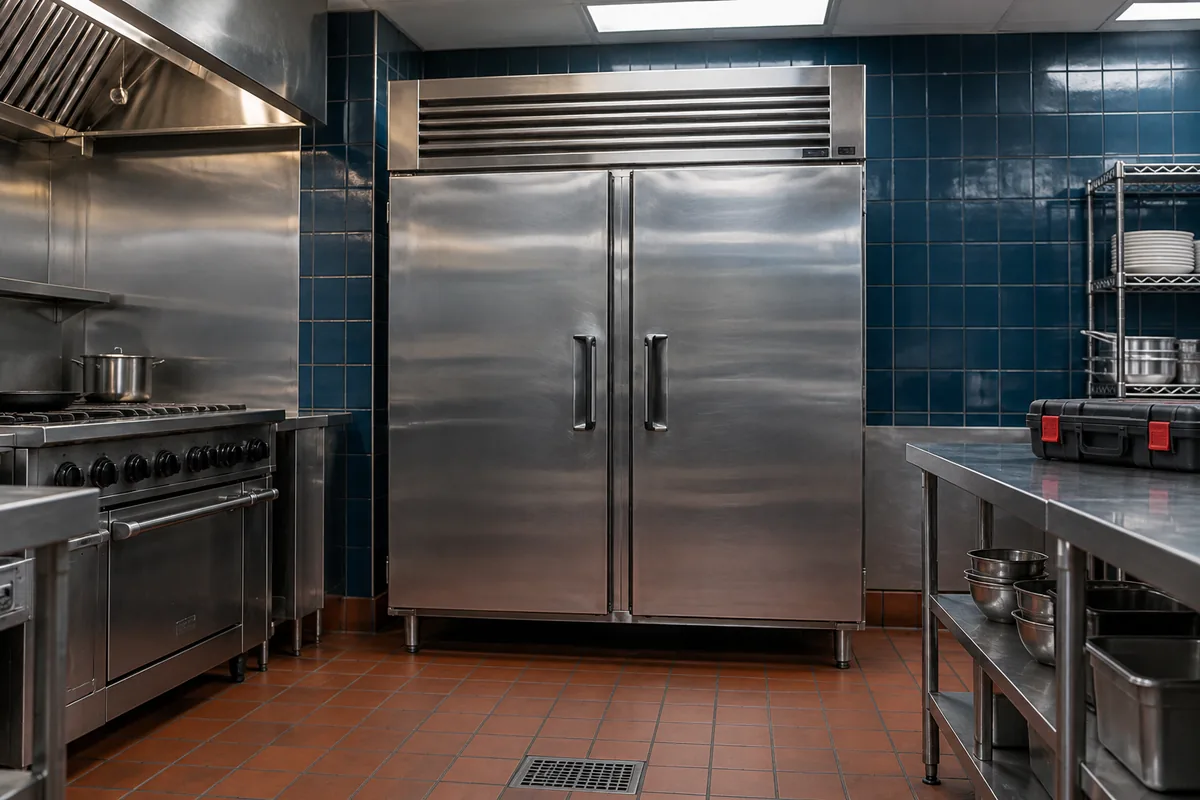
For a cold-storage problem, tell us whether you have a reach-in cabinet, prep unit, beverage cooler or walk-in room. Record the displayed reading and the time you saw it. Explain whether the whole space feels warm or just one section. Our commercial refrigeration repair service covers the next steps for a cooling fault within the supported equipment scope.
Cooking equipment needs a different description. Tell us whether the unit uses gas or electric heat and which function has stopped working.
An oven that fails to warm up is a different request from one burner that will not light. Describe the symptom from normal use. Do not open covers, bypass a control or repeat an unsafe start attempt to gather more detail.
Ice production and dishwashing also deserve their own notes. A machine that never starts presents a different problem from one that stops partway through a cycle. For a Scotsman unit, see Scotsman ice machine repair and include the model and stage at which production changes.
Include any code exactly as it appears. If more than one unit has trouble, keep each model and symptom together. A shared site problem is possible, but it should not become a diagnosis without testing.
Equipment Downtime and Visit Priorities
Tell us how the failure affects your next service period. A business with no backup unit may need a different visit plan from one with spare capacity. Explain which equipment remains usable and which machine you have taken out of service. We use those details to discuss the request and available appointment options.
A repair appointment does not decide whether stored food, ice or another product is safe to use. Follow your business’s product-handling procedures while equipment is down. Keep a record of the time you first noticed the fault and any readings you already have. Do not wait for a visit before carrying out your existing safety plan.
For several affected machines, identify the most urgent fault and give each unit’s model or asset number, if your business uses one. This keeps the estimate tied to the correct equipment, especially when similar appliances stand together.
Model Details and Fault Symptoms
A photo of an accessible data plate can help us review the model. Include the serial number when it is readable without moving equipment or removing a cover. Wide photos can show the space around the unit, fixed counters and the path to the work area. These details help us plan access without asking staff to dismantle anything.
Explain whether the fault is constant or comes and goes. A machine may work at opening and stop later, or fail only during part of its normal cycle.
Note the last time it worked as expected. Include recent setting changes or service visits. These details provide context but do not prove what caused the fault.
Tell us about a leak, unusual sound, control message or loss of power that accompanied the main symptom. Record what you can observe from a safe position. A short, specific description is more useful than a guessed part name. The technician still needs to test the equipment before recommending a repair.
Our commercial ice machine repair page explains no-ice or low-output problems in machines used for business. A storage-cabinet cooling fault is a separate refrigeration concern from the ice-making cycle.
Site Access and Repair Authorization
Tell us who will meet the technician, which entrance to use and when the work area will be available. Include sign-in requirements and restrictions on customer or food-preparation areas.
If a landlord or another business owns the unit, identify who can approve the estimate and share any purchase-order requirement before the visit. The on-site contact may be a different person.
Do not disconnect gas, water or electrical supplies just to prepare for a routine visit. Tell us about nearby shutoffs or access limits if you already know them.
The technician can review what the work requires. If you suspect a gas leak, including a gas smell, leave immediately and call 911 from a safe location. Do not operate appliance controls or electrical switches in the area. If you see smoke or fire, leave the area and call 911 from a safe location. A normal repair request is not an emergency response.
Diagnosis, Parts and Repair Options
Diagnosis should lead to a defined repair option, not a list of parts to replace on a guess. Our team explains the finding and proposed work before you approve the repair. Ask what the estimate covers and whether any further visit or part order is necessary. The answer depends on the actual fault and exact model.
A model number helps with parts research, but it does not prove which component has failed. Some parts also vary within a product series. The equipment details and the diagnosis need to agree before a repair plan can be reliable. Avoid buying a part based only on a similar symptom in another appliance.
Repair may be a sensible choice for a serviceable unit with a clear fault. Repeat breakdowns, poor overall condition or limited parts support may change that decision. Tell us if the appliance already struggles to meet your workload when it operates normally. Restoring a faulty unit does not necessarily solve a capacity problem.
The same distinction applies to cooking equipment. Our commercial oven repair service focuses on faults in supported ovens. A request to change the cooking line, fuel supply or layout needs a separate project discussion.
Timing and Follow-Up
Same-day service may be available depending on the schedule, location and equipment. Access, diagnosis and needed parts can affect completion, so an appointment does not guarantee a finished repair on the first visit.
Before the visit ends, confirm the work completed, any pending parts or return visit and the equipment’s current status. Keep that information with the model or asset number so the next shift has the same plan. If the symptom returns, add the time and operating conditions without repeated resets.
Request commercial appliance repair from HVAC & Appliance Repair Guys using the service form below. Include each appliance’s type, full model and fault so we can confirm support.
Commercial Appliance Repair by City
Choose your city for local service information.
Oregon: Aloha, Beaverton, Canby, Clackamas, Forest Grove, Gresham, Happy Valley, Hillsboro, Keizer, Lake Oswego, Milwaukie, Newberg, Oregon City, Portland, Salem, Sherwood, Tigard, Troutdale, Tualatin, West Linn, Wilsonville, Woodburn, Aurora, Donald, Gervais, Hubbard, Scappoose.
Washington: Battle Ground, Camas, Ridgefield, Vancouver, Washougal, Brush Prairie, La Center, Woodland.
Frequently Asked Questions
Do you repair every type of commercial appliance?
We review selected equipment. Send the brand, full model and service address so our team can confirm support. Built-in lines, unusual systems and equipment with limited parts availability may need a different scope. We check model support rather than relying on the appliance category.
Can one visit cover several machines?
Tell us about all affected units before scheduling. Include a separate model and symptom for each one, plus your order of priority. We can then review the work involved and discuss the appointment scope. Adding machines during a visit may require more time or another appointment.
Can you give a final repair price from a photo?
Photos can help identify equipment and access needs. They rarely establish the cause of a fault. A final repair option depends on diagnosis and the parts or work required. Ask about the visit terms when booking, and review the proposed repair before authorizing it.
What if the fault is outside the appliance?
A building supply, drain or control issue may fall outside the equipment repair. We explain what the assessment shows and whether the request needs a separate service scope. Do not assume that replacing an appliance part will solve a problem with the site’s connections.
Request Commercial Appliance Repair in Portland Metro
For commercial appliance repair in Portland Metro, call HVAC & Appliance Repair Guys or submit a service request through the form on this page.