



Independent KitchenAid Major-Appliance Repair
HVAC & Appliance Repair Guys provides independent KitchenAid appliance repair in Portland Metro. We assess major home appliances using the full model, fault and installed setup. KitchenAid also makes countertop products, so identify the product category when requesting service; support for one category does not establish support for another.
Our appliance repair service covers the wider home service scope. For a KitchenAid request, describe the function you need restored and the result that changed. We check the model and access first. The findings and proposed price come before approval.
Keep a model record for each machine that needs work. A matching suite may contain units with different designs and faults. Set the priorities that matter to your household. We review each task so the visit has a clear scope.
Refrigeration, Freezers and Ice Machines
Our KitchenAid refrigerator repair service covers cooling, water, frost and control concerns. Name the area that changed and what still works. Distinguish the selected temperature from any observed reading; a working display does not confirm cooling throughout the cabinet.
For a separate freezer or wine cabinet, provide that unit’s own model. Identify separate zones only when the installed equipment has them. Describe its usual role and the current storage result. Matching fronts do not make separate appliances one cooling system.
For refrigerator ice or a dedicated machine, see our KitchenAid ice maker repair service. State which type you have and whether production, storage, water removal or delivery changed. A separate ice machine can need different checks from the refrigerator beside it. The service scope must follow the actual equipment.
Dishwasher Cycles, Leaks and Door Fit
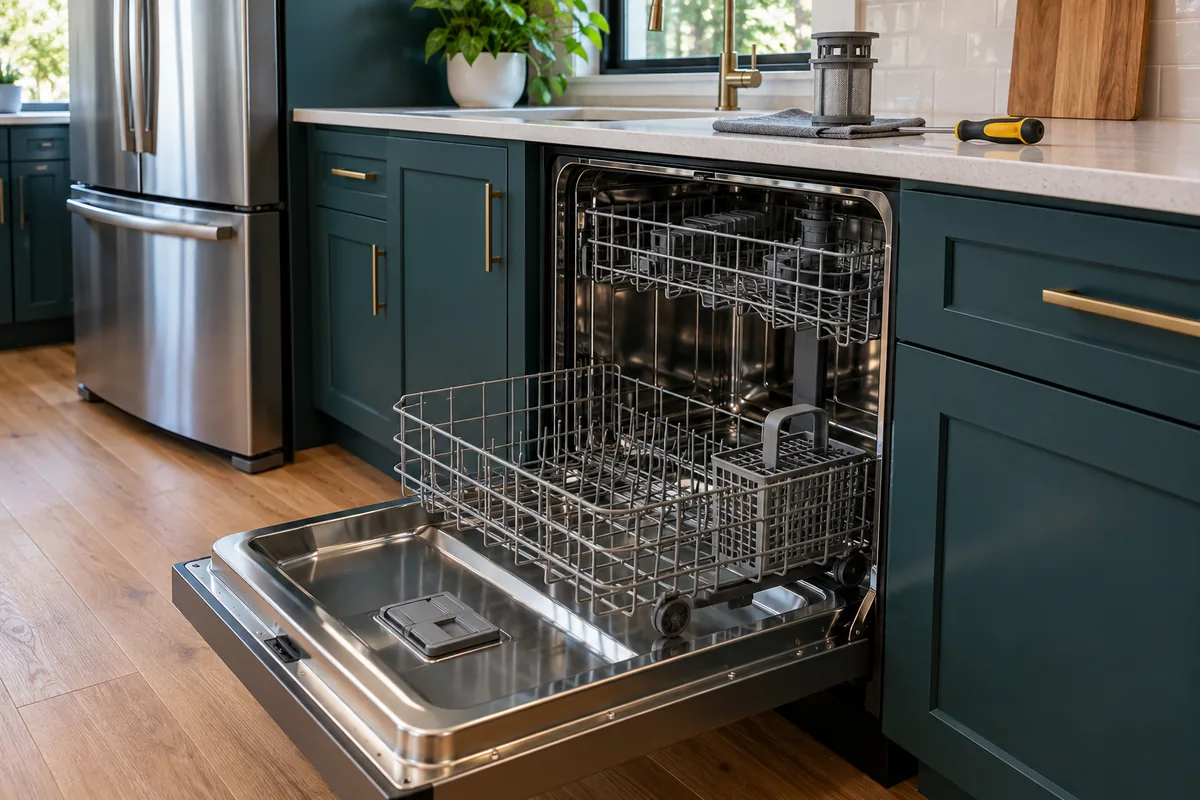
Our KitchenAid dishwasher repair service addresses wash, drain, dry and leak concerns. State the program used and the last normal stage. A completed cycle with poor results differs from one that stops before washing finishes. Include any visible message without guessing a failed part from the code alone.
A door or panel alignment concern also belongs in the request when present. Show its position through safe access and mention known earlier fitting work. Do not remove the front to inspect the latch or wiring. We assess the connection between fit and operation rather than assume one explains the other.
Stop using a leaking dishwasher instead of repeating a cycle for proof. Describe the first wet area and when you noticed water. Keep clear of wet power connections. The technician can review the relevant path and explain the task needed before parts approval.
Oven Heating and Surface Cooking
The KitchenAid oven repair service focuses on oven heat, controls and cooking results. Identify the affected cavity and mode. State whether the concern begins at preheat or later in use. Another high-heat test is unnecessary to prepare a service request.
For surface cooking, identify the zone and the change you see when using it. State whether that surface belongs to a range or a separate cooktop. Keep an oven concern with its own mode and cavity. These details help the visit address the right function instead of treating all cooking equipment as one fault.
Keep the size of a fitted appliance distinct from its surrounding opening. Existing installation records may help explain fit without removing trim. Mention a narrow route or fixed counter only when it actually affects access. Any cabinet or utility task needs a clear discussion alongside the appliance repair.
Repair Options and Replacement Requirements
We explain the finding, proposed correction and result it should restore. Ask whether the estimate addresses the whole complaint or one part of it. If the fault is intermittent, review what the checks establish and what remains uncertain before a parts decision.
Compare repair price, parts support, condition and previous major work with the full replacement task. Removal, delivery, connections, fitted fronts and cabinet openings may affect the choice. Check the requirements of the exact new model; a similar finish does not establish an identical fit.
Fitted Fronts, Model Identification and Access
Use the appliance’s full model from a safely accessible label or existing record. A fitted front can conceal the unit, and a panel, handle or cabinet number does not identify its repair parts.
Describe a rubbing door or changed panel position separately from poor cooling, washing or heating. Recent fitting work can help explain timing, but the relationship between fit and operation still needs assessment.
Leave panels, trim and supports in place. A safe view can show a tight opening or a door that cannot open fully. Tell us if you cannot see the label. We discuss extra access work before adding it to the approved task.
Other Household Equipment and Additional Requests
If you have a KitchenAid-branded washing machine, provide its complete model and known service history. Describe filling, movement, drainage and spin rather than assume a familiar design. We review the actual equipment and parts needs. The brand alone does not establish support for every unit or production year.
Countertop products need their own scope review; a major-appliance repair request does not automatically include them. Name the category before arranging additional work.
For someone else’s home, identify the onsite contact and the person approving costs. Pass along the user’s observations rather than only a guessed component name. Keep separate priorities and approval limits clear for several machines. A coordinated appearance does not make one estimate cover every concern.
Contact HVAC & Appliance Repair Guys to request independent KitchenAid major-appliance repair and share the product category, full model and current fault.
Frequently Asked Questions
Does this service automatically include countertop KitchenAid products?
No. Identify the exact product category and model so we can review the scope. A countertop machine can need a different arrangement from major household equipment. Confirm the actual task before combining requests.
Does keeping a matching kitchen make every repair worthwhile?
Appearance and fit can matter to you, but they are part of a wider comparison. Consider the findings, condition, parts support and full replacement needs. A matching front does not settle the decision on its own.
Request KitchenAid Appliance Repair in Portland Metro
For KitchenAid appliance repair in Portland Metro, call HVAC & Appliance Repair Guys or submit a service request through the form on this page.