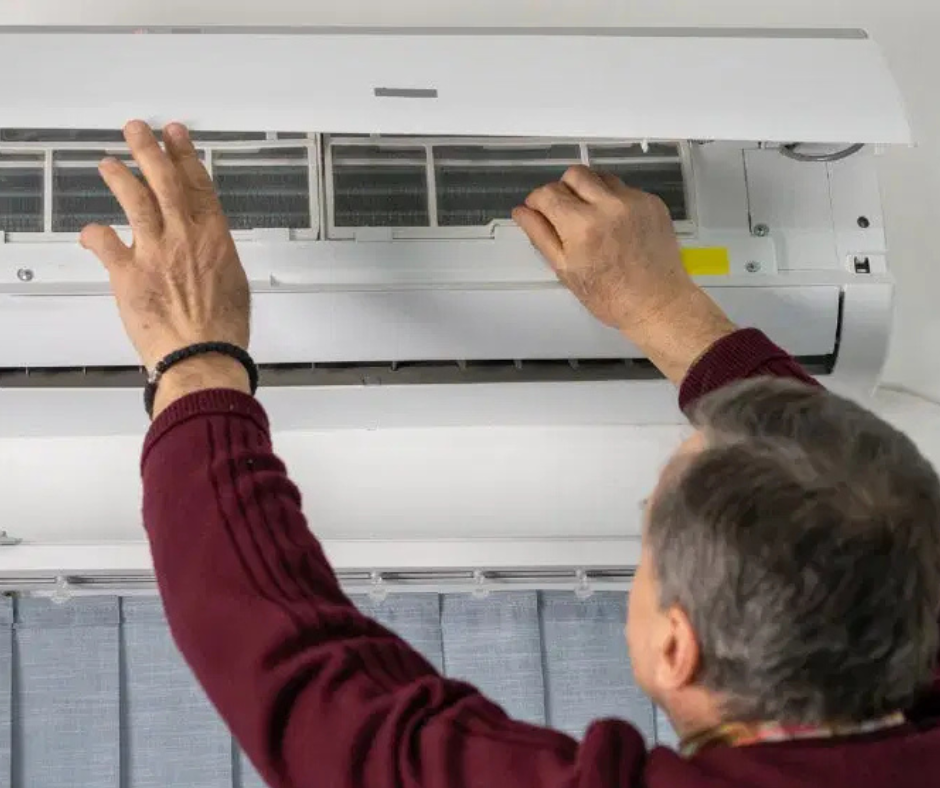
If your AC is running but not cooling, the system may have power without completing the cooling process. Start by confirming the thermostat is set to Cool, checking the air filter, opening supply vents, and looking for ice or an outdoor unit that is not operating normally. A running indoor fan does not prove that the compressor, refrigerant circuit, or heat-transfer process is working.
Some checks are safe for a homeowner; sealed-system, high-voltage, and internal component testing are not. If you notice a burning smell, repeated breaker trips, water near electrical components, or heavy ice, turn the cooling system off and request professional help. Portland Metro homeowners can start with our AC repair service page or call (503) 512-5900 to ask about current availability.
Safe checks to make before scheduling AC repair
- Set the thermostat to Cool. Lower the set temperature a few degrees below the room temperature and confirm the fan setting is Auto rather than Fan.
- Check the filter. Replace a visibly loaded disposable filter with the correct size and airflow direction. Do not operate the system without a filter.
- Open supply and return paths. Move furniture or rugs away from grilles and confirm that supply registers have not been closed throughout the home.
- Look for ice or water. Ice on refrigerant lines or the indoor coil area is a reason to stop cooling operation and let the system be evaluated.
- Observe the outdoor unit from a safe distance. Note whether its fan starts, stops, hums, or makes a new sound. Do not open panels or reach through the guard.
These observations narrow the problem; they do not identify a failed part by themselves. Avoid repeated breaker resets, adding refrigerant, bypassing a drain safety switch, or removing electrical panels.
Why the AC can run without blowing cold air
An air conditioner uses several processes at once. The thermostat calls for cooling, the indoor blower moves air, the outdoor unit releases heat, and refrigerant carries heat between the indoor and outdoor coils. The blower can keep running even when another part of that sequence has stopped. That is why “the fan is on” and “the system is cooling” are not the same observation.
1. Thermostat mode, schedule, or sensor problem
A thermostat set to Fan can circulate room-temperature air without calling for cooling. Schedules, eco modes, remote sensors, weak batteries, or a thermostat placed near a sunny window can also create confusing behavior. Record the displayed room temperature, cooling setpoint, mode, and any alert before changing the schedule.
2. Dirty filter or restricted return airflow
A loaded filter reduces airflow across the indoor coil. The system may run longer, deliver weak air at the registers, and eventually develop ice. An incorrectly sized filter, blocked return grille, collapsed flex duct, or heavily loaded indoor coil can create similar symptoms. If a fresh filter does not restore normal airflow, the restriction needs diagnosis rather than a more restrictive filter.
3. Frozen evaporator coil
Ice prevents the indoor coil from absorbing heat and can block airflow. Common contributors include low airflow, blower problems, control issues, or a refrigerant fault. You may see frost on the larger insulated copper line, water after the ice melts, or airflow that becomes weaker during a long cycle. Turn cooling off if ice is visible; continuing to run it can make diagnosis and water control harder.
4. Outdoor condenser blocked by debris
The outdoor coil must release heat. Cottonwood, grass clippings, leaves, or objects stored too close to the cabinet can restrict that process. Remove loose items around the unit without opening the cabinet or bending the coil fins. A coil that needs internal cleaning should be handled with the right method and access.
5. Outdoor fan, capacitor, contactor, or compressor fault
The indoor blower may run while the outdoor section is silent, starts and stops, hums, or trips protection. A technician may need to test supply voltage, electrical connections, capacitors, contactors, motors, compressor response, and control signals. Do not use a stick to start a fan or touch a capacitor; these components can remain hazardous after power is disconnected.
6. Refrigerant leak or incorrect charge
Refrigerant is not consumed like fuel. If the charge is low, the system may have a leak or a prior service issue. Clues can include long runtimes, ice, weak cooling, or temperature readings that do not match normal operation, but none of those proves a leak. Proper work requires measurements, leak evaluation, and compliance with refrigerant-handling rules; adding refrigerant without finding the cause is not a complete diagnosis.
7. Condensate drain or safety-switch interruption
Some systems use a float switch to stop cooling when water backs up. Depending on the wiring, the blower or thermostat may still appear active. Water near the furnace, air handler, ceiling, or finished floor deserves attention. Do not bypass the switch. Note where the water appeared, whether cooling stopped, and whether the drain or pump has been serviced recently.
8. Duct leakage, closed damper, or room airflow problem
If some rooms cool while others stay warm, the equipment may be producing cold air that is not reaching the right place. Disconnected or leaking ducts, closed balancing dampers, zoning faults, blocked returns, and attic heat gain can all affect delivery. Compare airflow and temperature room by room, and mention whether the problem affects one area or the whole home.
9. Heat-pump mode or control problem
A heat pump uses additional controls to switch between heating and cooling. A reversing-valve, thermostat configuration, defrost-control, sensor, or communication problem can leave the system operating in the wrong way. Share the thermostat model and whether the issue began after a power outage, thermostat replacement, or seasonal mode change.
10. Capacity, sizing, or a developing mechanical problem
An AC can run continuously during extreme weather and still fall behind if the system is undersized, airflow is poorly balanced, the building load changed, or performance has declined. An oversized system can short cycle and control humidity poorly. Age alone does not identify the answer. Actual temperature split, airflow, electrical readings, refrigerant measurements, equipment condition, and repair history help separate a repairable fault from a capacity or replacement question.
What the symptom pattern can tell you
| What you notice | Useful details to record |
|---|---|
| Fan runs but air is not cold | Thermostat mode, outdoor-unit behavior, filter condition, and vent airflow |
| Air starts cold and becomes warm | Cycle length, ice, outdoor-unit shutdown, and thermostat alerts |
| Weak airflow at every vent | Filter size, return blockage, ice, and blower sound |
| Only one room stays warm | Register position, return path, zoning, and whether airflow differs from nearby rooms |
| Water appears near the indoor unit | Exact leak location, pump or drain history, and whether cooling stopped |
What an AC diagnostic visit should examine
A useful diagnostic visit connects the complaint with measurements. Depending on the system and symptom, the inspection may include thermostat operation, temperature change across the system, filter and airflow conditions, indoor and outdoor coil condition, condensate controls, electrical components, motors, compressor response, refrigerant-side measurements, and visible duct or zoning clues. The result should be an explanation of the confirmed fault and practical options before approved work begins.
If the system mainly needs seasonal inspection rather than an active-failure visit, use the HVAC maintenance page. When an older system has repeated major problems, compare repair findings with AC installation and replacement planning rather than making the decision from age alone.
AC running but not cooling in Portland Metro
HVAC & Appliance Repair Guys serves Portland Metro and nearby Southwest Washington communities. For local service information, see AC repair in Portland or AC repair in Lake Oswego. Send the address, system type, thermostat reading, filter condition, and what the indoor and outdoor units are doing. Photos of ice, water, or the equipment label can make the follow-up more specific.
Frequently asked questions
Why is my AC fan running but the air is not cold?
The indoor blower can operate even when the thermostat setting, outdoor unit, compressor circuit, refrigerant process, or airflow is not working correctly. Check the safe items above, then request diagnosis if cooling does not return.
Should I turn the AC off if it is not cooling?
Turn cooling off if you see ice, smell burning, hear severe mechanical noise, find water near electrical parts, or experience repeated breaker trips. For a simple thermostat or filter correction with no safety warning, recheck operation after the correction without repeatedly resetting protection.
Can a dirty filter make the AC run without cooling?
Yes. A heavily loaded filter can reduce airflow, lower cooling performance, and contribute to coil icing. Replace it with the correct size, but schedule service if airflow stays weak or ice appears.
How long should I wait after a frozen coil?
Thaw time varies with the amount of ice, airflow, and indoor conditions. Do not resume cooling while ice remains. Because freezing can result from several faults, arrange diagnosis instead of treating thawing as the repair.
Does an AC running all day mean it needs replacement?
Not by itself. Weather, thermostat setting, airflow, equipment capacity, building load, and a developing fault all affect runtime. Test results and repair history provide a better repair-versus-replacement basis.
Request AC diagnostics
If your AC is running but not cooling after the safe checks above, send a service request or call (503) 512-5900. Include the ZIP code, thermostat reading, equipment type, filter condition, outdoor-unit behavior, and any ice, water, sound, smell, or error message you observed.
Need help in Portland Metro?
HVAC & Appliance Repair Guys helps local homeowners with heating, cooling, refrigerator, dishwasher, washer, dryer, oven, range and other home comfort problems. If the issue needs a technician, request service and our team will follow up with practical next steps and current scheduling options.