


Ice Maker Repair for Production and Dispenser Problems
HVAC & Appliance Repair Guys provides ice maker repair in Portland Metro. A machine may make no ice, make too little or fill the bin but fail to dispense it. We first establish which step has changed before proposing a repair.
Begin with the bin. An empty bin is different from one full of cubes that will not pass through the door. Note whether you hear movement when you use the dispenser in the normal way. Do not put a hand or tool into moving parts to test a jam.
Tell us whether the ice maker belongs to a fridge or stands in its own cabinet. A separate undercounter unit has its own model and installation needs. The fridge model will not identify that separate machine. This distinction helps us confirm the right equipment before the visit.
No Ice, Slow Output or an Uneven Supply
For a complete stop, state when you last saw fresh ice. Include any change to the controls, an alert or a recent power or water interruption. The order of events gives useful context. It does not prove that the last event caused the failure.
For slow output, compare the change with the unit’s normal use. A low bin after heavy use is different from little new ice during a quiet period. Describe the pattern rather than guessing a daily production figure. We use the model and operating condition to assess whether there is a fault.
If the problem comes and goes, keep a short record of when production stops and returns. Note any change in cooling or dispenser behavior at the same time. A timeline is useful even if the machine starts working before we arrive. Do not keep resetting it just to produce a different result.
Small cubes, hollow pieces or ice left in the mold provide other details. A photo can show their shape. Mention whether every batch looks that way or only some of them. Ice shape alone cannot establish that the complete assembly needs replacement.
Water Flow, Cooling and the Ice-Making Cycle
A working water dispenser does not rule out a fault in the ice maker’s fill path or controls. Tell us how both features behave. Weak water flow alongside low ice output is a different report from normal water flow with no ice. We follow those distinctions during diagnosis.
Mention a recent water-filter change and whether the issue began before or after it. Keep the filter details if available. The sequence can help us choose checks without assuming that buying another filter will fix the unit. Water supply, temperature and the ice-making cycle may each need review.
For a fridge ice maker, include a warming freezer or other cooling change. Our refrigerator repair service covers the broader appliance assessment. A new ice-making part would not fix every cooling-related cause of low output. We review the full complaint before defining the work.
A separate freezer may be the main concern. Our freezer repair service covers that equipment. Make clear which cabinet contains the fault. Similar-looking built-in units may have separate labels and controls, so each needs its own identification.
A Full Bin With a Dispenser Fault
If ice forms but will not come out, describe what happens at the door. You may hear the drive run, see movement in the bin or get no response at all. Those are separate observations. A full bin confirms the presence of ice, not that the whole dispensing system works.
Visible clumps may affect the way ice moves, but they do not settle the cause of every dispenser fault. Tell us about the clumps and any change after normal removal of the bin. Leave hidden parts and covers in place. Forcing a chute or drive can damage parts and create another concern.
Report a control or display problem separately from a mechanical sound. Does the button respond, does a light change and does the same issue affect water dispensing? We can use those details to plan checks of the relevant controls and movement. We do not select a control board from one symptom alone.
Leaks and Access to a Separate Machine
Water may appear at the fill area, inside the bin, near the door or below the appliance. State where you first notice it and whether it returns during a cycle. A puddle alone does not identify the source. Do not disconnect a water line or reach into wet electrical areas to trace it.
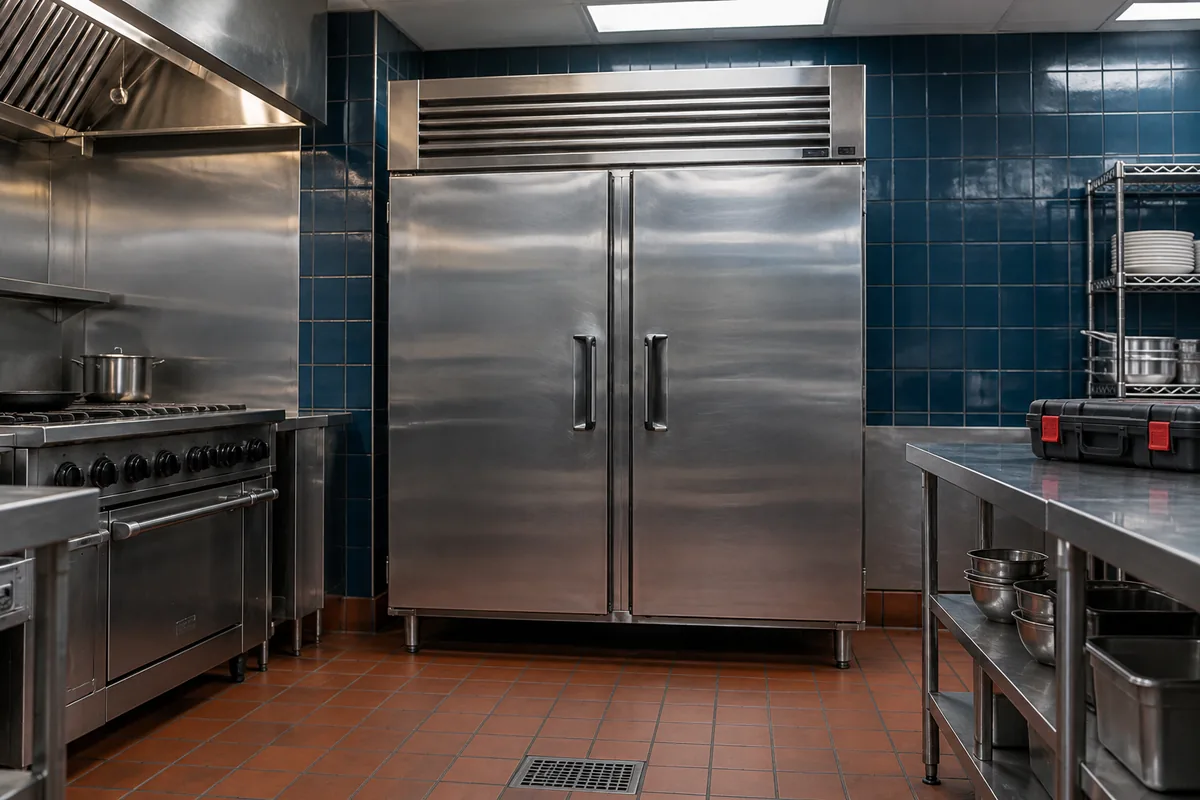
A built-in ice machine may sit below a counter with little room to reach the back. Show the cabinet opening and nearby fixtures in an installation photo. Leave the machine in position. We can discuss the access plan without asking you to expose fixed connections before the visit.
Provide the complete model from a label you can safely reach. For a shared property or business, tell us who can provide access and approve work.
Ice Maker Diagnosis, Repair Scope and Price
We check the model and the step that fails: filling, freezing, releasing ice or dispensing it. Relevant findings may involve water flow, the inlet valve, sensing, controls or the ice-release cycle. The unit’s design determines which checks apply. We explain what the findings support before recommending work.
The diagnostic service call costs $99. It counts toward the total repair price if you approve the repair; if you decline, the charge remains payable. We explain the parts, scope and price before approved work begins. A small visible assembly does not mean every repair needs the same part.
Contact HVAC & Appliance Repair Guys to request ice maker repair and ask about same-day availability for your address. Diagnosis and parts may require another step before normal output returns. For another appliance type, our appliance repair services cover the relevant equipment.
Ice Maker Repair by City and Brand
Choose your city or equipment brand for the relevant service information.
Oregon: Aloha, Aurora, Beaverton, Canby, Clackamas, Donald, Forest Grove, Gervais, Gresham, Happy Valley, Hillsboro, Hubbard, Keizer, Lake Oswego, Milwaukie, Newberg, Oregon City, Portland, Salem, Scappoose, Sherwood, Tigard, Troutdale, Tualatin, West Linn, Wilsonville, Woodburn.
Washington: Battle Ground, Brush Prairie, Camas, La Center, Ridgefield, Vancouver, Washougal, Woodland.
Brands: Amana, ASKO, Beko, Blomberg, Bosch, Dacor, Electrolux, Fisher & Paykel, Frigidaire, GE, Haier, Hisense, Hotpoint, Insignia, JennAir, Kenmore, KitchenAid, LG, Maytag, Miele, Monogram, Samsung, Sub-Zero, Thermador, Viking, Whirlpool.
Frequently Asked Questions
Should I buy a complete replacement ice maker before the visit?
Ask us first. The fault may lie outside the visible assembly, and the replacement must match the model. We need to establish the cause and repair scope before selecting parts for the job.
Can you include a broken bin or cover in the request?
Yes. Describe the damaged item separately from the operating fault. We review parts availability and whether the proposed work can include it. A repair to production does not automatically include every storage or trim part.
What should I keep from an earlier repair?
Any available record of the part, date and symptom can help. Tell us whether the old complaint returned or the new problem is different. Earlier work gives context, but it does not prove that the same part has failed again.
Does a repair include warranty coverage?
Qualifying labor and installed parts may include coverage with terms for the specific work. Ask which parts and labor qualify before approving the repair. One blanket warranty period does not apply to every ice-making system.
Request Ice Maker Repair in Portland Metro
For ice maker repair in Portland Metro, call HVAC & Appliance Repair Guys or submit a service request through the form on this page.