



GE and GE Profile Appliance Repair in Portland Metro
HVAC & Appliance Repair Guys provides GE appliance repair in Portland Metro, including requests for GE Profile equipment. We assess kitchen and laundry faults using the full model and affected function. A product-family badge helps describe the appliance but does not identify every part or service need.
If the label identifies Monogram, our Monogram appliance repair service covers that brand request. Similar handles or finishes do not establish equipment identity. In a kitchen with several brands, share the model and concern for each appliance that needs attention.
Our appliance repair service covers household kitchen and laundry equipment. We review the model, symptoms and access, then explain the findings and price before you approve work.
GE Refrigerators, Freezers and Ice Equipment
Our GE refrigerator repair service covers cooling, water, frost and control concerns. Name the compartment or feature that changed and what still seems normal. A selected temperature and an actual reading are different facts. A working light does not establish the cooling result throughout the cabinet.
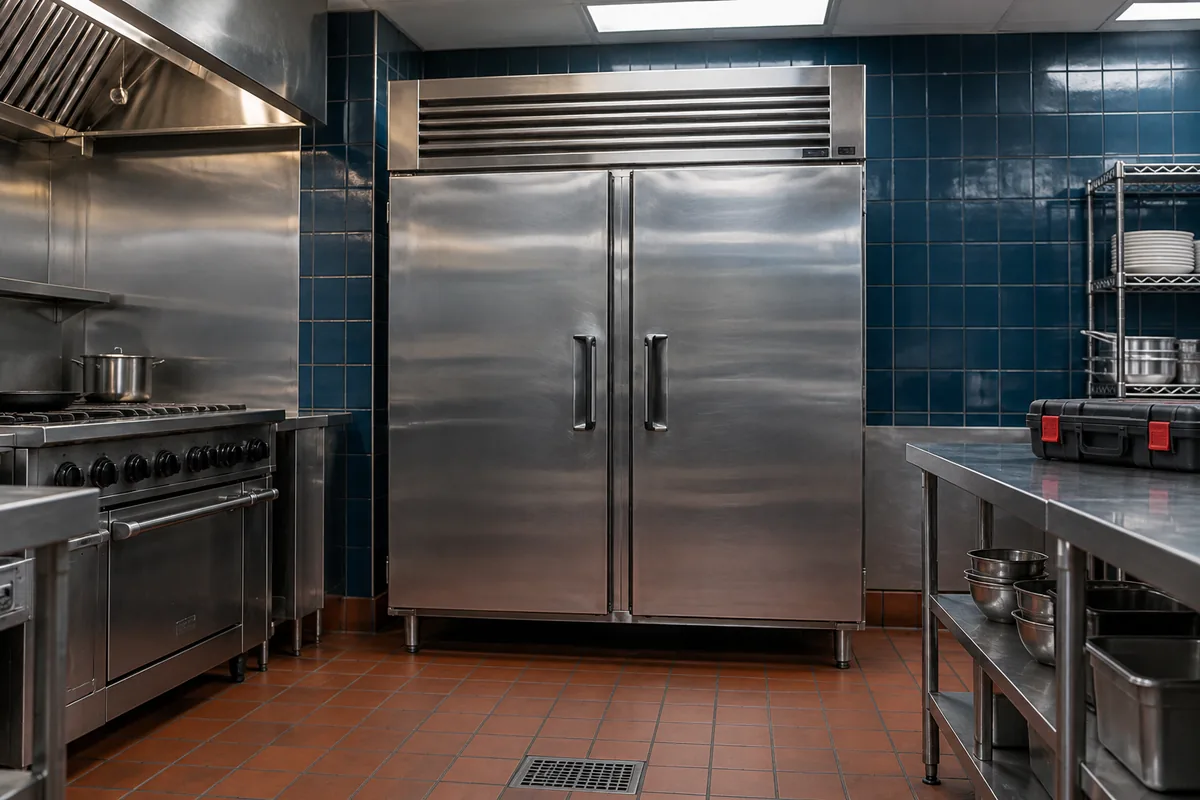
For a freezer concern, identify whether it is a separate cabinet or a refrigerator compartment. Describe frost, door behavior and any warning, and mention the installation location if it affects access.
For ice equipment, distinguish production from dispensing, changed ice or water escaping. State whether it belongs to a refrigerator or a separate machine. The model and category determine the appropriate scope. A remaining bin of ice can reflect earlier operation rather than the current condition.
A wine cabinet needs its own setting, cooling result and model record. Identify separate zones only when the installed unit has them. Include a recent move or change in the surrounding space when relevant. Do not transfer the controls or fitting needs of another cabinet simply because both store drinks.
GE Laundry: Washing and Drying Faults
Our GE washer repair service addresses filling, wash movement, draining and spin concerns. Describe the last stage that behaved normally. Water remaining in the drum differs from a drained machine that leaves the load wet. Keep the chosen program and load type with that observation.
For GE dryer repair, separate drum movement, warmth, cycle progress and the final load result. If laundry left the washer wetter than usual, include that fact. It helps explain the task but does not rule out a dryer fault. We assess each result rather than assign the whole complaint to the first machine you notice.
State whether the laundry setup consists of separate machines or one combined unit. Separate appliances need their own model records. A single laundry unit has a different equipment identity and access plan. Do not assume a working washing section proves that the drying section needs one particular component.
Leave stacks, supports and connections in place while we review access. Show the surrounding space through a safe wide photo or existing records. A pedestal or support may have its own number, but that does not replace the appliance model. We discuss any extra access work before including it in the scope.
GE Dishwasher Washing, Draining and Drying Problems
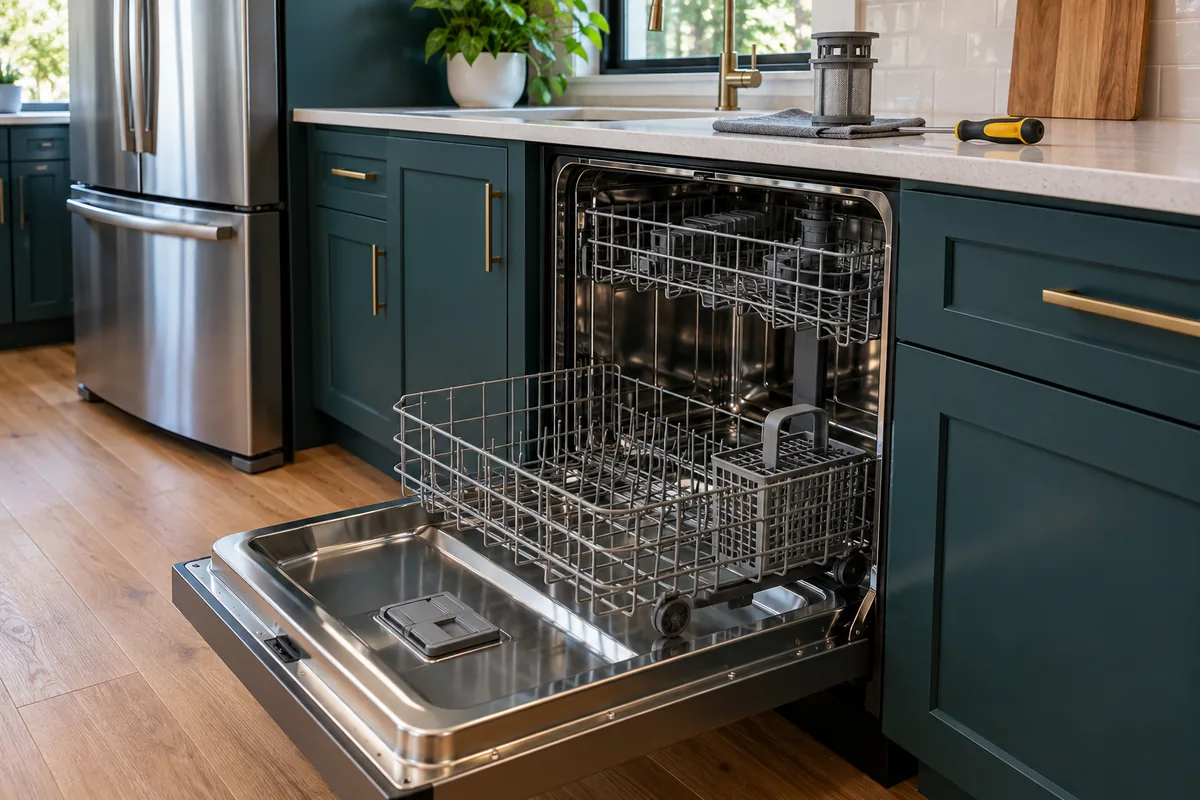
For GE dishwasher repair, distinguish poor washing, retained water, weak drying, leaks and a cycle that stops early. Include the chosen program, exact message and any relevant detergent or setting change. Those details guide checks without establishing a cause from timing alone.
Stop using a leaking machine rather than run it again to collect evidence. Describe where the water first appeared and whether the program stopped. Leave fitted panels and utility connections alone. We assess the condition and discuss the intended repair before selecting a component.
GE Ovens, Ranges and Cooktops
Our GE oven repair service addresses heating, controls and cooking results. Identify the cavity and mode involved, such as the bake or broil function actually used. State whether the change appears at preheat or later in the run. Extra high-heat tests are unnecessary before a service request.
For a range, report the oven and surface zones separately. A working burner or clock does not show that every heating function operates normally. For a separate cooktop, identify the affected zone and control response. The actual model and supply arrangement guide the checks and parts research.
For fitted cooking equipment, describe trim, handle contact or a fixed counter that limits access. Leave the unit seated and connected. Product size and the surrounding opening are not always the same measurement. Any additional cabinet or utility task needs its own scope discussion alongside appliance repair.
Repair Findings and Replacement Choices
We explain which finding supports the proposed repair and what result it should restore. Ask whether the estimate addresses the whole complaint or one part of it. If an intermittent fault leaves uncertainty, we state it before a parts decision. A similar part listing does not prove fit or establish the cause.
Compare repair price, parts support, condition and previous major work with the full replacement task. Delivery, removal, installation and companion-equipment fit can matter alongside the new unit’s price. A GE Profile badge or matching finish alone should not decide the choice.
Error Messages and Intermittent Faults
Keep the full message or code with the request when available. Add what the appliance was doing and which function stopped or changed. A warning during washing differs from one before a cycle begins. We use the sequence to plan checks without naming a failed part from the code alone.
Describe the last normal result, the first symptom and the current condition in plain terms. Include a setting change or power event only if it belongs in that history. A restart that briefly restores operation is relevant. It does not establish a lasting repair or make repeated resets a useful test.
Share the full model from a safely visible label or existing record, keeping each appliance’s details separate. If the tag is hidden, explain the access limit. Leave the installation in place so the technician can confirm the model before parts research.
Service Access, Scope and Safety
Describe stairs, narrow routes or adjacent fixed surfaces, using a safe wide photo when helpful. Clear loose items where safe, but leave loaded or connected appliances in place if a label is hidden.
When arranging service for someone else, share their observations and priorities. Confirm the scope and charges for each appliance; a shared brand does not mean every concern in the home is included in one repair.
Stop use for smoke, sparks, a burning smell, active leaks or repeated power trips. Avoid wet electrical connections and leave gas fittings, wiring guards and refrigerant lines untouched. A brief recovery after cooling or a restart does not prove safe continued use. The technician can review the event without another demonstration.
Contact HVAC & Appliance Repair Guys to request GE or GE Profile appliance repair in Portland Metro. Share the full model and the function that has changed for each appliance needing attention.
Frequently Asked Questions
Is a GE Profile name enough to identify a repair part?
No. Provide the full model as well as the Profile marking. The model guides an exact match, while assessment establishes the part or task needed. Similar controls do not prove identical internal components.
Can an error message tell you the final repair price?
It helps describe the concern but does not establish the complete work. Include the actual behavior and timing with the message. We assess the appliance before explaining the proposed scope and price.
What if several GE appliances need attention at once?
Give each machine its own model, concern and priority. Identify the person who can approve the work and confirm the scope for each unit. This keeps a multi-appliance visit clear without assuming a common cause or one repair for all equipment.
Request GE Appliance Repair in Portland Metro
For GE appliance repair in Portland Metro, call HVAC & Appliance Repair Guys or submit a service request through the form on this page.