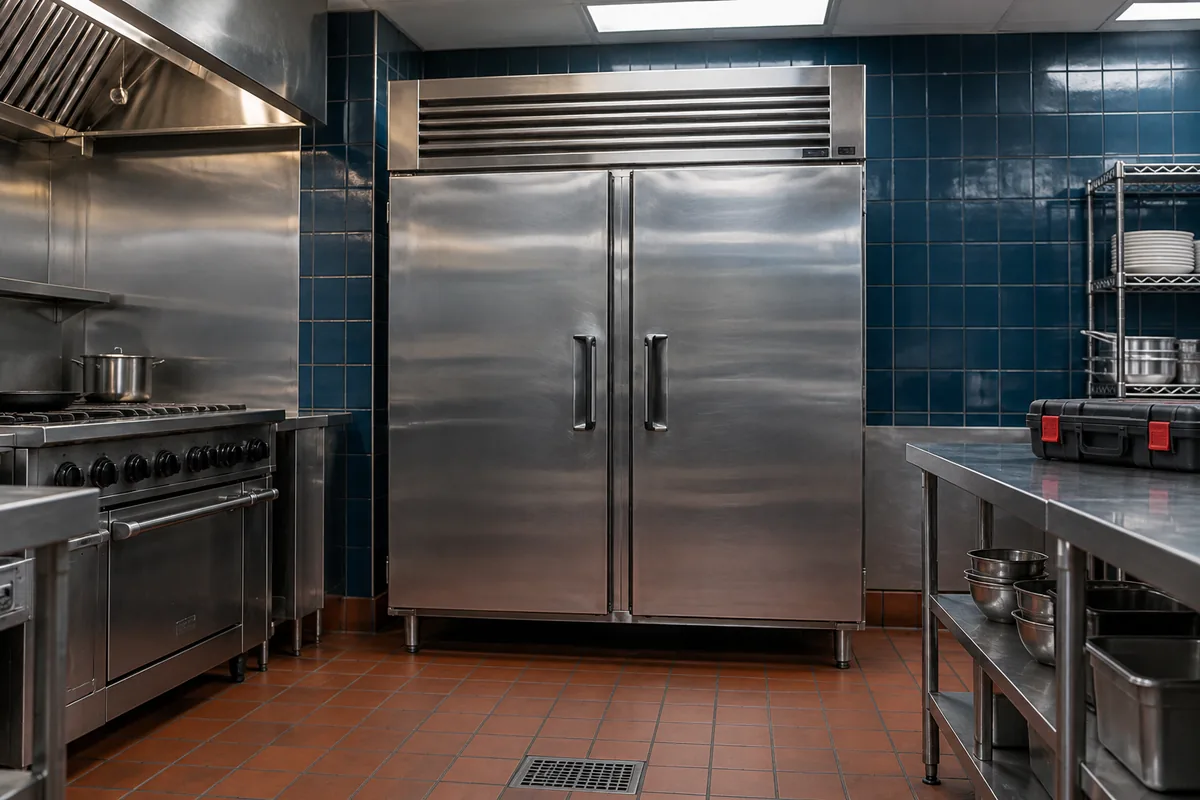




Commercial Kitchen Equipment Repair in Tigard
HVAC & Appliance Repair Guys provides commercial kitchen equipment repair in Tigard, OR, for supported cooking and cooling equipment with poor output, stops or warnings. Send the full model and changed function so we can confirm support and assess the current fault.
If equipment has begun falling behind, describe both performance and workload. A busy shift does not by itself prove the machine is too small, and a quiet period does not rule out a fault. The diagnosis explains what repair can address.
Give additional appliances their own models and symptoms when booking.
Workload and Changes in Performance
Describe a time when the machine met its usual task, if staff know one. Note the approximate workload and how its result differed from now. A useful comparison stays tied to the same unit. Another machine nearby may have a different role, model or operating history.
Tell us about actual changes in hours, demand or routine use. Those facts provide context without proving the cause of a breakdown. Avoid creating a special test to settle the question before service. The technician can review observations from normal use and explain what further assessment requires.
Keep readings, warnings and output notes with their times and sources. A report from opening may not describe the same conditions as one from a busy service period. Preserve both rather than average them into a single claim. The sequence can reveal a difference worth assessing without identifying a failed part by itself.
Cooling and Cooking Performance Faults
For cooling equipment, record the changed reading or affected area and say how staff observed it. A display and a separate check may refer to different points. Do not treat one familiar value as proof that the full cabinet performs normally. Keep door, frost or water concerns as separate notes.
Our commercial refrigeration service in Tigard provides a focused path for chilled equipment. A freezer or another unit needs its own model and report. Shared workload does not make those machines one repair. We review the actual equipment and requested scope before confirming work.
For a cooking appliance, describe the changed heat or result, an early stop or the exact warning. A lighted display alone cannot settle that concern. Include whether one section behaves differently from the rest. Staff should not bypass controls or inspect hidden parts to test a theory about capacity.
Our commercial fryer repair in Tigard covers that specific equipment category. Keep its present symptom and recent use with the correct model. The repair assessment should address the reported machine rather than assume all heat-related complaints need the same work.
Fault Repair and Future Capacity Needs
Mention any expected lasting increase in demand. A repair addresses the assessed fault within its scope; it does not establish that the equipment will suit a future workload or answer every capacity question.
Mention any planned move or change in use separately. The repair proposal addresses the current model and fault; a different location or workload may need its own review.
Earlier service records may help explain how performance changed over time. Keep the dates, findings and completed work tied to this unit.
Past repair costs and visit history provide context, but current findings determine the proposed work.
Service Access, Repair Cost and Timing
Explain the station’s access limits and when staff can make it available. Identify the person meeting the technician and the person who can approve costs. Include any purchase-order requirement. A suitable work window should reflect the assessment or repair needs, not an assumed finish between busy periods.
We explain the finding and proposed work before approval. Ask which symptom the repair addresses, whether parts or another visit are needed, and which capacity or layout questions remain outside the proposal.
The commercial appliance repair overview describes the broader service scope. Retain your Tigard finding with the workload and symptom record.
Add later changes as dated observations. Follow the site’s procedures for equipment and products while the concern remains open. A booked visit does not establish product condition.
Request commercial kitchen equipment repair in Tigard from HVAC & Appliance Repair Guys and share each model, changed performance and usual workload.
Frequently Asked Questions
Does falling behind mean we need a larger machine?
Not necessarily. Describe demand and any change in output under comparable use. The technician assesses the equipment fault before proposing work. A broader capacity decision needs the business’s actual plans as well as the current finding.
Should staff increase the load to show the problem?
Do not stage an unusual workload test for the repair request. Share observations from normal operation and any reliable records already available. The technician can clarify what the assessment needs for the model.
Request Commercial Kitchen Equipment Repair in Tigard, OR
For commercial kitchen equipment repair in Tigard, OR, call HVAC & Appliance Repair Guys or submit a service request through the form on this page.