



Sewer Line Repair and Replacement in Portland Metro
HVAC & Appliance Repair Guys provides sewer line repair and replacement in the Portland Metro service area. We assess the problem and explain which pipe section needs work. A backup alone does not establish the condition of every section.
A sewer pipe carries wastewater away from the building. Trouble can affect one fixture, several connected drains or normal use across the property. Describe the affected areas and what happened before discussing a replacement length. You do not need to diagnose hidden pipes.
Clearing a blockage can restore flow, while repairing or replacing damaged piping addresses its condition. Both types of work may be relevant to the same backup.
Sewer Backups and Affected Fixtures
Note which fixtures reacted, the order in which it happened and whether wastewater came back through an opening. A toilet and shower reacting together provide different context from one slowly draining sink. Include whether the problem followed normal use or returned after a previous clearing.
Use observations you already have. You do not need to flush repeatedly or run more water to demonstrate an active backup. Explain if wastewater is still returning or if normal drainage has stopped, so the current effect on use is clear.
Share any previous service dates, work areas and results. Leave the extent of an unknown hidden repair open rather than guessing.
Drain Cleaning and Structural Sewer Repair
Drain cleaning addresses a restriction to flow. Removing buildup or a blockage can restore flow without changing the pipe itself. That helps with use, but it does not prove every part of the line is free of damage.
A broken section, damaged joint or separated connection raises a different question from an obstruction. Repair or replacement needs a scope tied to that defect. Restored flow does not establish that the pipe needs no work, while a single backup does not prove that the whole line needs replacement.
Tree roots can obstruct a line where they enter it. Removing the roots does not rebuild a damaged joint. Assess the pipe condition before choosing a repair. The work should address the cause as well as the loss of flow.
Describe the result of earlier clearing as well as the fact that it happened. Did normal drainage return, and did the same symptoms later recur? Those details help explain what the next check needs to answer. They do not determine a repair method on their own.
Camera Inspection and Visible Pipe Conditions
A sewer camera inspection can provide a view of accessible interior piping. It can help document visible conditions along the inspected route. The findings should state which parts were in view. They should also note any parts the camera did not reach or show clearly.
Review images with the report’s entry point, inspected route and visibility limits. A single image alone may not establish the full extent of damage or the required repair boundaries.
If you already have a report or recording, share the date and known scope. Later work or a new blockage can change the current condition. We review old records with the current concern. Past footage does not guarantee good drainage today.
Local Sewer Repair and Longer Pipe Replacement
A local repair addresses one section when the findings and access support that approach. A longer replacement changes more of the route. Compare why the extra work matters and the state of nearby piping. The proposals may cover different tasks.
The scope should identify the new connections and retained piping. A partial repair leaves other sections in service; even a larger replacement has defined limits.
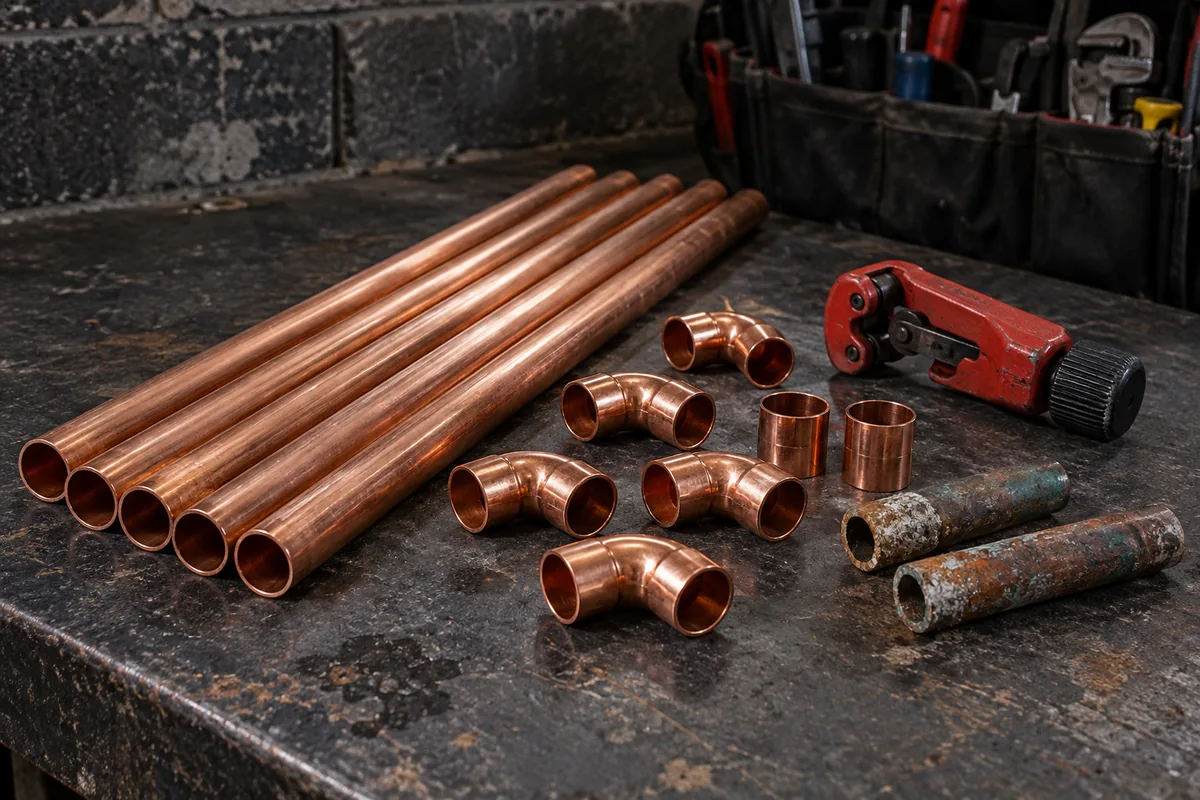
Use reliable material information for the section being repaired. A record may identify cast iron in one area, while later repairs used a different material elsewhere. Keep unknown sections separate from confirmed findings.
The repair method depends on the line, defect and access. Some projects require excavation. Ask how the proposed approach fits the findings rather than choosing by the method’s name alone.
Sewer Access, Excavation and Surface Restoration
A buried line can pass beneath different surfaces along its route. The location of a visible backup does not show every work area needed for repair. Discuss known access points and any limits on reaching the relevant spaces when reviewing the proposed scope.
Access and finish work can make two estimates quite different. One may involve different openings or cover more surface work than another. Compare those items alongside the pipe repair itself, so a total price does not hide a difference in the included tasks.
Confirm which surface restoration is included and which work is separate. Sewer pipe repair does not automatically include all nearby landscaping or finished surfaces.
Explain who can provide access and who can approve the work. Those roles may belong to different people. The person opening the work area needs to know the agreed limits. New findings may raise a question about adding another section.
Replacement Estimates and Drainage Use During Work
Sewer work can limit use of the fixtures connected to the affected line. Discuss that impact before planning around normal occupancy. The work sequence depends on the actual scope and access, so continuous drainage use should not be an assumption.
We offer a free estimate visit for planned replacement. Finding an unknown source or investigating a backup is a separate service need. Explain the active issue and any future replacement question when arranging the visit. Keep the two needs clear.
If findings change the proposed extent, review the added work before approval. A longer section may affect the method, access, estimate or schedule. Keep that decision clear. The first agreement does not cover every part of the system by default.
Keep a record of the repaired or replaced section and the piping left in service for future work.
Contact HVAC & Appliance Repair Guys to request sewer line repair or discuss planned replacement in Portland Metro. Describe any active backup and the affected fixtures when arranging the visit.
Sewer Line Repair & Replacement by City
Choose your city for local service information.
Oregon: Aloha, Aurora, Beaverton, Canby, Clackamas, Donald, Forest Grove, Gervais, Gresham, Happy Valley, Hillsboro, Hubbard, Keizer, Lake Oswego, Milwaukie, Newberg, Oregon City, Portland, Salem, Scappoose, Sherwood, Tigard, Troutdale, Tualatin, West Linn, Wilsonville, Woodburn.
Frequently Asked Questions
Does clearing a backup prove the line needs no repair?
No. Restored flow and structural condition are different findings. The relevant pipe condition still needs assessment if there is a repair concern.
Can every sewer line avoid excavation?
No approach fits every line and defect. The proposed method needs to account for the actual condition, route and access.
What makes two sewer repair estimates comparable?
Compare the included section, method, connections, access and restoration. A shared project label does not make different scopes equivalent.
Can a limited repair leave other piping in service?
Yes, when the findings support that scope. The proposal should identify the retained sections and the connection boundaries.
Request Sewer Line Repair & Replacement in Portland Metro
For sewer line repair & replacement in Portland Metro, call HVAC & Appliance Repair Guys or submit a service request through the form on this page.