
★★★★★
“This company was quick to respond to my request and Alex was very knowledgeable and professional. Took his time answering my questions. Diagnosed the problem quickly and timely. Thank you so much Alex!”

Local • Licensed • Trusted
We repair sump pumps and assess their connected drainage setup. Get help with a pump that won’t start, won’t stop, fails to move water or leaves water collecting in the sump.
HVAC & Appliance Repair Guys repairs sump pumps with starting, stopping and water-removal problems in Portland Metro, Oregon. A silent pump as water rises, a motor that runs without lowering the level and repeated short cycles are different symptoms. We assess the equipment and its connected discharge path before recommending a repair.
Tell us what you have already observed and whether the problem is active. An alarm, recent outage or change during wet weather can provide useful context. Keep clear of standing water near electrical equipment; do not enter the pit or bypass controls to demonstrate the fault.
Leave your name and number. We’ll contact you to discuss your needs and the next steps.
Or call us directly (503) 512-5900
Or call us directly (503) 512-5900
The level control tells the pump when to operate. Water then needs a clear path through the unit and along its discharge pipe. A fault in either function can affect the result. Hearing the motor does not prove that water reaches the end of that path at the rate the installation needs.
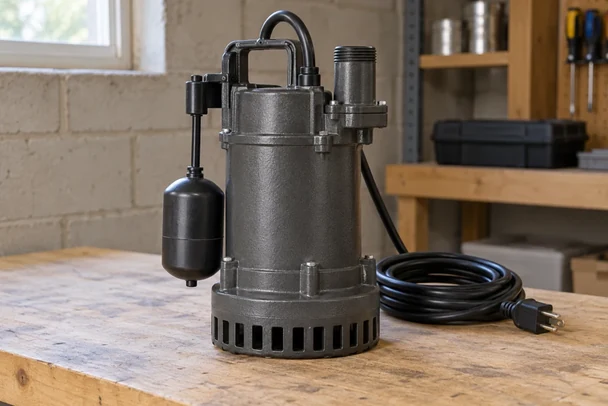
Where the design uses a float switch, its condition and freedom of movement matter to automatic starts and stops. The equipment finding must identify the fault before a switch or another part is selected for replacement.
A pump can fail to start even when the basin receives water, or start correctly while a separate discharge problem limits removal. That difference matters when comparing a proposed control repair with replacement of the pump. The assessment should connect the identified fault to the symptom, rather than treating every high-water event as proof that the motor is too small.
Unusual noises and repeated short runs can be warning signs. A unit that stays off as the water rises also needs attention.
Describe the difference from the pattern you previously knew. Include whether the water falls, stays high or rises during operation. These details help distinguish a control question from a water-removal concern.
Heavy rainfall may form part of the timing, but the weather alone does not prove a failed part. State what happened before, during and after the event if you know. There is no need to stay beside an unsafe installation to build a record. Existing observations are enough to begin discussing sump pump service.
The repair diagnostic service call is $99. We credit that amount toward the total price when you approve the repair. If you decline the repair, the diagnostic charge remains payable.
The finding may concern a control, the pump or its connected discharge path. We explain the proposed work and price before approval; the diagnostic charge is not a fixed replacement price or a complete property waterproofing service.
The pump must move water through its connected piping, not merely make a running sound. A restriction or damaged connection can affect removal. Water returning after a cycle can also cause another start. A check valve can limit return flow where the system uses one, but its role needs review within that particular arrangement.
Pipe repair addresses damaged connected piping. The proposal should name any discharge task separately from work on the unit. That distinction explains what a repair changes and what it leaves in place.
Replacing the pump does not fix a separate damaged pipe. It also does not prove that the full route works properly.
Where water returns after shutdown, the pattern can explain why the pump restarts soon after stopping. It is useful to distinguish a little expected movement in the basin from repeated return flow that keeps the equipment cycling. Describe the pattern already seen; do not disconnect discharge piping or remove a check valve to investigate it. A discharge change may also need a different routing decision from the pump repair itself.
Mention known power outages and any alarm that occurred with the problem. Identify a battery backup or other supporting equipment if the installation has it. A backup is not automatically part of every system. Its presence alone also does not prove that it can take over the current water load.
Where two pumps share an installation, explain which one ran or raised a concern. The working unit does not establish the condition of the other. Their controls and water paths need to make sense together. Do not bypass controls or alter electrical connections to test a theory before the visit.
A repair proposal should identify the faulty part or function and explain how the work addresses the reported behavior. A damaged outside connection can require a different task from a fault within the unit.
Sump pump replacement may be an option when the equipment condition calls for it. The replacement must suit the sump pit and the installation’s water-removal and discharge requirements. A similar-looking unit or a larger motor does not establish the right fit. Include any connection changes in the proposal.
When replacement is proposed, compare the complete arrangement: pump type, switch, available clearance, discharge connection and any existing backup controls. Keeping the same power rating alone does not establish equivalent performance in that installation. Ask which connected parts remain, which need changing and whether the proposed work addresses the source of the earlier cycling or removal problem. That makes repair and replacement estimates easier to compare on the same basis.
Water near a sump does not mean every wet area has the same cause. Leak detection addresses an uncertain plumbing-water source. Report a leaking supply pipe or moisture in another area as a separate observation. The assessment should not turn those facts into one assumed pump fault.
Pump work does not restore damaged finishes, dry every affected material or provide complete property waterproofing. Any wider water-entry or restoration work needs its own agreed scope.
The final review should relate to the original symptom and the work performed. Starting at the appropriate level, stopping correctly and moving water are different parts of normal operation. A brief motor sound alone does not check all three. Connections involved in the task also need their relevant checks.
Ask what the visit found, what changed and whether any concern remains. Care steps should suit the model and the installed arrangement. Keep the equipment details and work record together for later service. If the operating pattern changes again, describe that change without forcing another cycle or opening the system.
An intermittent fault may not be present throughout the visit. Earlier alarm messages and a description of the normal water level can help explain the complaint, but the service finding should still state what was actually observed. If access or operating conditions limit a check, keep that limitation with the work record instead of assuming that an unobserved condition has been eliminated.
We provide sump pump repair in the Oregon communities below. Include the property address, symptoms already observed and any access limits when requesting service.
Oregon service area
Aloha, Beaverton, Canby, Clackamas, Forest Grove, Gresham, Happy Valley, Hillsboro, Lake Oswego, Milwaukie, Newberg, Oregon City, Portland, Scappoose, Sherwood, Tigard, Troutdale, Tualatin, West Linn and Wilsonville.
Does a running motor prove the water level is under control?
No. The removal result matters as well as the sound. State whether water drops during operation or remains high.
Should I identify an alarm even if the pump still runs?
Yes. Include when it occurred and the water condition you already observed. Do not assume that continued operation makes the alarm irrelevant.
Can the same replacement unit suit every sump?
No. Equipment choice depends on the water, available space, controls and discharge needs of the installation.
Does a sump repair include all property waterproofing?
No. The agreement needs to define any wider water-entry or restoration work separately from the pump task.
What if I do not know whether there is a backup pump?
Say that the arrangement is unknown. Equipment identification can form part of the assessment; do not open a wet or unsafe area to check.
For sump pump repair in Portland Metro, Oregon, call HVAC & Appliance Repair Guys or submit a service request through the form on this page.
Customer experiences
Selected Google reviews from our customers.
“This company was quick to respond to my request and Alex was very knowledgeable and professional. Took his time answering my questions. Diagnosed the problem quickly and timely. Thank you so much Alex!”
“Ben arrived on time and went straight to work. He knew from our description of the problem what the problem was and when checking, he was right. Problem repaired and thankful that Ben was so thorough.”
“Ivan was excellent! Crew is very clear and concise with communication, described our issue in simple terms, and fixed our issue very efficiently. Would recommend to anyone looking to resolve their issues.”