


Commercial Refrigeration Repair in Tigard
HVAC & Appliance Repair Guys provides commercial refrigeration repair in Tigard, OR for poor cooling, warnings, display faults and changed operation. We test the actual equipment before recommending parts or repair. An error message guides that assessment but may identify a condition rather than a failed component.
Copy the code or wording exactly and note when it appears. Tell us whether the unit continues running, stops or changes its usual sound. Include the full model from an accessible label. We review support for that equipment rather than assume a familiar code means the same thing on every cabinet.
A display that is dark, frozen at one value or difficult to read also needs context. Describe how the rest of the unit behaves without opening a control cover. The technician needs to assess the complaint, not just replace the part that seems most visible. Staff can provide useful evidence through ordinary observations.
Display Readings and Operating Patterns
Record the selected setting and displayed reading with their times. Add any separate readings already obtained through the business’s normal checks. Different instruments may measure different points. A difference alone does not prove that a sensor or control has failed.
Explain whether the cabinet seems to run all the time, cycles differently or remains off. Include whether the problem affects all storage areas or one section. The pattern helps show how the equipment behaves around the message. It is more useful than a series of untimed readings collected after several setting changes.
Include doors that no longer close, new moisture or frost, and when those changes appeared relative to the warning.
Resets, Returning Warnings and Recent Changes
If staff have restarted the unit or changed a setting, record what they did and what happened next. Do not repeat the action just to recreate the result; the sequence already observed is useful for assessment.
Avoid repeated resets intended to clear a warning during normal business use. A message that disappears may return when the same condition occurs again. Its absence at one moment does not establish a completed repair. Tell us whether the cabinet’s behavior changed as well as whether the display cleared.
Share relevant recent work, power interruptions or moves with dates and any service record. The current condition still determines the repair.
Refrigeration Models, Freezers and Ice Machines
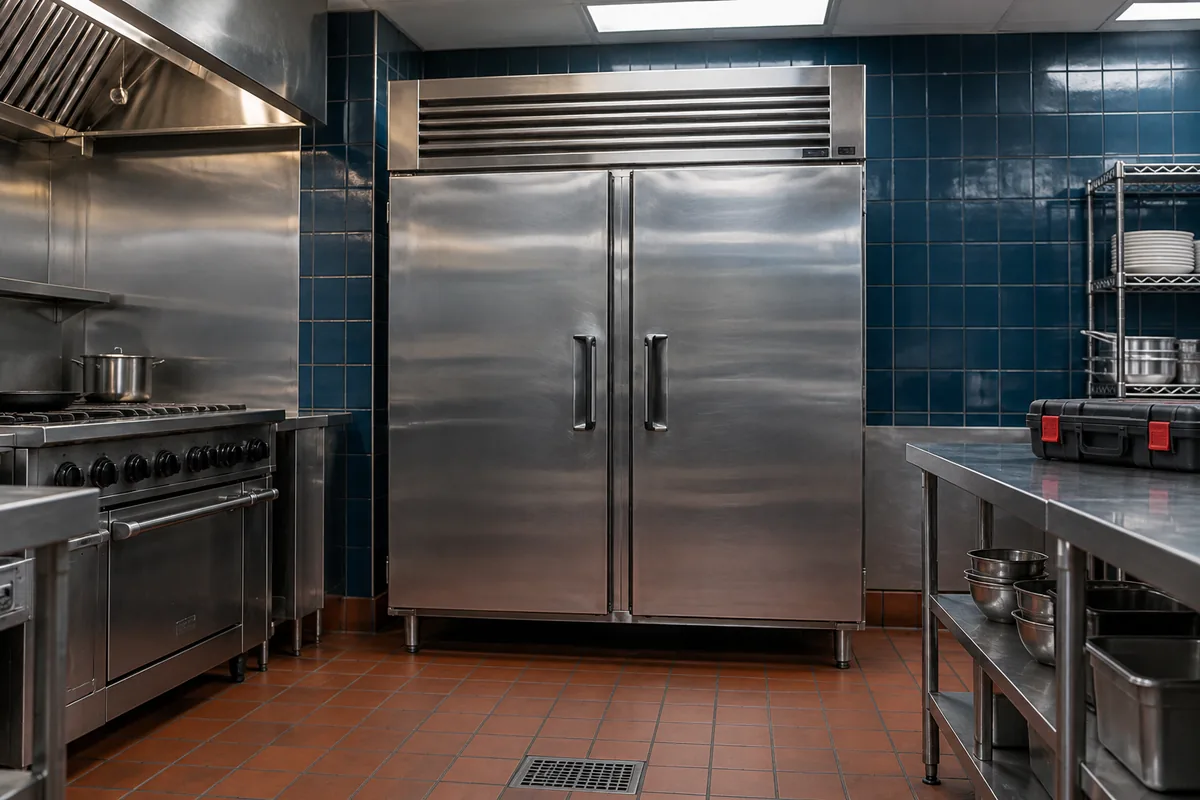
A control complaint can occur on several kinds of commercial refrigeration. Tell us whether the unit is a reach-in cabinet, prep unit or another setup. Include separate zones or sections when the equipment has them. The model determines the layout and parts context, not the general appearance of the display.
For a freezer warning, our commercial freezer repair service in Tigard fits that equipment request. Use the exact model and message for that unit. A freezer’s code should not become the explanation for a nearby refrigerator simply because the displays look similar.
If an ice-making unit is the source of the message, use our commercial ice machine service in Tigard. Its cycle and output complaint belongs in a separate record. Clear service boundaries help keep the repair recommendation matched to the actual machine.
Safe Equipment Access and Product Handling
Provide an accessible model label and a photo of the message when safe. Tell us which entrance and work area to use, and mention fixed shelving, locked spaces or restricted hours. Do not remove panels or disconnect the unit to prepare.
Give the site contact the model and fault history. Provide the repair approver and any purchase-order requirement.
Manage stored products through your business’s handling procedures while the problem remains open. A normal-looking display does not by itself establish the condition of the contents. Keep the responsible manager informed of both the equipment status and available records. The repair visit and product-use decisions serve different purposes.
Diagnosis, Repair Options and Parts
We explain the assessed fault and proposed work before an approved repair. Ask whether the finding concerns a control, another component or a condition outside the agreed equipment scope. A code can guide the assessment without proving which part to order. Model information and diagnosis need to agree.
Our commercial refrigeration repair service covers the broader equipment category. Keep the findings, required parts and any further assessment with this unit’s record so the next manager or shift can follow the agreed plan.
For a returning warning, record the time and any change in operation for follow-up.
Request commercial refrigeration repair in Tigard from HVAC & Appliance Repair Guys and share the full model, exact warning and changes in the cabinet’s operation.
Frequently Asked Questions
Should I keep lowering the temperature setting?
Repeated changes may obscure the pattern without addressing the fault. Record the current setting and any changes already made. Follow your normal storage procedures and arrange an assessment of the equipment’s actual behavior.
What if different staff report different codes?
Keep each message with its time and the machine identity. Do not combine them into one general warning. Separate records help show whether the condition changed or whether the reports concern different equipment.
Request Commercial Refrigeration Repair in Tigard, OR
For commercial refrigeration repair in Tigard, OR, call HVAC & Appliance Repair Guys or submit a service request through the form on this page.