



Refrigerator Repair in Happy Valley
HVAC & Appliance Repair Guys provides refrigerator repair in Happy Valley, OR. We assess cooling loss, leaks, frost, noise and water or ice problems. Tell us what changed first and whether this is the main food-storage appliance or a secondary unit. Same-day service is subject to availability.
See refrigerator repair in Portland Metro for the broader scope. Provide the service address, ZIP code and entry details that affect access. A safely accessible model label and a wide installation photo can help identify the unit and tight clearances.
Our Happy Valley appliance service also covers other household equipment. Give each additional machine its own model and symptoms. If the resident cannot approve work, identify the owner or manager who can.
When the Problem Started and What Changed
Start with the earliest change: ice may have slowed before shelves warmed, water may have appeared after filter work, or a new sound may have preceded a cooling change. Include whether the problem stays present or comes and goes. The sequence helps guide assessment without proving a particular cause.
Record adjustments already made, including a changed setting, new filter or items moved away from a vent, and explain what happened afterward. Avoid changing several things at once for a test; that can obscure the original pattern.
Keep the note brief: first symptom, affected area, later changes and current condition. Add existing readings or photos when available. Leave the refrigerator and protected panels in place, and do not reproduce an unsafe condition for a record.
Cooling, Water and Ice Symptoms
Fresh-food shelves warm before the freezer
Say which compartment changed first and whether the freezer still appears cold. Note frost at a vent or rear panel, door closure and any change in fan noise. Airflow, frost, seals and controls may need review, but the pattern alone does not identify a failed part.
Both sections lose cooling
Report whether the controls still respond, whether the unit seems to run and whether noise has changed. Include any recent power event or setting adjustment. The visit needs to distinguish a wider cooling concern from the individual compartment symptoms.
Water appears near a drawer, filter or floor
Identify the first visible location. Include a recent filter change and whether the appliance has a water connection. If water reaches a floor transition or cabinet edge, show that route when safe. The surrounding area matters as well as the appliance leak.
Ice production slows, stops or changes shape
Describe no fill, slow production, small or hollow cubes, clumping or water in the ice area. Include the freezer condition and dispenser behavior. Keeping those observations together helps the technician review the water and cooling systems in context. For a separate machine, see ice maker repair in Happy Valley and provide its own model.
Kitchen Clearance and Safe Refrigerator Access
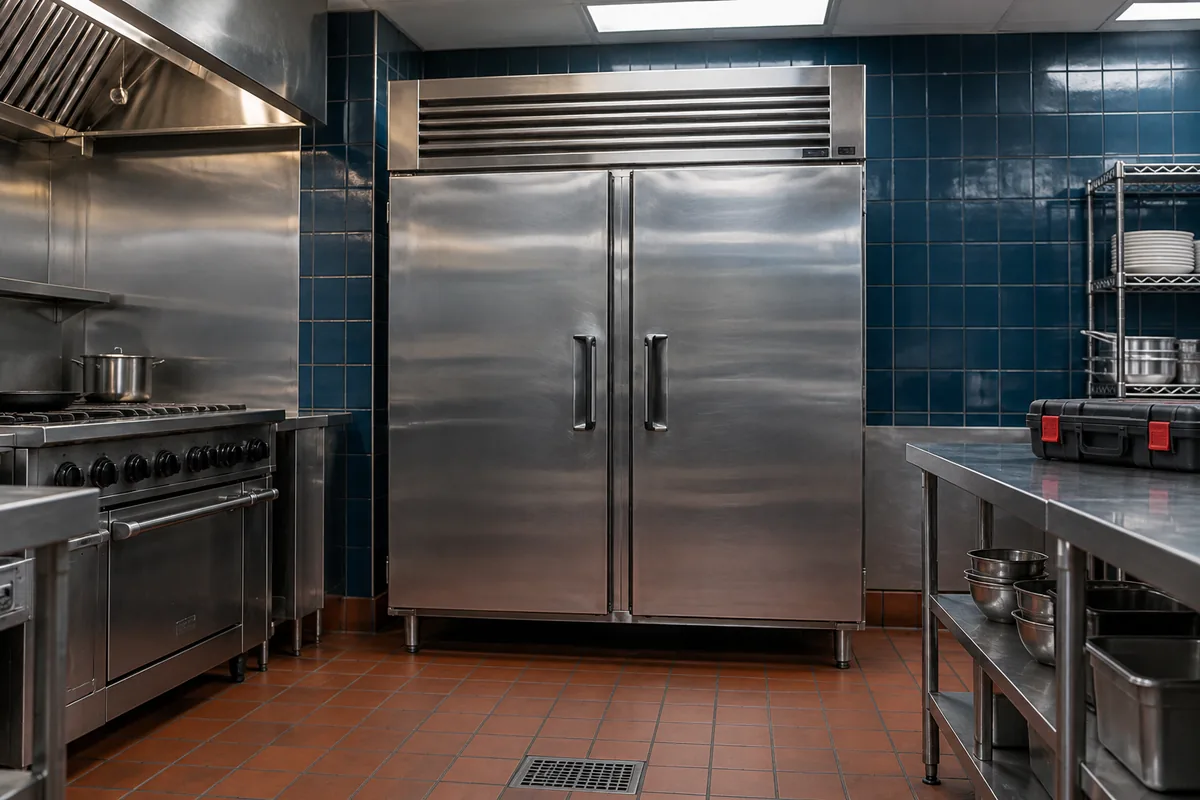
For a fitted or counter-depth unit, photograph the full opening and both sides. Show a nearby island, pantry wall, cabinet panel or other feature that limits clearance. Include the handle and hinge side so the access plan accounts for the way the doors open.
A large appliance may fit the opening but still have limited space to move forward. Describe the floor surface and any transition nearby. Mention the water line without disconnecting it. Do not pull the unit out solely to expose its rear connection or a hidden label.
Describe the actual route from parking to the kitchen, including stairs, gates or elevator instructions when present. If water reaches flooring or cabinetry, note where it travels. Use existing observations rather than running another leaking cycle.
Diagnosis, Repair Cost and Replacement Fit
We use the model and fault history to choose the checks. Temperature, airflow, frost, doors, fan response and controls may help narrow a cooling concern. Water, drainage and ice symptoms require their own assessment when present. We explain which findings support the proposed repair. For a standalone freezer rather than a refrigerator compartment, freezer repair keeps the request tied to the correct appliance and its freezing problem.
The diagnostic service call is $99. We explain the repair option, parts status and price before approved work begins. We credit the $99 toward the total when you approve the repair. If you decline, the diagnostic charge remains payable.
Ask whether the proposed repair includes a parts or labor warranty and, if so, confirm its duration and exclusions. The exact model and diagnosed fault guide parts research. Same-day scheduling does not guarantee immediate parts availability.
Compare the repair with the cabinet’s condition, previous faults, available parts and how well the refrigerator meets your needs. Those findings help determine whether repair or replacement is the more practical option.
A replacement comparison should include depth, door swing, handle clearance and the water connection. Check the nearby island and delivery route as well as the opening width. For a garage unit, explain whether it provides essential backup storage or occasional overflow. Its role can affect the spending decision.
Request refrigerator repair in Happy Valley from HVAC & Appliance Repair Guys and describe the first symptom, later cooling or water changes and the appliance’s role in your household.
Frequently Asked Questions
Is a garage refrigerator assessed differently?
The technical checks follow the model and symptoms. Its location, access and role as daily or backup storage also matter when comparing repair with replacement.
What if the refrigerator recovers and then warms again?
Record when each change occurs and what else changed around that time. Include settings, door use and temperature readings already available. An intermittent pattern is useful information even when the appliance seems normal again.
Request Refrigerator Repair in Happy Valley, OR
For refrigerator repair in Happy Valley, OR, call HVAC & Appliance Repair Guys or submit a service request through the form on this page.