



Frigidaire Dryer Repair in Portland Metro
HVAC & Appliance Repair Guys provides Frigidaire dryer repair in Portland Metro for no heat, slow drying, early stops, startup faults and new drum noises. We assess the machine and explain the findings and price before you decide.
Our dryer repair service uses the exact model and gas or electric setup. Describe the first changed result, selected cycle and last normal stage. Similar cabinets can contain different components; you do not need another test run or a guessed part name.
Heat Loss at Startup or During the Cycle
A drum may keep turning even when the load no longer warms as expected. Tell us whether the problem begins at startup or later in the run. If the first few minutes seemed normal, keep that detail. Constantly cool laundry and heat that disappears partway through the cycle call for different lines of assessment.
Record the program and temperature choice from the affected load. A setting that uses little or no heat must stay separate from a heated cycle that has changed. Controls and options vary by model, so copy the actual wording. There is no need to switch repeatedly between programs before requesting service.
Gas and electric dryers can share a no-heat symptom while needing different supply and heat-system checks. A working motor does not establish that the heating path works. Do not test an outlet, alter a breaker or disturb a gas connection to narrow the cause. Leave those checks to the service assessment.
Do not choose a heater, igniter or thermal component from the symptom alone. We explain which finding supports the proposed repair and how it addresses the reported fault before you approve the work.
Long Cycles and Damp Loads
Longer cycles need context about the load, not just a time estimate. Tell us whether you dried towels, mixed clothes or a bulky item. Identify damp areas such as thick seams or the center of bundled fabric. A whole load that stays wet differs from a few heavy areas that need further assessment.
Include the condition of the clothes when they came from the washer. A very wet starting load gives the dryer more moisture to remove. This is useful history without proving that the washer or dryer has failed. Keep each machine’s observed behavior clear if both have changed.
For a sensing cycle that ends early, note the chosen dryness level and final result. If an ordinary timed cycle behaved differently in past use, share that contrast. You do not need to perform a new comparison for us. The technician can review the existing account alongside the model and safe checks during the visit.
Clothes that finish hot but damp need a different description from clothes that remain cool. Warmth alone does not prove that moisture leaves the machine effectively. Report the result without touching internal parts or guessing a temperature. That helps the assessment separate heat production, sensing and airflow concerns.
Dryer Repair and Separate Exhaust Work
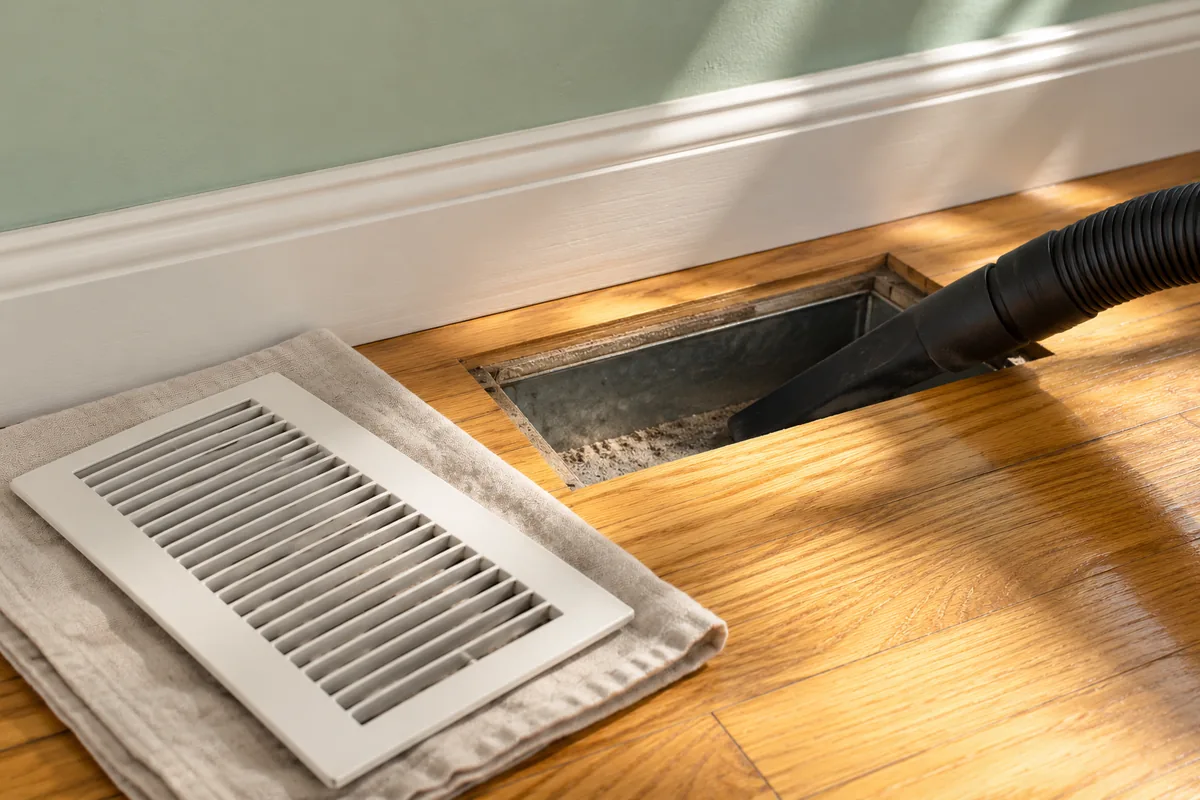
On a vented installation, the dryer and connected exhaust route work together. A clean-looking lint screen does not establish that the entire route is clear. Mention recent duct work, a change in dryer position or known damage to the connection. Leave fixed parts in place rather than pulling the appliance out to inspect them.
If the findings point to an exhaust issue, our dryer vent cleaning service covers that separate work. Ask whether the proposed work concerns the appliance, the exhaust route or both. A vent task is not an automatic solution to every no-heat complaint.
Do not climb to a high outlet or run the dryer with a disconnected duct to test airflow. Describe only what you already know from normal access. The technician can determine which accessible checks fit the installation. Any additional access requirement belongs in the scope before the job expands.
A recent improvement after vent work is useful even if the problem later returned. Record what changed and how long the difference lasted. It does not prove that the same task is the only next step. The appliance’s current behavior still needs review rather than an automatic repeat of the last service.
No-Start Faults and Mechanical Noises
When the dryer will not begin, say whether the panel lights and responds. Include a click, hum or brief drum movement before the stop. A blank control and a running motor with no drum motion are different reports. Preserve that distinction instead of labeling both as a failed start button.
For a new noise, describe its rhythm and the point where it begins. A sound that repeats with each turn differs from a steady rumble. Tell us if it occurs only with a particular load from what you have already observed. The sound can guide checks without identifying a specific support or drive part by itself.
Objects on or beside the machine can add noise, while a new internal scrape can indicate a different concern. Explain where the sound seems to come from without removing a panel. Do not reach around moving parts or bypass the door switch to listen more closely. A safe recording from an earlier event is useful only if you already have it.
Stop operation for severe metal contact, smoke, sparks, a burning smell, excess heat or repeated power trips. Do not restart the dryer after a cooling period just to finish the load. A temporary return to operation does not prove the problem has cleared. Let the assessment establish the cause and appropriate next step.
Messages and Earlier Service
Preserve the first error message or flashing pattern with the model and cycle stage. Include any reset already attempted and what changed, without repeating it to clear the history.
Share relevant invoices and the result of past work. A previous part is not automatically the correct choice again. Current findings should support the recommendation.
Use the full model and serial details from safe access or existing records. Brand relationships and similar controls do not establish parts compatibility. Do not separate a stack or move connected equipment for a label photo.
Access and the Repair Decision
Describe a pedestal, stack, closet, narrow approach or recent floor or cabinet change. Clear loose items while leaving brackets and utilities connected. We explain any additional fitting work before adding it.
Our Frigidaire appliance repair overview covers other machines. Give each its own model and symptoms; a matching laundry pair does not necessarily need joint repair or replacement.
Ask what result the work should restore and how it can be checked. We explain testing limits when an intermittent fault is absent. Compare the repair with the machine’s condition, parts support and major repair history.
A replacement also needs a suitable utility setup, opening and exhaust alignment. Include that installation work when comparing its cost with the proposed repair. Contact HVAC & Appliance Repair Guys to request Frigidaire dryer repair with the model and symptoms you have.
Frequently Asked Questions
Why does it matter whether heat fails at once or later?
The timing helps the technician choose relevant checks. A dryer that never warms and one that loses heat after a normal start may share a final damp load while having different causes. Use observations from the affected run rather than repeat it as a test.
Does a clean lint screen rule out an airflow concern?
No. The screen is only one part of a vented machine’s airflow route. The appliance, connection and building exhaust may need separate review. We explain the finding before adding exhaust work to the repair scope.
Can a previous repair invoice prove which part I need now?
It records useful history, including what improved after the earlier work. It does not confirm the cause of the current symptom. The proposed part should follow current findings for the correct model. We explain the intended result and price before approval.
Request Frigidaire Dryer Repair in Portland Metro
For Frigidaire dryer repair in Portland Metro, call HVAC & Appliance Repair Guys or submit a service request through the form on this page.