


Ruud AC Repair for Cooling and Startup Problems
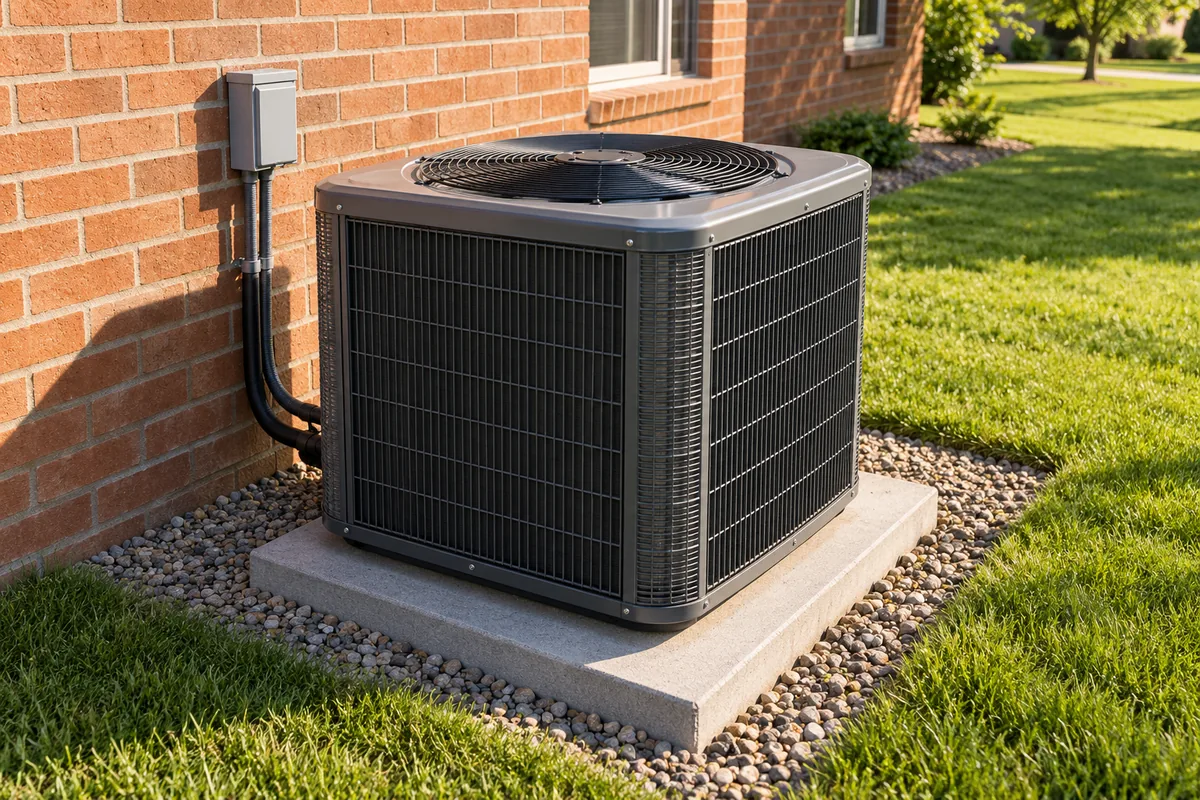
HVAC & Appliance Repair Guys provides Ruud AC repair in Portland Metro. Similar-looking outdoor units can use different controls and parts. Share the model if it is safely available, along with the change in cooling you noticed. We assess the installed air conditioner and explain the repair options.
Describe whether the system fails to start, stops too soon or keeps running without cooling the house. Our AC repair overview covers the general service. We use your observations to plan an assessment of the equipment rather than choose a part from appearance alone.
Changing Output Is Different From Losing Cooling
Selected Ruud units, including the UA18AZ, use a variable-speed compressor. Their operation can differ from that of an older single-stage air conditioner. That does not make a new comfort problem normal. The useful detail is how the system now behaves compared with its usual performance.
Tell us whether the rooms keep warming, the airflow changes or a new sound appears. Avoid forcing repeated starts to demonstrate the problem. We assess the operating pattern with the actual indoor and outdoor match. A long run alone does not identify a failed component.
A Hum, a Quiet Cabinet or a Repeated Stop
If the outdoor unit hums, explain whether the indoor fan still moves air. If it stays silent, say whether the control appears to request cooling. These are observations you can share from normal use; you do not need to reach inside the unit to check them.
A sound alone does not prove that a capacitor or motor needs replacement. Leave electrical covers and fan guards attached. If a breaker trips repeatedly, stop using the system and do not keep resetting it. If you see smoke or active sparking, move to a safe location and call 911. Do not wait for a routine repair visit.
Indoor Airflow and the First Wet Area
Tell us whether weak airflow affects several rooms or one part of the home. A sudden change differs from an area that has never cooled well. We review the indoor equipment alongside the outdoor unit so the assessment fits the whole complaint.
Visible ice or spreading water also needs attention. Turn cooling off if ice develops, and do not chip or heat it away. Stay clear of water near electrical connections and stop use if it spreads. Describe the first area affected without opening the indoor cabinet or drain parts.
Indoor and Outdoor Models
Share the complete model from any label you can reach safely. The indoor unit can help identify the installed system as much as the outdoor label. If access is tight, describe the location; do not move equipment or climb into an unsafe space just to find the number.
An outdoor unit that supplies both heating and cooling needs that function in the request. Our Ruud heat pump repair covers heat-pump concerns. Similar cabinet styling does not establish that an air conditioner and a heat pump need the same tests or parts.
Repair Scope and Future Equipment Choices
We explain what the proposed repair would address and any parts it requires. Earlier work can reveal a recurring concern, but a past invoice does not prove the cause of a new failure. The present findings remain the basis for the recommendation.
For a planned system change, our Ruud AC replacement covers that discussion. Consider the indoor match, controls and history of room comfort as well as the outdoor unit. Repairing one fault and resolving a longstanding cooling imbalance may involve different work.
Contact HVAC & Appliance Repair Guys to arrange Ruud AC repair and describe the recent change in cooling, startup or airflow.
Frequently Asked Questions
Does quieter operation always mean the system is healthy?
No. Some variable-speed equipment changes its output during normal use. A new loss of cooling still needs assessment, even if the unit makes less noise than before.
Will you assess a problem that returns after earlier work?
Describe the previous repair and whether the system worked normally afterward. We assess the current concern and explain the findings. A returning symptom does not automatically identify the last replaced part as the cause.
Request Ruud AC Repair in Portland Metro
For Ruud AC repair in Portland Metro, call HVAC & Appliance Repair Guys or submit a service request through the form on this page.