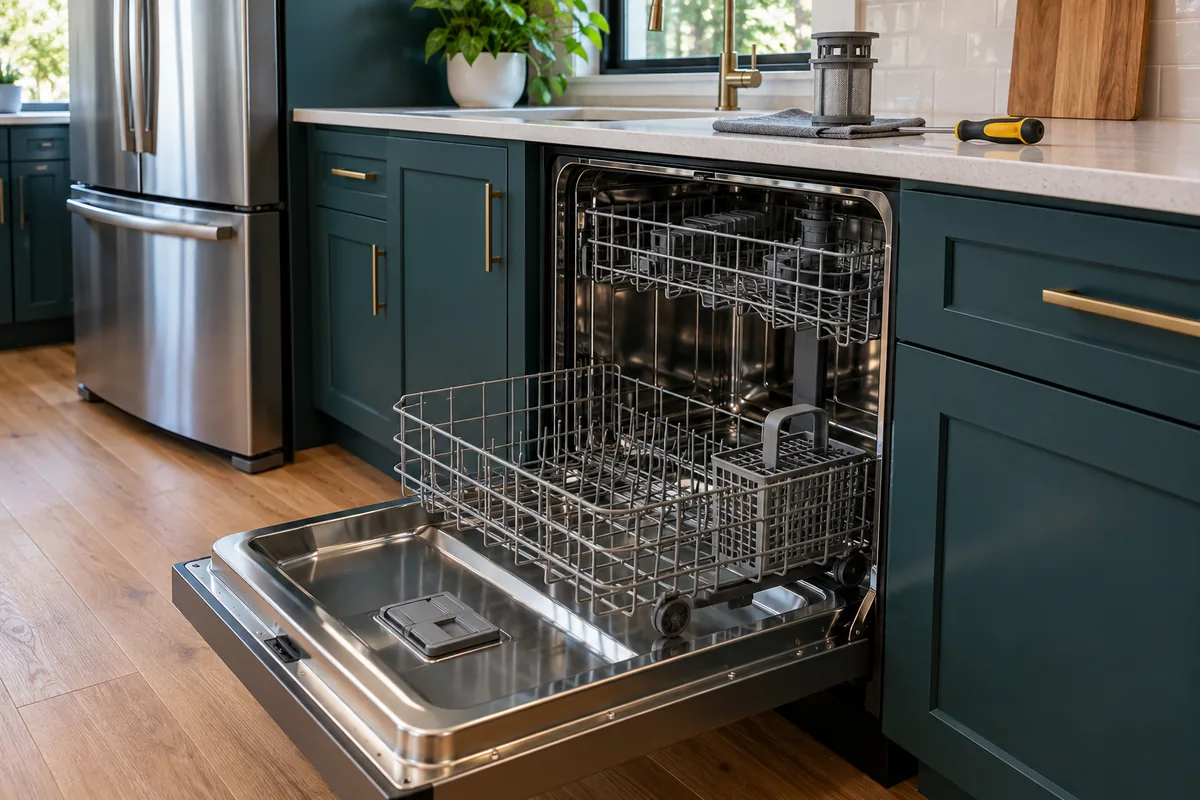



Dishwasher Repair in Vancouver, WA
HVAC & Appliance Repair Guys provides dishwasher repair in Vancouver, WA. Tell us whether the machine fails before a cycle, stops during washing or leaves a poor result after the program ends. We assess the installed model before recommending a repair.
The same final result can follow different events. Dishes may stay dirty after a completed program, or they may never receive a full wash because the machine stopped. Water may remain inside, appear outside or show up only after a later event. We assess the actual equipment and explain what the findings support.
Our dishwasher repair service covers startup, washing, draining and drying problems. Share observations from ordinary use; you do not need to run a special test cycle before requesting help.
Controls and Door Problems Before a Cycle
If the dishwasher will not start, describe the controls and door separately. A dark panel differs from responsive buttons followed by a message. Include whether the door closes normally, but do not force a latch or hold a switch in place to make the cycle begin.
Record the program and options you chose if you remember them. If someone else selected the settings, keep unknown details clear. A selected program is context for the complaint, not proof that the machine began every intended stage.
Mention a known power or water interruption if it occurred before the fault. Use a date or approximate sequence rather than assuming the event caused the change. If the start problem existed earlier, preserve that fact so the timeline does not point to the wrong event.
New Noises, Messages and Unexpected Stops
Tell us about a new sound, message or pause that differs from normal use. Describe what you actually observed instead of naming a motor or pump based on the sound. The timing and actual model help guide assessment of the complaint.
If the machine stopped, note whether the controls stayed on and whether water remained visible. Include whether anyone opened or cancelled the cycle. A user interruption and an unexpected stop can leave similar results, but their histories are different.
Keep the complete message if available. An existing photo can preserve the characters and display state, especially if the message later clears. Add when you took it so an earlier event does not appear to describe the machine’s present condition.
Do not repeat resets or procedures for another model to make the cycle run. Report the steps already tried and their results. A display responding again differs from a program beginning, and both differ from a full load finishing normally.
Standing Water and Leaks Outside the Unit
For water remaining inside, describe the visible area and cycle ending. Designs can retain water in different places. A small amount and a deep pool need their own context, not one universal diagnosis. The model and actual findings determine how the observation fits the fault.
For water outside, give the first visible location and timing. Water may collect away from its source. A wet area near the door does not prove a failed seal. Water in a cabinet does not identify which nearby connection needs work.
Include recent kitchen work or earlier appliance service when relevant. Keep the date and the resulting change clear. Timing can help with the assessment. It does not prove responsibility or include all nearby water connections in the appliance repair.
Stop using a machine that actively leaks. Keep clear of water near electrical equipment, and do not reach behind panels or into wet hidden areas. You do not need to recreate the leak for the visit; safe observations and existing photos can preserve the complaint.
Dirty or Wet Dishes After a Finished Program
Describe the dishes and the machine’s end state separately. Food residue, clean but wet items and standing water are different results. If the display showed complete, include it without assuming that every washing or drying function performed correctly.
Note whether the result affects the whole load or a particular rack or material. A few wet plastic items do not establish a failed heater by themselves. Drying methods and options vary by model, so the equipment record matters before any parts conclusion.
Use the cycle and load details from the affected run, not from a later one with different settings. If a later normal cycle already occurred, include that result too. It may help show a pattern without explaining the earlier failure or guaranteeing it has cleared.
Use the observations you already have. Do not add chemicals, raise temperatures or run repeated loads just to prepare a service history.
Equipment, Kitchen Fit and Safe Access
Provide the model from a receipt, existing photo or label within safe reach. If the label requires forcing a door or moving the machine, leave it alone. Tell us what record is missing and describe the equipment from normal access.
Mention a fitted cabinet front, restricted door movement, narrow aisle or flooring that affects access. These details can change the work plan without explaining the internal fault. A wide photo from a safe position may show the arrangement more clearly than a close view of the controls.
Leave panels, mounting hardware, hoses and installed connections intact. Pulling the dishwasher forward can disturb several systems at once. Appliance repair does not automatically include cabinet changes or every adjustment to nearby utilities, so clarify the proposed scope before additional work.
If there is smoke, a burning smell or other unsafe behavior, stop use and keep people clear. Do not run another cycle for a demonstration. A service request can use the existing history and current condition without exposing anyone to a repeated event.
Scheduling Dishwasher and Other Appliance Repairs
Our Vancouver appliance repair service covers other household equipment. Describe additional units when scheduling and confirm the scope and any separate charges.
If several people use the dishwasher, keep their accounts attached to the relevant load or date. If you did not see the fault, share a short account from the person who did rather than guessing at a failed part.
Identify who can provide entry and who can approve the work. If these are different contacts, arrange a practical way to share the findings and proposed price. The entry contact should know the correct machine and have the same fault history available.
Diagnostic Fee, Repair Findings and Completion
The diagnostic service call costs $99. We credit it toward a repair you approve; it remains payable if you decline. We explain the findings, proposed work and price before approval. The model and symptom account start the assessment but cannot establish every part need in advance.
Ask which symptoms the proposed repair addresses and what warranty applies to the job. Make sure any unresolved concern and next step are clear.
Same-day service depends on availability. Parts, access or further findings can affect completion after the visit. We explain the next step after assessment. The appointment date does not promise a finished repair that day.
Contact HVAC & Appliance Repair Guys to request dishwasher repair in Vancouver and describe the first changed behavior, model and current condition.
Frequently Asked Questions
What is the most useful detail if I am unsure which part of the cycle failed?
Start with the first change you noticed and the condition at the end. Include the display, visible water and dish results as separate observations. Mark the stage as unknown if you did not see it rather than guessing a complete sequence.
Does a clean but wet load need the same assessment as dirty dishes?
Describe the results separately, even if both occur. Drying design, selected options and the actual model matter. The technician reviews the complaint before explaining which work addresses the changed result.
Can the visit cover a nearby water problem outside the dishwasher?
Describe the water problem when scheduling. We explain the appliance findings and whether separate plumbing or access work is needed before confirming the repair scope.
What if a normal cycle follows several failed ones?
Keep that normal result in the history with its date and known settings. It helps describe the pattern but does not establish the cause of the earlier failures. Avoid extra test loads if the machine leaks or shows unsafe behavior.
Request Dishwasher Repair in Vancouver, WA
For dishwasher repair in Vancouver, WA, call HVAC & Appliance Repair Guys or submit a service request through the form on this page.