
AC Repair for Vancouver Homes and Selected Businesses
An air conditioner can lose comfort in several ways: it may stop completely, run while the rooms become warmer, move too little air, freeze, leak water, or cycle so often that the set point is never reached. In Vancouver, the equipment may serve older central neighborhoods, newer subdivisions, and homes using either straight-cooling AC or heat-pump equipment. A useful repair visit begins with the actual symptom and the way it changes during operation.
HVAC & Appliance Repair Guys provides AC repair in Vancouver, WA, and nearby Clark County communities. We diagnose central air conditioners, ducted split systems, thermostats, related controls, and cooling-side problems on many heat pump systems. We also service selected light commercial equipment when the system and scope fit our capabilities.
HVAC & Appliance Repair Guys accepts calls and online service requests 24/7. Same-day appointments are usually available, but timing depends on the current route, the service address, the equipment described, and whether a particular part is needed.
The diagnostic service call is $99. When the repair is approved, that $99 is credited toward the total repair price. When the repair is declined, the service-call charge is still due. The technician explains the finding and price before approved work begins.
AC and Heat-Pump Cooling Problems in Vancouver
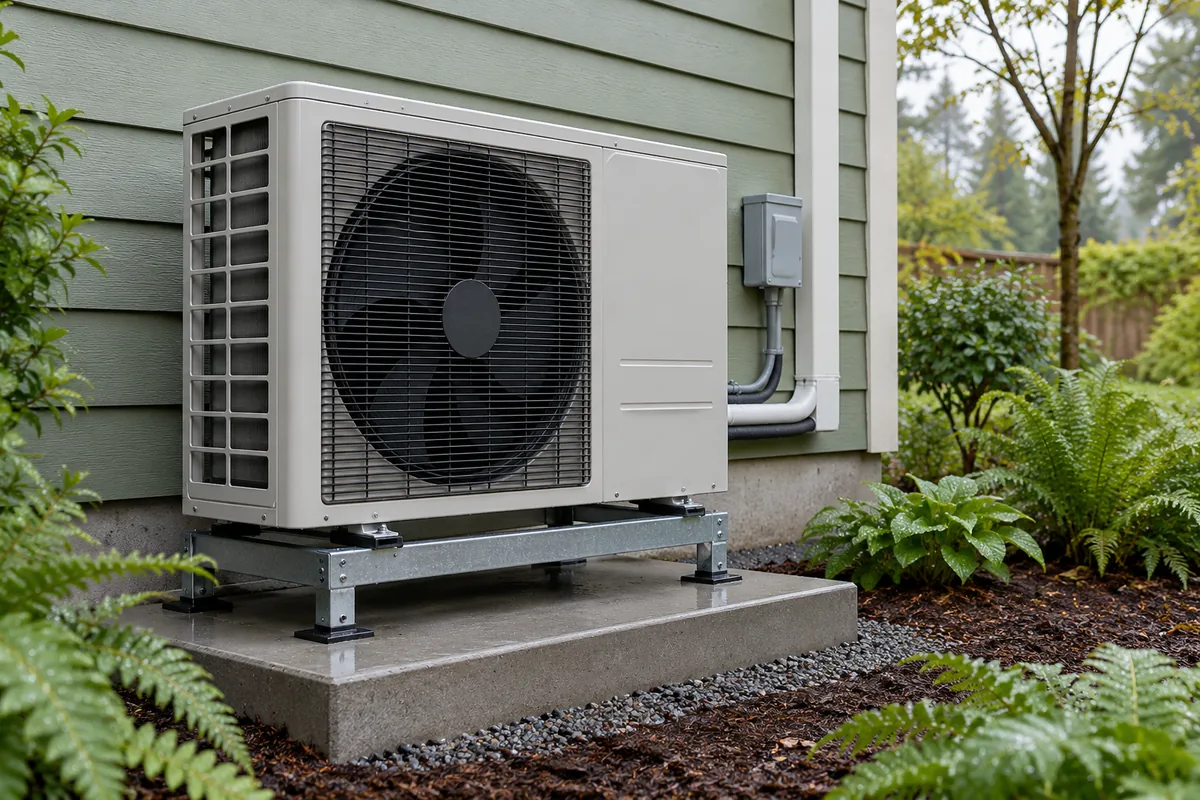
Vancouver homes may use a conventional air conditioner paired with a furnace or a heat pump that handles both heating and cooling. The distinction matters. A thermostat may show a cooling call on either system, but the outdoor components, reversing functions, defrost-related controls, and diagnostic sequence can differ.
When requesting service, it helps to know whether the equipment provides heat in winter and whether the thermostat displays heat-pump or auxiliary-heat settings. The technician still begins with the current cooling symptom: does the outdoor unit start, is the indoor blower moving air, is the air warm or simply weak, and are there signs of ice or water?
On either equipment type, common causes include thermostat and low-voltage problems, capacitor or contactor failure, fan issues, airflow restriction, frozen coil conditions, condensate drainage, and refrigerant leak symptoms. The visit should confirm the equipment configuration before parts are selected. That avoids treating a heat-pump control issue like a standard AC problem or assuming every warm-air complaint has the same source.
Cooling Symptoms and What They Can Mean
No-cooling calls often fall into recognizable patterns:
- The AC is running but not cooling: the blower may operate while the outdoor unit, refrigeration circuit, or indoor airflow cannot produce the needed temperature change.
- Warm air comes from the vents: thermostat settings, electrical startup parts, a stopped outdoor fan, a frozen coil, or refrigerant leak symptoms may be involved.
- Airflow is weak: filters, returns, blower performance, coil restriction, duct leakage, or zone controls can reduce delivery.
- The system short cycles: controls, thermostat placement, condensate safeties, electrical parts, airflow restriction, or refrigeration conditions may end a cycle early.
- Ice appears: a frozen evaporator coil is a result of a problem, not the final diagnosis.
- Water leaks near the indoor unit: condensate drainage, a thawing coil, a damaged pan, or another nearby source must be separated.
- The outdoor unit hums or remains silent: capacitor, contactor, fan motor, compressor, control-signal, or power issues are possible.
- A new noise or code appears: timing and model information help determine which components should be tested.
A short cycling heat pump or air conditioner may be interrupted by controls, safeties, airflow, electrical components, or refrigeration conditions.
What the Diagnostic Visit Examines
The technician begins with the complaint and confirms whether the thermostat is actually requesting cooling. Testing may include filter and return-air condition, blower operation, supply temperature, indoor coil condition, condensate drainage, outdoor fan operation, capacitor and contactor readings, low-voltage controls, and visible refrigerant leak symptoms. The exact test sequence depends on what the equipment is doing; not every call requires every measurement.
The equipment brand, complete model number, and any thermostat alert are useful when they can be obtained safely. Do not remove panels to find the label. A photo of visible ice, water, or the thermostat display can help preserve an intermittent symptom, but testing at the property is still required.
Safe Steps Before the Appointment
Turn cooling off if ice is visible on the indoor coil or refrigerant line. Do not scrape the coil or use a heat source. If water is spreading toward finished surfaces or electrical components, shut the system down and limit damage if it can be done safely. Smoke, sparking, a burning electrical odor, or repeated breaker trips require the equipment to remain off until it is inspected.
Confirm the Equipment Before Diagnosing Cooling Mode
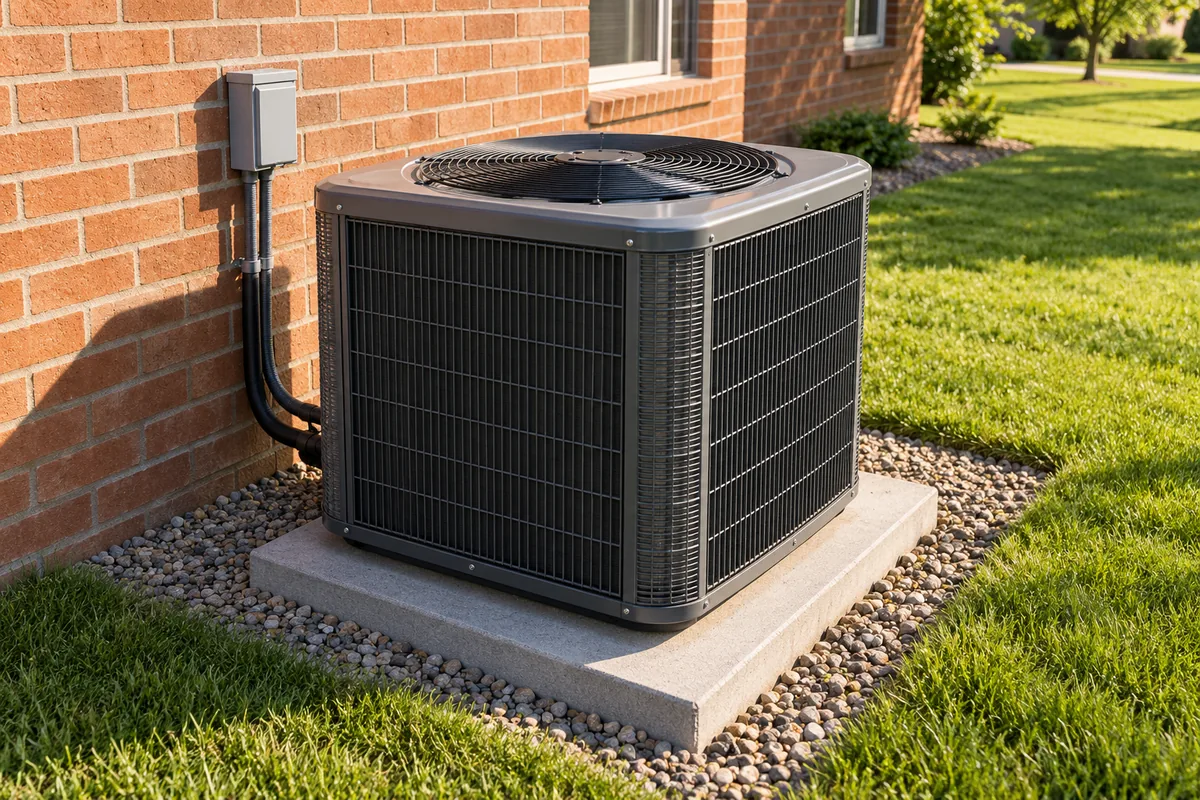
The first equipment question is whether the home uses straight-cooling AC or a heat pump operating in cooling mode. Both can respond to a thermostat cooling call, but the outdoor-unit configuration, control sequence, indoor pairing, and safety logic are not identical. The outdoor and indoor model numbers help establish the correct diagram and expected operation.
On straight-cooling equipment, the visit follows the cooling signal through the furnace or air handler and condenser. On a heat pump in cooling mode, the technician also confirms the mode command and the controls that establish cooling operation. Heating performance is outside this AC repair scope unless the same control is directly relevant to the current cooling failure.
The technician then compares thermostat output, indoor airflow and temperature change, coil condition, outdoor fan and compressor behavior, electrical controls, and any fault history. A control message can identify the system area that needs testing, but it is not treated as proof that one part failed.
Correct equipment identification prevents a normal heat-pump control state from being misread as a straight-AC fault. After measurements confirm the cause, the finding and repair price are reviewed before approved work.
Before the appointment, photograph the thermostat display and the data labels that are safely visible on the indoor and outdoor equipment. Note whether the outdoor fan runs during a cooling call and whether the vents deliver cool, room-temperature, or weak air. Do not remove panels or change installer settings. Those observations let the technician confirm the cooling-mode sequence while preserving any intermittent control message.
Systems, Controls, and Brands We Service
Our technicians work on conventional central AC systems, furnace-and-coil combinations, air-handler systems, thermostats, staged equipment, and cooling operation on many heat pumps. We support all major AC brands and many additional manufacturers. Exact serviceability depends on the model, equipment condition, installation, failure, and availability of supported parts.
For brand-specific information, see our Rheem, Trane, and Carrier repair pages. If the equipment is a ductless system or a specialized commercial unit, include that detail when requesting service so the office can confirm the appropriate scope.
Repair or Replace the Air Conditioner?
Repair is usually the practical choice when the failure is isolated, the major components remain in reasonable condition, supported parts are available, and the system cooled the home properly before the breakdown. Capacitors, contactors, thermostat problems, drain blockages, selected fan components, and certain airflow corrections can have direct repair paths.
Replacement should be compared when the compressor or coil has a major failure, leaks have returned, several expensive repairs have accumulated, the refrigerant or controls are difficult to support, or the system has never delivered adequate comfort because of sizing or installation limitations. Age matters, but it should not be the only reason for the decision.
For a planned new system rather than a repair visit, review AC installation in Vancouver. The repair page remains focused on diagnosing existing cooling equipment.
AC Repair Coverage in Vancouver, Washington
We accept service requests throughout Vancouver and nearby areas of Clark County. Coverage includes East Vancouver, Hazel Dell, Salmon Creek, Minnehaha, Cascade Park, Ellsworth. Common local ZIP codes include 98660, 98661, 98662, 98663, 98664, 98665, 98682. The ZIP code helps confirm routing and current same-day availability; it does not change the diagnostic or pricing process.
For metro-wide service information, visit the Portland Metro AC repair hub. Nearby pages include Camas, Washougal, Portland. These links help customers choose the page closest to the property without creating a different diagnosis for every neighborhood.
Why Customers Choose HVAC & Appliance Repair Guys
Customers choose HVAC & Appliance Repair Guys for clear diagnostic explanations, pricing before approved work, licensed Oregon and Washington operations, and public feedback available on Google, Yelp, and Thumbtack. We work on all major AC brands and many additional systems. Exact serviceability and first-visit completion depend on the model, condition, access, failure, and parts support. Warranty coverage is available on qualifying labor and installed parts; the applicable terms vary by repair and component.
For equipment-specific guidance, visit the Goodman AC repair page.
Vancouver AC Repair FAQ
Do you usually offer same-day AC repair in Vancouver?
Same-day appointments are usually available, but they depend on the active schedule, service address, equipment details, and any part the repair requires. Call or submit the form to confirm the earliest opening.
How does the $99 service call work?
The diagnostic service call is $99. If you approve the repair, the $99 is applied toward the total repair price. If you decline the repair, the service-call charge remains payable.
What is confirmed before diagnosing a Vancouver cooling failure?
The technician identifies straight-cooling AC versus a heat pump in cooling mode, confirms the indoor and outdoor equipment match, and then checks the thermostat call, airflow, temperature change, controls, coil, and outdoor operation.
Should I turn the system off when I see ice?
Yes. Leave cooling off when ice is visible. Do not scrape the coil or use direct heat. The equipment should be evaluated after it has thawed safely.
Do you work on all major AC brands?
We service all major AC brands and many additional systems. Exact serviceability depends on the model, installation, equipment condition, failure, and availability of supported parts.
Why does heat-pump cooling mode change the test sequence?
A heat pump uses a different outdoor-unit control sequence to establish cooling mode. Confirming the model and mode keeps those controls from being misread as a conventional AC fault and directs the technician to the correct measurements.
Is a water leak always a clogged condensate line?
No. Water can come from a blocked drain, damaged pan or fitting, a frozen coil that is thawing, or another nearby source. The source should be identified before a repair is chosen.
When should replacement be compared with repair?
Replacement deserves comparison when a major coil or compressor has failed, refrigerant problems keep returning, several costly repairs have accumulated, parts support is limited, or the system never cooled the property adequately.
Is warranty coverage included with AC repair?
Warranty coverage is available on qualifying labor and installed parts. The length and terms vary with the repair and the specific component.
Can I send a service request after normal business hours?
Yes. Calls and online requests are accepted 24/7. Appointment timing depends on current availability and the details of the service call.