


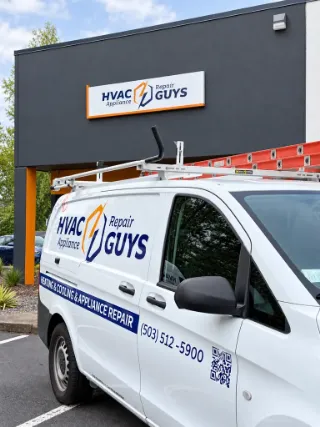

AC Repair in Beaverton, OR
HVAC & Appliance Repair Guys provides AC repair in Beaverton, OR for warm air, weak airflow, ice, water and repeated shutdowns. We diagnose the current fault and explain the proposed work. If cooling improved after refrigerant service and then faded again, that history helps guide the assessment without assuming another charge is the answer.
Our air conditioning repair service checks the equipment now in place. Tell us whether the problem affects every room, develops during a run or follows recent service. You can request diagnosis without selecting a part or repair in advance.
Describe the result that returned, such as warmer air, longer runs or rooms that no longer cool. Include any new sound, water or shutdown rather than assuming a familiar symptom has the same cause.
Cooling Loss, Airflow and Earlier Service
A fan can move air while the system fails to cool. Describe whether the air feels warm, flow has weakened or both have changed. Ice also needs attention: stop cooling operation and do not chip it away or reach into the cabinet.
If you have an earlier refrigerant invoice, share it and describe how long cooling improved. An entry for refrigerant added may not document a leak location or a completed leak repair.
Mention any later thermostat, filter or equipment change. Identify which system the earlier work concerned, especially if the property has more than one AC.
Refrigerant Recharge and Leak Repair
In air conditioners, refrigerant moves heat through a closed circuit. Normal cooling does not use it up like fuel. A finding that the charge is low needs an explanation of the system’s condition and history. Treating every loss of cooling as a routine refill can leave the underlying question unanswered.
Finding a leak, repairing it and restoring the correct charge are distinct parts of the work. Review which steps are included and which findings support them; the system and fault location affect the repair decision.
Warm air alone does not prove refrigerant loss. Airflow, controls and other equipment conditions can affect cooling, so the actual response and test findings need review before choosing a charge adjustment. If the concern centers on the wall control, thermostat repair & installation provides a focused assessment; a room-temperature difference alone does not prove that the control has failed.
Returning Cooling Symptoms
Describe whether the system now struggles from the start or cools well before fading. Note whether airflow also weakens or only its cooling effect changes. Record the mode and room reading if they are visible on the normal display. These observations provide context without asking you to open equipment.
Include what happens in the rest of the home. One uncomfortable room is a different account from a broad loss of cooling. If you have more than one system, name the affected area and unit where known. Do not assume the same cause applies to every room or piece of equipment.
Visible ice, water or repeated shutdowns deserve mention at booking. Do not run the unit just to reproduce those symptoms for a more detailed account. Leave internal checks and refrigerant work to the service visit. A useful history does not require touching lines, opening covers or trying a repair.
Repair Scope and Replacement Options
Review the diagnosed fault, repair and price before approval. If testing is the next step, discuss what it aims to establish and whether further work requires a return visit.
Where a part or return visit is necessary, clarify the next action and timing. Same-day service is subject to availability. It does not promise completion of every refrigerant-related repair on the appointment date. The model, findings and needed work determine what can proceed.
If the findings justify comparing a larger project, our AC installation service offers a separate path. The on-site estimator visit for installation or replacement is free. Repair diagnosis is a different service.
Compare the defined repair with the actual replacement proposal. The earlier refill alone should not decide which option fits.
Cooling Checks and Follow-Up After Repair
Ask what cooling operation was checked after the repair and retain any follow-up recommendation with the equipment details.
If cooling changes again, report when it returned and whether the same rooms, airflow and operating mode are affected.
Future routine care covers a separate need. Report a cooling problem that continues after repair as an unresolved fault when arranging the next visit.
Contact HVAC & Appliance Repair Guys to arrange AC repair in Beaverton and describe how cooling changed after earlier refrigerant work and what is happening now.
Frequently Asked Questions
Is an old receipt useful if it has no model number?
It can still show the date and wording of earlier work. Explain which system you believe it concerns and where that connection is uncertain. Do not treat the receipt as confirmed history for a unit until the equipment connection is clear.
Can one refrigerant-service record cover two AC systems?
Check which equipment the service record identifies. If it is unclear, ask the company that performed the work to confirm which systems were serviced. Do not assume both received the same work or had the same finding.
Does a warranty cover a return visit for the same symptom?
Do not assume coverage from the symptom alone. Keep the relevant written terms with the earlier service record and confirm how they apply to the current request. The proposed work and any charge should be clear before approval.
Should I buy refrigerant before arranging repair?
Let the equipment review establish the needed work first. A symptom does not identify the correct material, amount or repair. Buying supplies in advance does not replace diagnosis and may not match the requirements of the actual system.
Request AC Repair in Beaverton, OR
For AC repair in Beaverton, OR, call HVAC & Appliance Repair Guys or submit a service request through the form on this page.