


Dishwasher Repair in Happy Valley
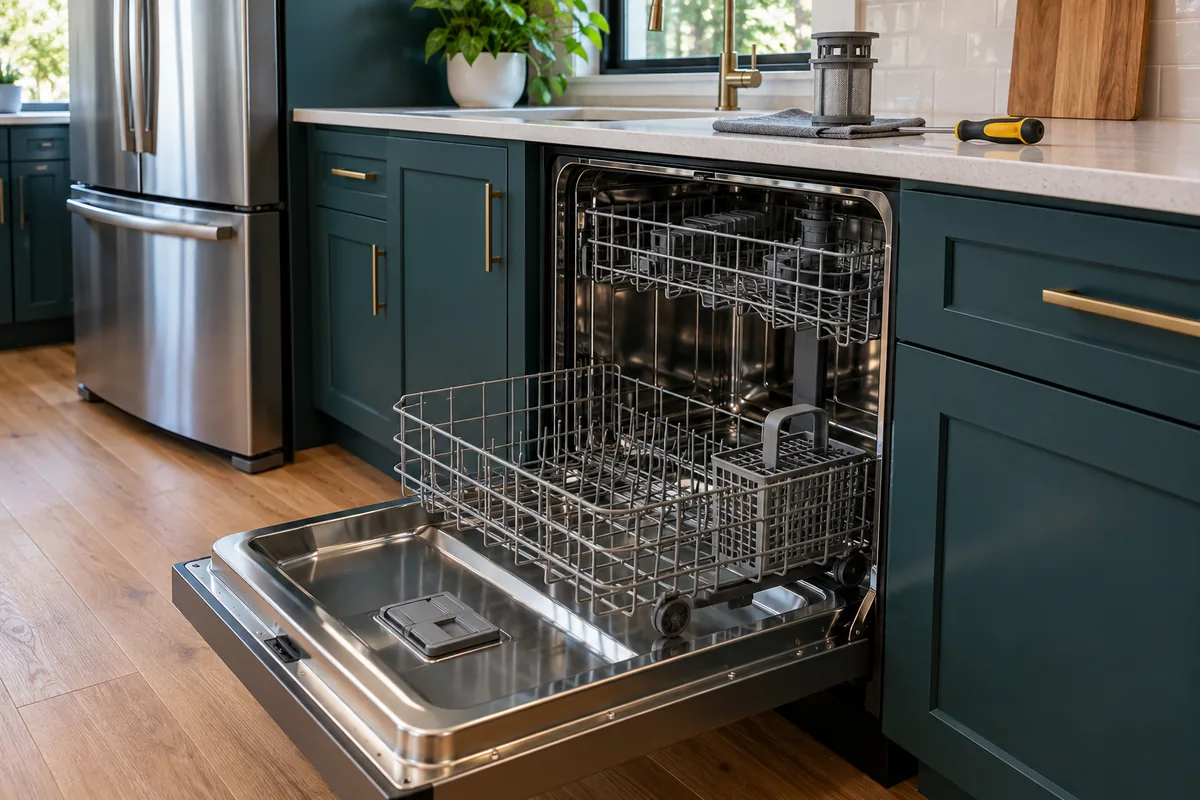
HVAC & Appliance Repair Guys provides dishwasher repair in Happy Valley, OR, for start and control faults, poor cleaning or drying, drainage problems and leaks. We assess the equipment and explain the recommended work before you decide.
When cleaning changes, describe whether food or residue remains on one rack or across the whole load, and whether the cycle completed. Use observations from normal use; a rack-specific complaint guides checks but does not identify a failed spray or wash part.
Poor Cleaning, Wet Dishes and Drainage Problems
A clean but wet dish is not the same complaint as food left behind. Describe both if they occur together. Also mention water left inside or a message at the end. Keep those facts separate from a guessed diagnosis.
State the program and options you selected if you remember them. If someone else started the machine, keep unknown details clear. The chosen cycle does not prove that every stage finished. State whether the display showed complete or the machine stopped without warning.
Our dishwasher repair service covers washing, draining, drying and control problems. We review the actual model and symptoms before recommending work.
Changes in Loading, Settings or Recent Repairs
Mention a change in load, settings or product use if you know about it. Give the order of events without assuming the latest change caused the fault. If the same problem existed earlier, retain that detail too.
If you already tried another normal load, describe its result. A better cycle can still be part of an intermittent pattern. Do not keep running programs or adding products to gather more examples; notes from the events you have already observed are enough.
Keep recent repair records where available. The earlier work may clarify the history, but it does not establish which part needs attention now. Explain whether performance improved afterward and whether the present concern differs from the earlier one.
Safe Access, Diagnostic Fee and Repair Timing
Use a model record or a label within safe reach. Tell us about a custom front, tight cabinet space or any limit on opening the door normally. Leave fitted equipment in place, and do not remove panels or reach into hidden areas to inspect wash parts.
If the complaint includes an active leak, smoke, a burning smell or water near electrical equipment, stop use and keep clear. There is no need to demonstrate the fault again. Describe the current condition when arranging service.
Our diagnostic service call costs $99. We credit it toward an approved repair; it remains payable if you decline.
We explain the findings and proposed price before work. Ask what the repair addresses, which warranty applies and whether parts affect completion. Same-day service depends on availability.
Our Happy Valley appliance repair service covers other household equipment. If another machine needs attention, provide its model and symptoms when scheduling and confirm any separate charges.
Contact HVAC & Appliance Repair Guys to request dishwasher repair in Happy Valley and share the model and cycle problem.
Frequently Asked Questions
Does one dirty rack prove a spray part has failed?
No. It describes where you noticed the result, not the final diagnosis. Include the model, program and whether the cycle finished so the technician can assess the actual complaint.
Should I describe wet dishes as a cleaning failure?
Keep the two results separate. State whether the dishes look clean but remain wet, or whether food or residue remains as well. Those details help define which concern you want assessed.
What if the next load comes out normally?
Include the normal result with the earlier poor one. A dated comparison helps preserve the pattern without proving that the fault has cleared. Avoid extra test loads when the machine shows a leak or another unsafe condition.
Request Dishwasher Repair in Happy Valley, OR
For dishwasher repair in Happy Valley, OR, call HVAC & Appliance Repair Guys or submit a service request through the form on this page.