

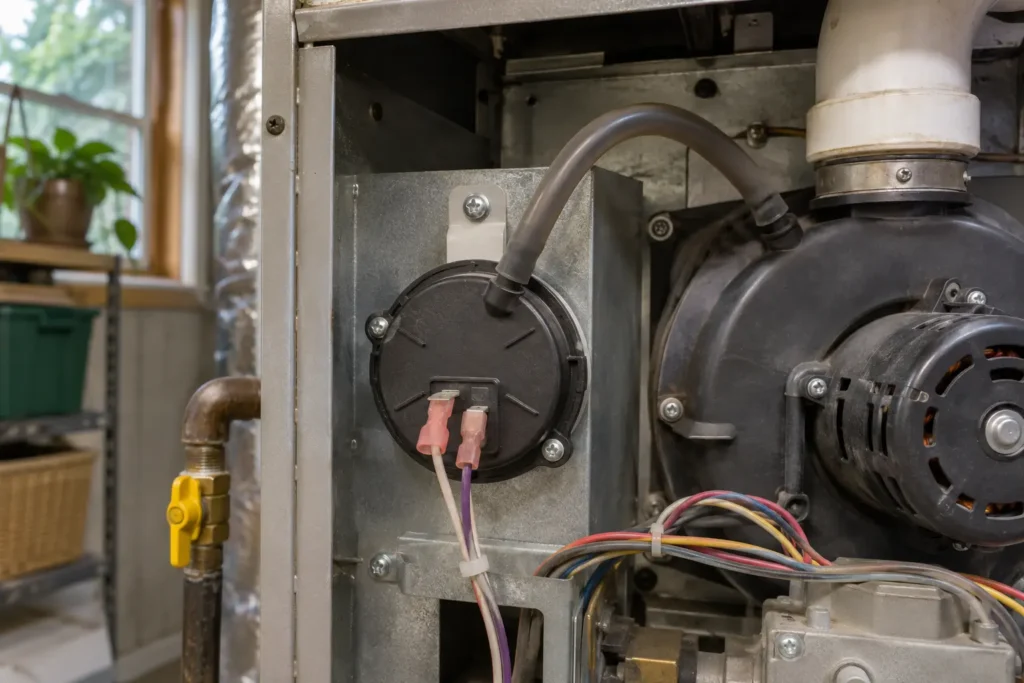

When it comes to keeping your home cozy during a chilly Lake Oswego winter, your furnace does a lot of heavy lifting. But have you ever thought about the little parts that work behind the scenes to make it all happen? One of these unsung heroes is the furnace pressure switch. At HVAC & Appliance Repair Guys, we’re here to break it down for you and explain why this small but mighty component is essential to your home’s safety and comfort.
What is a Furnace Pressure Switch?
A furnace pressure switch checks whether the draft system produces the pressure required for the heating sequence. If the required condition is not met, the furnace control prevents or stops burner operation. The switch does not detect a natural-gas leak or measure carbon monoxide in the home.
The Importance of Furnace Pressure Switches
A blocked vent or draft problem can cause the pressure switch to interrupt heating, which is a reason for professional diagnosis. This protection does not replace carbon monoxide alarms or routine maintenance. If you smell gas, leave the building and contact the gas utility from a safe location. If a carbon monoxide alarm sounds, get outside and call emergency services.
How Does a Furnace Pressure Switch Work?
Before your furnace even thinks about firing up, the inducer motor kicks in. This motor creates negative pressure, pulling harmful gases out through the flue and ensuring proper ventilation. The furnace pressure switch monitors this process:
- Pressure Detection: Responds to the pressure difference produced by the draft system.
- Circuit Control: If the pressure is just right, the switch closes an electrical circuit, allowing the furnace to ignite.
- Safety Stop: If pressure isn’t safe—due to a blocked vent, broken motor, or malfunctioning switch—the furnace won’t operate.
It’s all about keeping your home safe and your furnace running as it should.
Common Issues with Furnace Pressure Switches
Even the best parts can run into trouble. Here are a few common issues:
- Stuck Open: The switch doesn’t close, preventing the furnace from starting. Often caused by vent blockages or inducer motor problems.
- Stuck Closed: The switch fails to open, leading to potential unsafe conditions.
- Intermittent Operation: Pressure fluctuations or a faulty switch can make your furnace start and stop unpredictably.
- Failure to Close: If airflow is inadequate or the switch is damaged, it won’t allow the furnace to ignite.
Why Professional Maintenance is Essential
A pressure-switch fault needs diagnosis before a part is replaced. HVAC technicians evaluate the switch and the furnace system to identify the cause. Follow the furnace manufacturer’s maintenance schedule; maintenance does not guarantee safe operation or prevent every future failure.
Here’s why calling in the pros is worth it:
- They use specialized tools to test the switch’s functionality.
- Technicians check for physical damage like cracks or wear.
- They assess system pressure and airflow to ensure everything’s aligned with manufacturer standards.
- Preventive care can identify developing problems, but it cannot guarantee that future failures will be avoided.
Trust the Experts for Reliable Furnace Performance
The furnace pressure switch may be small, but it plays a massive role in keeping your home safe, warm, and efficient. By understanding its function and addressing issues early, you can avoid costly breakdowns and enjoy a comfortable home all winter long.
When it comes to repairs, replacements, or maintenance, don’t take chances. Reach out to HVAC & Appliance Repair Guys in Lake Oswego, OR, and let us ensure your furnace is ready to handle anything this winter throws at it!
Service context for Portland Metro homeowners
When reading about understanding furnace pressure switches, the most useful takeaway is what to observe next and when to stop guessing. Heating, cooling and appliance symptoms can share surface-level signs while having different causes, so the safest next step is usually to collect details before a professional diagnosis.
Details that make the article more useful during a service call
- When the symptom started and whether it is getting worse.
- Equipment or appliance age, brand and model information when available.
- Whether the problem happens constantly, during startup, during long cycles or only under heavy use.
- Any sounds, smells, leaks, frost, error codes, short cycling or comfort changes noticed at the home.
- Recent maintenance, filter changes, power interruptions, repairs or installation work.
- Whether the issue affects heat, cooling, refrigeration, cooking, cleaning or laundry right now.
For Portland Metro homeowners, service guidance is most helpful when it supports a practical decision rather than a risky workaround. If the issue involves electrical components, gas equipment, refrigerant, active leaks, food storage temperatures or repeated system failures, scheduling a diagnostic visit is usually the better path.
The service request should include the main symptom, address, equipment type and best callback number. If the problem is urgent, calling (503) 512-5900 first is the fastest way to check current availability and decide whether the next step should be repair, maintenance or replacement planning.
When to request service
This article can help you understand the issue, but a real diagnosis depends on what the equipment is doing in the home. If the problem affects comfort, safety, food storage, cooking or laundry, it is worth sending the details to the service team.
- Note the equipment type, brand and approximate age when available.
- Describe the symptom, when it started and whether it happens constantly or only sometimes.
- Save photos, error codes or sounds that may help explain the issue.
- Call first when the problem is urgent or affects daily use right now.
For routine timing, send the request form and the team will follow up with the next available Portland Metro scheduling option.