

Here’s What You Need to Know
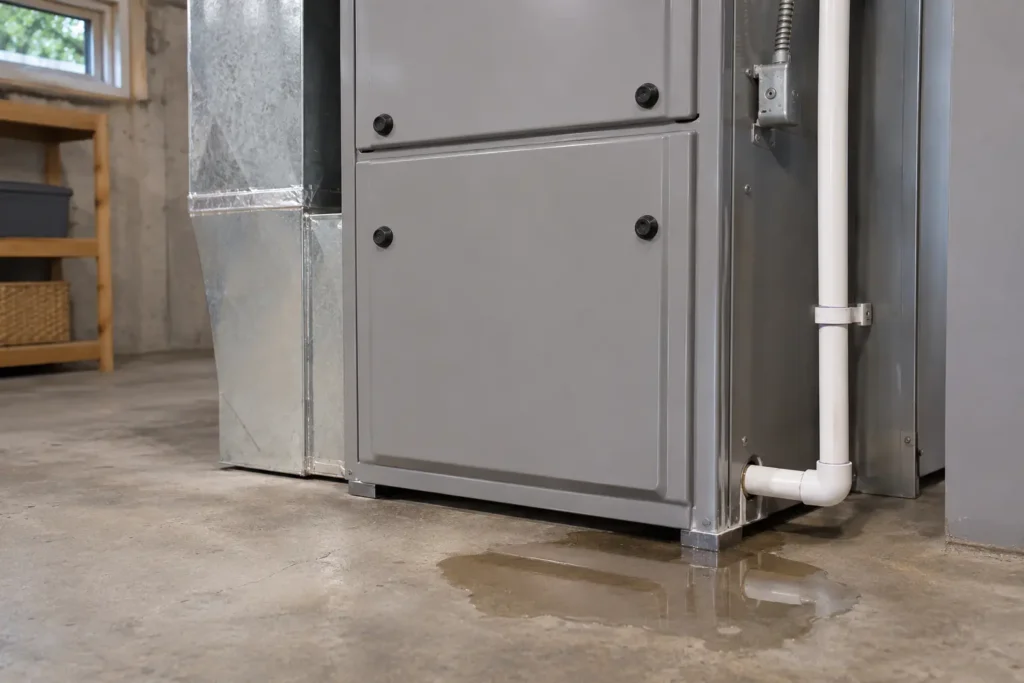
Water around a furnace needs prompt attention. The source may be a condensate drain, connected cooling equipment or another nearby component. HVAC & Appliance Repair Guys can help identify the cause. This guide explains what to observe and when to stop using the system.

Understanding Furnace Water Leaks
So, why is your furnace leaking water in the first place? If you have a high-efficiency furnace, condensation is likely to blame. These systems produce condensation as they heat air efficiently, but that moisture needs to go somewhere. When that drainage system gets disrupted, the water ends up leaking out around the furnace. While this is most common in high-efficiency models, it can happen in other systems too.
Common Causes of Furnace Leaks
The good news is that most furnace water leaks are caused by a few common issues. Here are the top culprits:
- Clogged Condensate Drain Line: Dirt, dust, and debris can clog the line, causing water backup and leaks around the furnace.
- Cracks in the Condensate Pan: Over time, the pan that collects condensation can crack or corrode, letting water leak out.
- Frozen Condensate Line: In cold temperatures, your condensate line might freeze, blocking the water flow and causing leaks.
- Whole-Home Dehumidifier Damage: If your dehumidifier is malfunctioning, it can cause water to pool near the furnace.
- Poorly Fitted Exhaust Pipe: In some cases, condensation can form inside a misfitted exhaust pipe and leak out around the furnace.
- Air Conditioner Leaks: If you’ve been using your air conditioner recently, water from the AC could spill into the furnace area.
How to Troubleshoot a Furnace Leak
Before calling in the pros, there are a few simple things you can check to get an idea of what’s going on. But remember, it’s always best to call in the pros to handle repairs, especially if you’re unsure or uncomfortable with any of these steps.
- Turn off the furnace: Stop using the furnace. Turn it off only from a dry, safely accessible control; do not touch wet electrical equipment.
- Observe the condensate drain line: Note visible water backup or ice without disconnecting tubing. Have a technician check the drain and trap.
- Report visible water or damage without opening furnace or coil panels. A technician can identify whether the source is the furnace condensate system, an air-conditioning drain pan or nearby equipment.
- Report a frozen condensate line: Keep the furnace off and arrange service. Do not use a hairdryer, electric blanket or other electrical heater around the leak.
When to Call a Professional
Some furnace issues, like cracks in the condensate pan or problems with the exhaust pipe, really need a professional touch. If you’ve tried troubleshooting and the leak’s still there, or if you’re not sure how to tackle the repair yourself, don’t hesitate to call HVAC & Appliance Repair Guys. A technician can diagnose the source and explain the repair options to help limit further damage. We’re here to help!
The Dangers of Ignoring Furnace Water Leaks
While a small leak might seem like no big deal, ignoring it can lead to serious damage. Water leaking into your furnace can rust metal components, damage the heat exchanger, and even create mold or mildew around your home. Worse, if the water reaches electrical parts, it can cause a full system breakdown or even pose a safety risk. Regular maintenance and prompt repairs are essential to keep your furnace running smoothly and safely.
Preventative Measures for Furnace Leaks
To prevent furnace leaks from happening in the first place, regular maintenance is key. Here’s what you can do to keep your furnace in top shape:
- Include the condensate drain and trap in professional maintenance.
- Have your furnace checked by a professional once a year to catch issues early.
- Have a technician check the vent installation against the furnace manufacturer’s requirements.
- Report visible pan damage so a technician can identify the correct repair.
No Need to Stress – We’ve Got Your Furnace Covered!
A leaking furnace doesn’t have to be a major issue. Catching the problem early can save you from bigger headaches down the road. If you’re unsure or the leak persists, call HVAC & Appliance Repair Guys in Lake Oswego. We’re here to handle all your furnace repair and maintenance needs!
For cooling problems and maintenance options, see our AC repair and maintenance services.
Service context for Portland Metro homeowners
When reading about why is my furnace leaking water?, the most useful takeaway is what to observe next and when to stop guessing. Heating, cooling and appliance symptoms can share surface-level signs while having different causes, so the safest next step is usually to collect details before a professional diagnosis.
Details that make the article more useful during a service call
- When the symptom started and whether it is getting worse.
- Equipment or appliance age, brand and model information when available.
- Whether the problem happens constantly, during startup, during long cycles or only under heavy use.
- Any sounds, smells, leaks, frost, error codes, short cycling or comfort changes noticed at the home.
- Recent maintenance, filter changes, power interruptions, repairs or installation work.
- Whether the issue affects heat, cooling, refrigeration, cooking, cleaning or laundry right now.
For Portland Metro homeowners, service guidance is most helpful when it supports a practical decision rather than a risky workaround. If the issue involves electrical components, gas equipment, refrigerant, active leaks, food storage temperatures or repeated system failures, scheduling a diagnostic visit is usually the better path.
The service request should include the main symptom, address, equipment type and best callback number. If the problem is urgent, calling (503) 512-5900 first is the fastest way to check current availability and decide whether the next step should be repair, maintenance or replacement planning.