



Circuit Breaker Repair and Trip Diagnosis
HVAC & Appliance Repair Guys provides circuit breaker repair in Portland Metro. A breaker that trips may be responding to a problem elsewhere on the circuit. Tell us what lost power and what was running at the time. We assess the circuit and equipment before proposing a breaker replacement.
Keep a repeatedly tripping breaker off. Do not hold its handle in place or reset it again and again to continue using the circuit. The cause of the power loss needs assessment. The repair should address that cause rather than bypass protection while leaving the fault unresolved.
Power-Loss Patterns That Help Diagnosis
Note whether the trip happened as equipment started or later during use. Identify the affected rooms, outlets or fixed equipment. Include a recent appliance change or electrical work if it relates to the timing. These observations help frame the assessment without asking you to test the circuit yourself.
If the handle looks on but equipment has no power, describe both facts. The visible handle position does not establish the state of the full circuit. Do not remove a panel cover to trace the fault. The technician reviews accessible electrical conditions as part of the agreed diagnosis.
Breaker, Panel or Wiring Repair
A confirmed breaker fault may call for a compatible replacement. The actual panel, circuit and connected load matter to that choice. Do not buy a larger breaker simply to stop trips. A different rating is not a substitute for assessing why the existing protection opened the circuit.
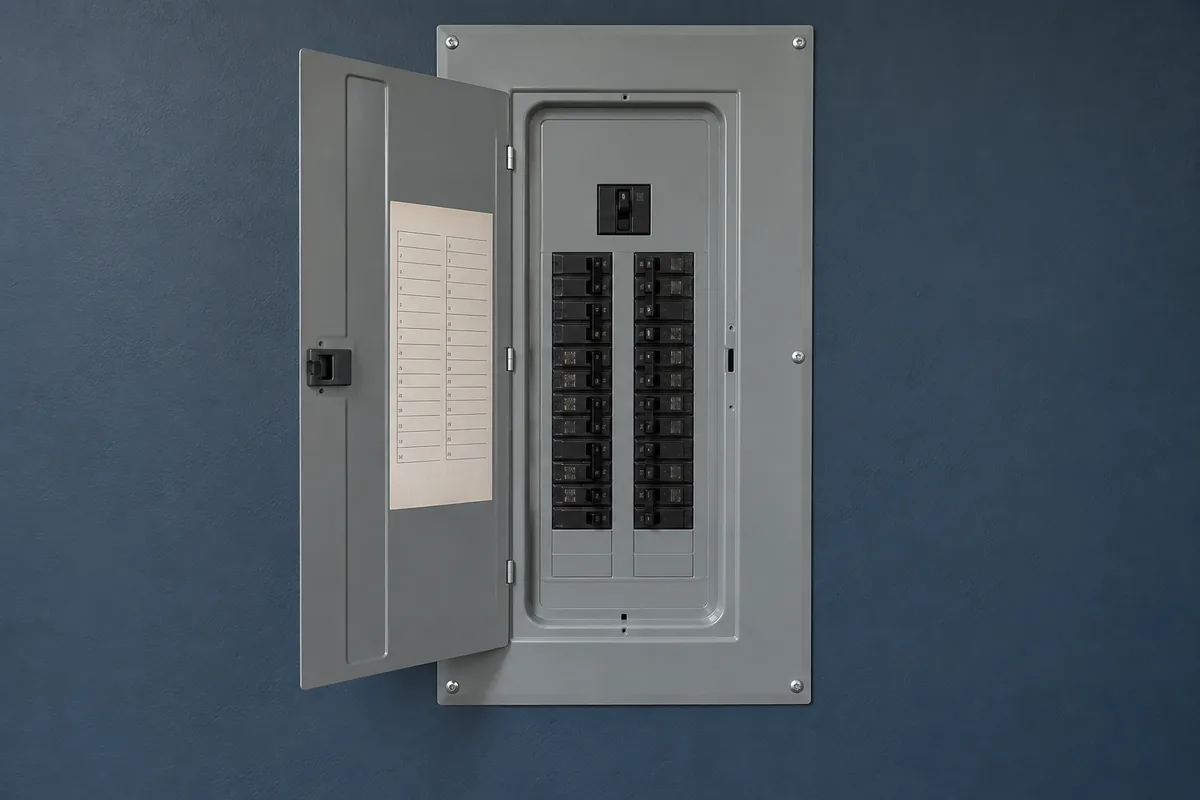
Damage at the panel may require a different task. Our electrical panel repair service covers assessment of broader panel concerns. Explain any visible damage, sound or odor from a safe distance. Do not touch hot parts or open the enclosure to provide more detail.
The fault may also involve a connection or the branch wiring. Our electrical wiring repair service addresses that work. The finding determines which repair makes sense. One tripped breaker should not become an automatic recommendation to replace every part of the electrical system.
Repair Price and Further Diagnosis
We explain the assessed cause and proposed work before approval. Confirm which circuit and symptom the task covers, the repair price and any condition that needs further assessment.
If the concern is intermittent or involves concealed wiring, assessment may need more than one stage. We explain what the current visit covers and discuss additional work and access before you decide whether to proceed.
Safe Access for the Repair Visit
Identify the panel location and any locked area the technician needs to reach. Keep the affected equipment list available for the visit. Do not touch exposed parts, move wiring or bypass a protective device. Safe observations are enough to explain why you requested service.
Keep the completed-work details and any operating limits. If a later trip occurs, report its timing and connected equipment; it may have a different cause.
Request circuit breaker repair from HVAC & Appliance Repair Guys and describe the power loss and any repeated trips.
Circuit Breaker Repair & Replacement by City and Brand
Choose your city or equipment brand for the relevant service information.
Oregon: Aloha, Beaverton, Canby, Clackamas, Forest Grove, Gresham, Happy Valley, Hillsboro, Keizer, Lake Oswego, Milwaukie, Newberg, Oregon City, Portland, Salem, Sherwood, Tigard, Troutdale, Tualatin, West Linn, Wilsonville, Woodburn, Aurora, Donald, Gervais, Hubbard, Scappoose.
Frequently Asked Questions
Does a trip always mean the breaker itself failed?
No. A circuit or connected device may cause the trip. We review the pattern and electrical conditions before choosing the repair. Replacing a breaker without that assessment can leave the actual concern unresolved.
Can the visit include work on a damaged outlet?
Mention the outlet and its symptoms before booking. We review whether it belongs to the same concern and what work the scope includes. Do not assume a breaker repair quote covers every device on the circuit.
Can a larger breaker stop repeated trips?
Do not increase the rating simply to stop trips. The panel, wiring and connected load must be assessed, and any replacement must suit the actual circuit. Keep a repeatedly tripping breaker off and arrange diagnosis.
Request Circuit Breaker Repair in Portland Metro
For circuit breaker repair in Portland Metro, call HVAC & Appliance Repair Guys or submit a service request through the form on this page.