

Commercial Dishwasher Repair in Beaverton, OR for businesses that cannot afford avoidable downtime
When commercial dishwashers and warewashing equipment fails in Beaverton, the problem is rarely just an inconvenience. It can slow tickets, put inventory at risk, delay close, interrupt prep or force staff to work around equipment that should be dependable. Our commercial dishwasher repair service is built for restaurants, cafes, markets, office kitchens, franchise locations, bakeries and food-service spaces around Beaverton.
The goal is a practical diagnostic visit, not a generic parts swap. We look at how the unit behaves under real business use, what changed before the failure, and whether the issue points to controls, airflow, heat, water, electrical components, doors, drains or mechanical wear. For Beaverton locations, details such as mall access, shared loading zones, after-lunch windows and property management rules can affect appointment timing are useful when scheduling.
We commonly help businesses around Central Beaverton, Cedar Hills, Progress Ridge, Murrayhill, Bethany and Five Oaks. If the equipment is still running, we document the symptom pattern. If it is down, warming up, leaking or stopping production, we focus first on the failure that is creating the largest business risk.
Equipment covered by this service
Commercial Dishwasher Repair is not a one-symptom service. Commercial kitchens and food-service operations usually depend on several connected systems, and a failure in one unit can affect prep, service, storage or close. The diagnostic visit is matched to the equipment type and the way the failure shows up onsite in Beaverton.
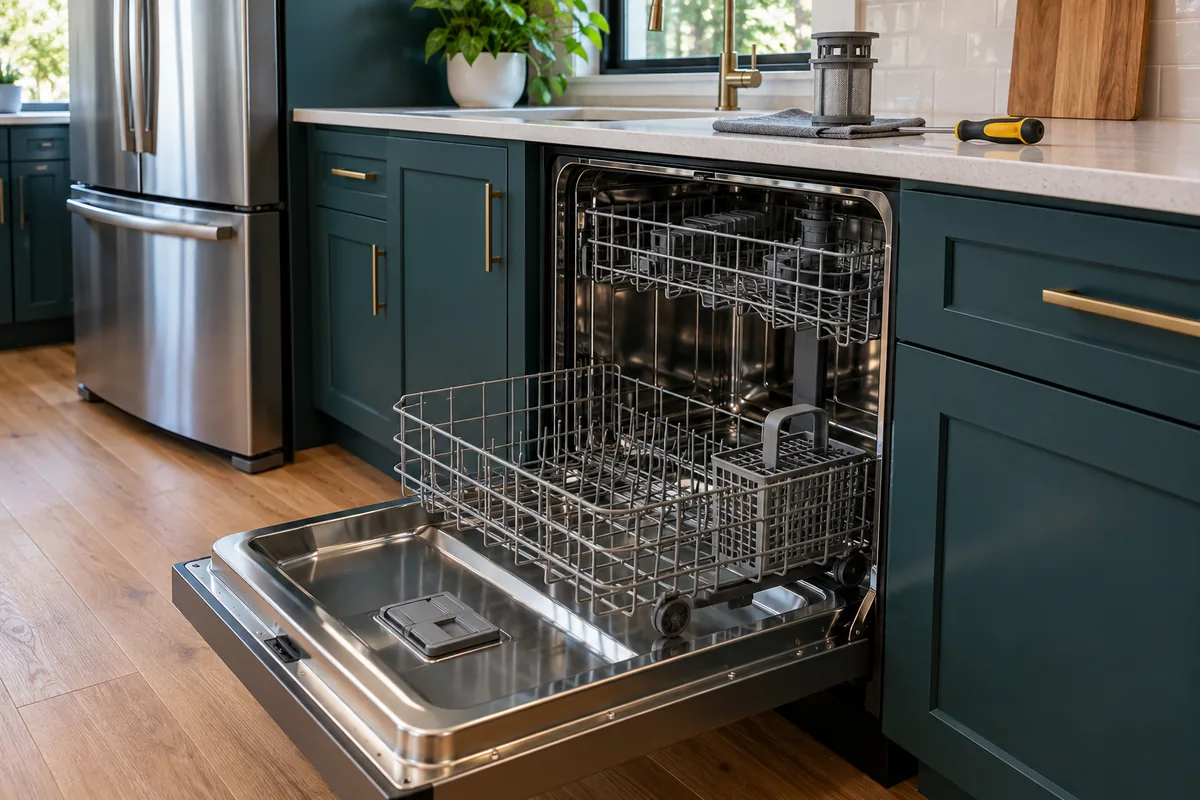
- undercounter commercial dishwashers
- door-type dish machines and pass-through units
- conveyor dishwashers and high-volume warewashers
- glass washers, sanitizer systems and rinse components
- booster heaters, pumps, fill valves, drain valves and controls
- spray arms, curtains, racks, switches, sensors and door hardware
Common problems we troubleshoot
Many businesses call after a reset no longer works, a unit starts failing during peak demand, or staff begin working around the same problem every day. These symptoms are useful because they point the diagnostic process toward the right component group instead of guessing.
- dishwasher will not fill, wash, rinse, heat or drain correctly
- cycles stop early, run too long or fail intermittently
- wash quality is poor even after basic cleaning
- leaks, steam, odors or standing water interrupt close
- booster heater, pump, valve or control issues keep returning
- door switches, curtains, racks or spray arms are affecting operation
Brands and equipment lines we commonly see
Commercial kitchens use a mix of national equipment lines, older units, replacement cabinets and specialty machines. We commonly encounter brands such as Hobart, Jackson, CMA, Champion, Moyer Diebel, Meiko, Jet-Tech, Fagor, Insinger, ADS, Blakeslee, Auto-Chlor. Brand names are listed to help describe the equipment category and do not imply factory authorization or warranty representation.
How the diagnostic visit is handled
The technician starts with the reported business problem, then checks the equipment behavior under realistic conditions. That can include temperature recovery, heat output, airflow, ignition, water flow, drains, electrical response, controls, doors, seals, fans, motors, pumps or operating cycles depending on the service type.
- Confirm the equipment type, symptom, access and business impact.
- Inspect the operating condition and look for visible causes such as damaged seals, blocked airflow, water issues, failed hardware or unsafe operation.
- Test the component groups most likely tied to the symptom before recommending repair.
- Explain what was found, what can be repaired, what should be watched and when replacement may be the better business decision.
Repair versus replacement
A commercial repair should be tied to downtime, age, parts availability, operating condition and the cost of repeated failures. A lower repair quote is not useful if the same equipment keeps stopping service. At the same time, replacement is not always necessary when a focused repair can restore dependable operation.
We try to make the decision practical: what failed, why it failed, whether supporting parts are likely to create a repeat call, and whether the unit still fits the demands of the business. For high-use equipment, that discussion is often as important as the repair itself.
Commercial Dishwasher Repair service areas near Beaverton
Commercial equipment failures often need local routing details. For Beaverton businesses, we commonly consider access around Central Beaverton, Cedar Hills, Progress Ridge, Murrayhill, Bethany and Five Oaks, along with parking, loading, kitchen availability and the best time to inspect equipment without interrupting service.
If the issue is urgent, include the current equipment condition, current temperature when relevant, whether the unit is still usable, and any steps staff have already taken. That information helps avoid a vague service request and gives the technician a clearer starting point.
Related commercial repair services
Commercial repair needs often overlap. A business looking for commercial dishwasher repair may also need help with adjacent equipment in the same kitchen, prep area, bar, storage room or dish room.
- Undercounter Commercial Dishwasher Repair in Beaverton
- Door Type Dishwasher Repair in Beaverton
- Commercial Glass Washer Repair in Beaverton
- Commercial Booster Heater Repair in Beaverton
- Restaurant Equipment Repair in Beaverton
Commercial Dishwasher Repair FAQ
Why is the commercial dishwasher not getting dishes clean?
Poor wash quality can involve water temperature, chemical feed, spray arms, screens, pumps, pressure, fill, drain or cycle control issues.
Can you diagnose booster heater problems?
Yes. Booster heater symptoms, temperature recovery and electrical or control behavior can be evaluated as part of warewashing service.
Do you repair glass washers?
Glass washers are a related commercial warewashing category. Provide the equipment type and symptoms when requesting service.
What should staff check before requesting repair?
Clear obvious debris if safe, note error codes, confirm water is on, and describe whether the issue affects fill, wash, rinse, heat or drain.