

Commercial Freezer Repair in Beaverton
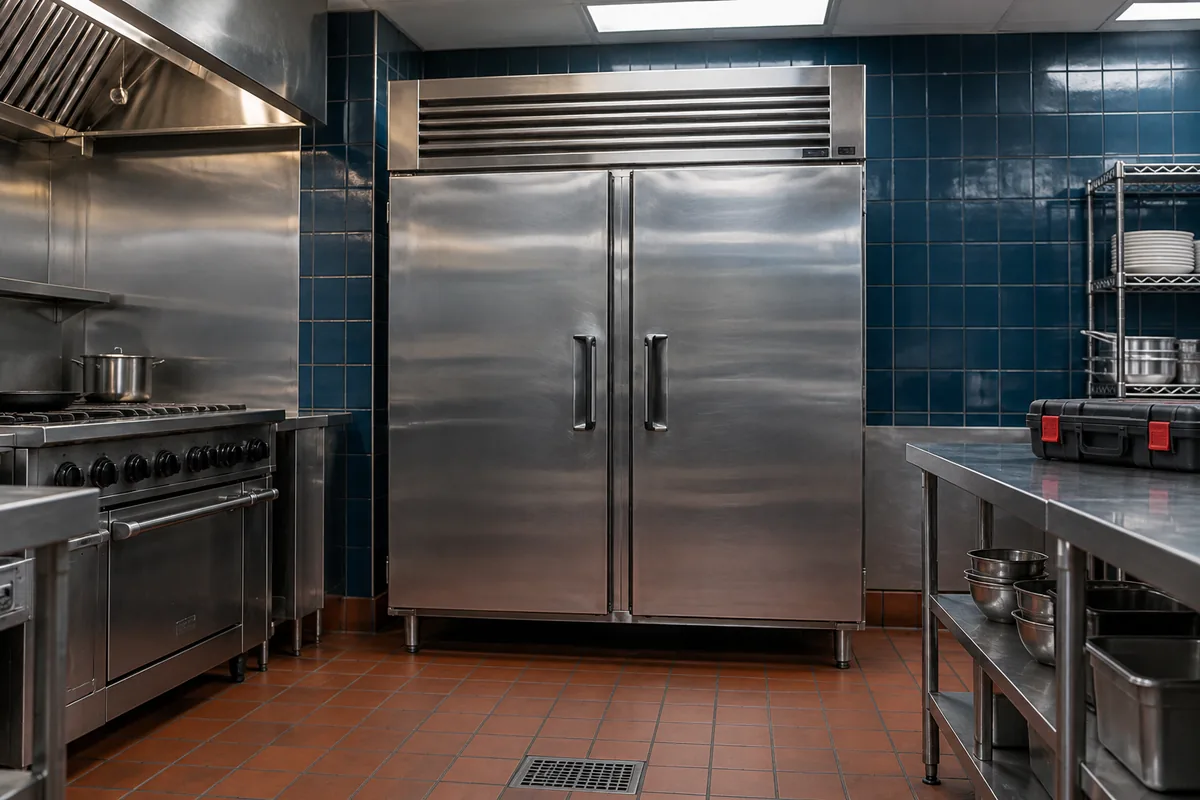
HVAC & Appliance Repair Guys provides commercial freezer repair in Beaverton, OR for warming, frost, door and operating problems. We assess the equipment before recommending a repair. For a gradual temperature rise, tell us when staff first noticed the change and whether the freezer now runs differently.
Record the displayed reading and its time, plus the source and time of readings already part of normal checks. Explain whether the change is new, steady or returning after normal operation; one reading does not show the trend.
Include the full model and identify the cabinet by its position or asset number. This matters when several units share the same space. Staff can send a safely accessible label photo. There is no need to open covers or move connected equipment to begin a request.
Operating Changes That Need Assessment
Tell us whether the freezer runs, stays off or starts and stops differently. Describe any display message as it appears rather than guessing what it means. A working light or control panel does not prove that the whole unit operates normally. Testing guides the repair recommendation.
Note a door that no longer shuts as usual, visible frost or a new sound, including when each change began. Avoid forcing a control cycle or repeatedly lowering the setting to compensate.
If a refrigerator also has trouble, our commercial refrigeration service in Beaverton covers that equipment request. Give it a separate model and history. A fault in one cold-storage unit does not automatically explain another unit’s behavior.
Stock Handling and Service Access
Follow your business’s procedures for the contents while frozen storage has a fault. A repair visit does not determine whether products remain fit for use. Keep the manager responsible for that decision informed of the timing and readings. Do not wait for an appointment before carrying out the site’s handling plan.
Tell us whether stock limits access to the reported area. Explain any fixed shelving, narrow aisle or locked room around the unit. We can discuss what the assessment needs when arranging service. Staff should not empty or dismantle the work area on a guess.
Provide the site contact, repair approver and any purchase-order requirement when booking.
Repair Scope, Parts and Timing
We explain the fault and proposed work before you approve a repair. Ask what the estimate resolves and whether parts or a return visit are necessary. Model-specific parts support and cabinet condition can affect the answer.
Same-day service may be available, depending on scheduling and the equipment review. It does not promise completion before a particular shift.
Our commercial freezer repair service covers the broader equipment category. Mention recurring faults or a change in storage demand; repairing a fault does not increase the cabinet’s intended capacity.
Contact HVAC & Appliance Repair Guys to request commercial freezer repair in Beaverton and confirm support for the affected model.
Frequently Asked Questions
What if the freezer returns to its usual reading?
Keep the original record and tell us when operation changed. A temporary recovery may still need review. The earlier symptom and current condition both matter when discussing the next step.
Request Commercial Freezer Repair in Beaverton, OR
For commercial freezer repair in Beaverton, OR, call HVAC & Appliance Repair Guys or submit a service request through the form on this page.