



True Commercial Freezer Repair
HVAC & Appliance Repair Guys provides True commercial freezer repair in Portland Metro for warming, alarms, frost, unusual sounds and door problems. We assess the exact cabinet and explain the proposed work and price before repair.
Send the full model, symptoms and access details so we can confirm support.
True equipment includes T-Series cabinets as well as freezer units in the TUC and TWT groups. A prefix alone does not describe every feature of a unit. Preserve the full model name, including its letters, numbers and suffix. Add the serial number if you can read the label through normal safe access.
Control Settings and Actual Cooling
Explain what the controls show and what happens when the unit runs. A chosen setting describes an input; it does not prove that the freezer reaches that condition. Keep the display reading and any other reading in your normal records separate. Include the time and source of each one.
Report any changed display reading, alarm or cooling behavior and when it began. The technician tests the unit before choosing a repair.
Mention any setting change and its result. Do not enter service menus or copy settings from another cabinet to test a theory. Similar-looking units can have different setups; this unit’s configuration needs review before comparison.
Previous Repairs and Part Compatibility
Tell us if a previous repair changed the control, sensor or another component. Use the part description from the record when you have it. If you do not know the part, describe the work as far as you can and mark the missing detail as unknown.
If you already bought a part, share its details before planning the repair. A listing for a related model proves neither that it fits this cabinet nor that it addresses the current fault.
For a returning symptom, describe whether the earlier repair improved operation and for how long.
Cooling, Door and Frost Symptoms
Alongside a temperature complaint, report unusual sounds, visible frost or a door that no longer closes normally, with each symptom’s location.
If several units changed at once, identify each model and the timing. Similar symptoms do not establish the same repair.
For equipment outside the freezer category, use our True commercial refrigeration repair service. Identify whether the affected unit is a refrigerator or other equipment; a shared brand does not make it a freezer repair request.
Service Access and Stock Handling
Explain the route to the cabinet and any limits around it. Fixed fixtures, connected equipment or a tight aisle can affect the approach. Leave panels and connections in place. We can review the access needs without asking staff to expose components or make changes before the visit.
Provide the site contact and repair approver, including how to reach them during the visit.
Follow your site’s stock-handling procedures while arranging equipment service. An appointment or later display reading does not establish whether stored items remain suitable for use.
Repair Scope, Price and Parts Availability
After testing, review how the recommended task addresses the reported symptom, its price and any remaining concerns.
If parts need review or ordering, ask about the next step. The True name alone does not guarantee immediate parts supply.
Contact HVAC & Appliance Repair Guys to request commercial freezer repair for your True unit and confirm model support. Keep the finding and open tasks with its model and serial details.
Frequently Asked Questions
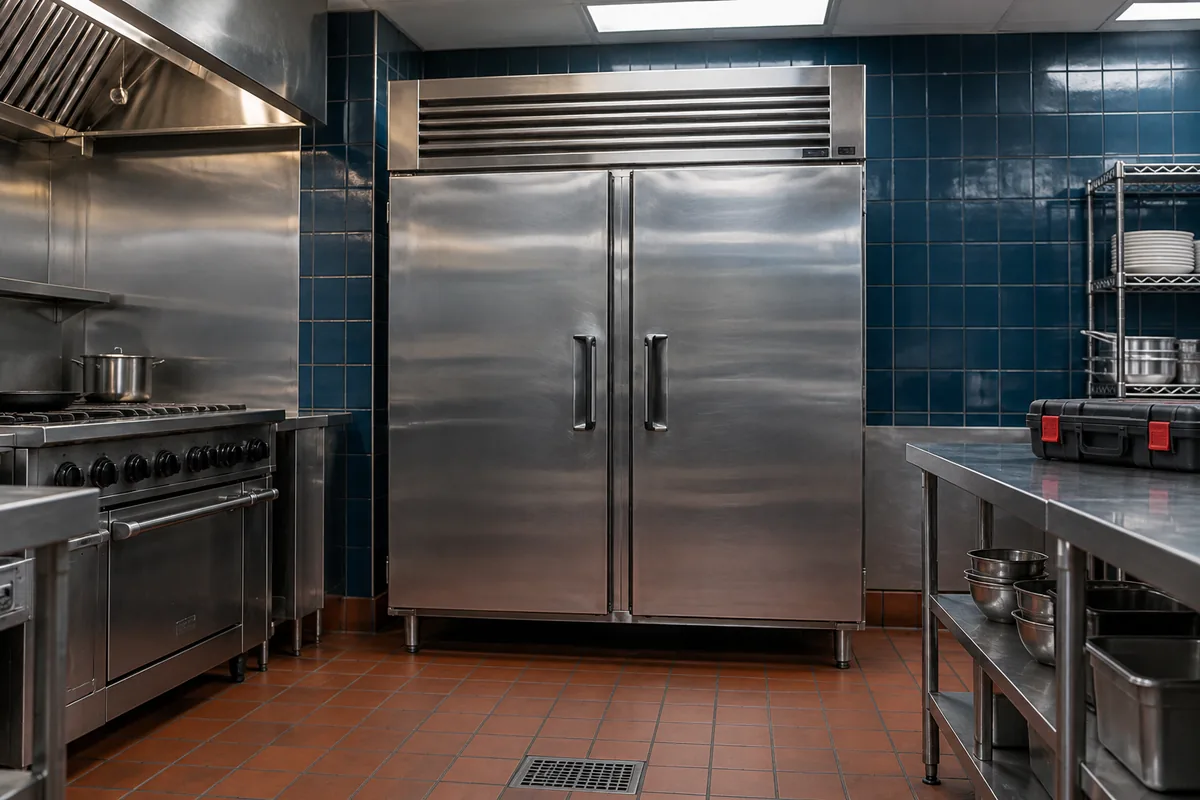
Is a photo of the front enough to identify the exact freezer?
It can help show the cabinet style, but the full model and serial number provide more precise details. Share the label only when safely visible. If you cannot reach it, explain the access limit so we can discuss how to identify the unit.
Request True Commercial Freezer Repair in Portland Metro
For True commercial freezer repair in Portland Metro, call HVAC & Appliance Repair Guys or submit a service request through the form on this page.
Before your visit
Commercial Freezer Repair details for True
Include the service address, equipment details, and the order in which symptoms appeared. The technician checks the cause on site. The $99 service call covers diagnosis and is applied toward the total when the repair is approved. The finding and price are reviewed first.
Record the model and serial number
For True commercial freezer repair, share the complete model and serial number exactly as shown on the rating label when it is safely visible. A product family or marketing name alone may not identify the configuration, revision, compatible part, or service information needed for planning.
List earlier repairs and parts
Share prior True service dates, replaced components, recurring failures, and any part already supplied or ordered. A previous repair can be useful history, but the current condition still needs to be tested before the same cause or part is assumed.
Describe the utility connections
State which utilities serve the True equipment and whether another appliance or system is also affected. This helps describe whether the issue is limited to the equipment or affects the property more broadly.
Estimate age and current condition
Approximate age, corrosion, prior leaks, repeated failures, physical damage, and overall condition can affect whether True commercial freezer repair remains practical. Age alone does not identify the fault. Compare the diagnostic findings with the equipment’s condition before deciding between repair and replacement.