


Air Duct Cleaning in Lake Oswego
HVAC & Appliance Repair Guys provides air duct cleaning in Lake Oswego, OR. Cleaning addresses debris within the agreed heating-and-cooling air path, based on its condition and access. Describe the affected rooms and whether material appears during system operation. Then identify who can arrange entry and approve the proposed work.
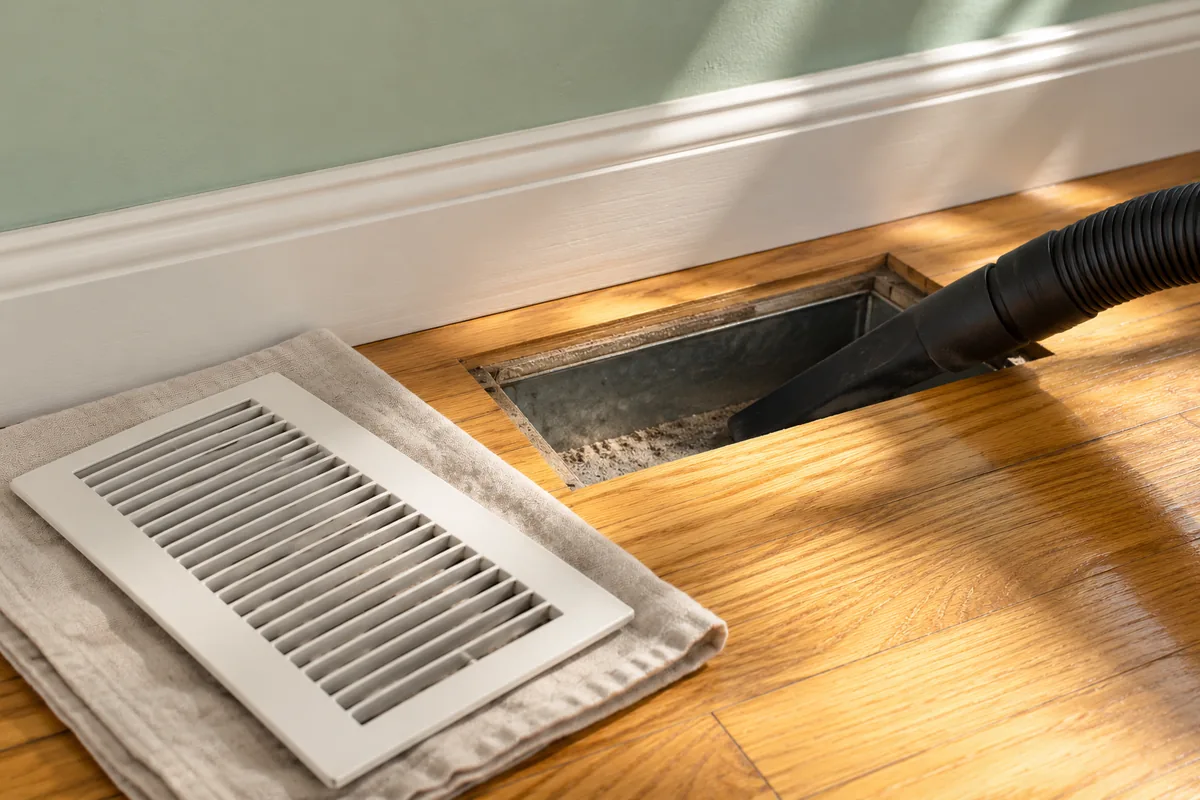
Supply vents deliver air to rooms; return grilles carry it back toward the system. A light coating on a grille does not show the condition of hidden ducts. The location and pattern of debris help establish what needs assessment.
Debris, Odors and Previous Work
Describe what appears at the vent and when the concern occurs. Note whether material comes out during normal use or builds up on a visible surface over time. Identify the room in each photo. Safe observations help us understand the request without anyone removing grilles or entering concealed areas.
If several people noticed different things, keep their accounts distinct. One may report dust in a bedroom while another describes an odor near a return. Those are separate observations, even when they share a date. We review the pattern before proposing cleaning as the answer to every concern.
Include any known previous work and what changed afterward. Keep a completed task separate from a quote or a possible plan. The actual history helps define what needs review now. A vague report that someone serviced the property should not imply that every relevant duct received cleaning.
Separate and Shared Air Paths
Tell us whether you know the affected space has its own system. If the route may connect to shared areas, state that as an open question. Do not assume that a vent in one room establishes ownership of the complete path. We review the setup before defining the equipment and areas the work can cover.
Access to one unit or room does not automatically provide access to every relevant section. Explain any separate equipment area, locked space or shared entry point that may matter. The scope should reflect those limits. An unclear connection needs assessment rather than an assumption that the visit includes the whole building.
For a house with separate living areas, identify the rooms involved and any known separate equipment. Keep each area’s concern clear. Similar grilles or nearby walls do not prove that all rooms use one air path. The plan should describe the actual system instead of relying on the property’s general layout.
Cleaning Approval and Additional Work
Name the person who can approve the proposed cleaning and any later change. Make sure the site contact can reach that person during the visit if needed. We explain the work before approval. Entry to the property does not authorize a larger job.
If assessment identifies an access problem or separate repair need, keep that finding explicit. Ask how it affects the cleaning plan and what decision comes next. The initial cleaning request does not authorize work on fixed features or unrelated equipment.
Our air duct cleaning service overview describes the general approach. Include the affected rooms, visit contacts and access limits when arranging the Lake Oswego appointment.
Equipment Faults Beyond Duct Cleaning
Report poor heating, cooling or an equipment stop separately from visible dust. Our HVAC repair service in Lake Oswego covers a broader fault assessment. Cleaning does not promise to resolve every cause of low airflow or uneven comfort.
If both types of concern exist, keep both in the request rather than choosing a suspected cause in advance. The technician can review how the findings relate. Ask which task addresses which concern before proceeding. A single visit discussion may lead to more than one clearly defined decision.
Room Access and Completed Work
Confirm which rooms and equipment areas can be available at the agreed time. Discuss pets, locked doors and other practical limits with the site contact.
Leave heavy storage in place and do not cut access openings to prepare for the assessment. We will discuss any preparation needed for the agreed work.
Update the appointment if keys, contacts or available rooms change before the visit.
After service, share the completed work, unfinished areas and separate findings with the resident and the person who approved the job. Contact HVAC & Appliance Repair Guys to request air duct cleaning in Lake Oswego.
Frequently Asked Questions
Can a resident report the concern before the owner approves a job?
The resident can explain the symptoms and access. Identify who will decide on the proposed work before service proceeds. A useful report does not require the resident to approve tasks outside their role.
Does entry to my living space mean all connected ducts are in scope?
No. The actual route, equipment and access need review. Explain any shared or locked areas that may affect the work. We define the proposed task before treating a room-level request as a larger cleaning job.
Will duct cleaning remove an unexplained odor?
Whether cleaning can address the odor depends on its source. Describe where and when the odor occurs, including whether it remains with the system off. The cause needs assessment before we recommend cleaning for it.
Request Air Duct Cleaning in Lake Oswego, OR
For air duct cleaning in Lake Oswego, OR, call HVAC & Appliance Repair Guys or submit a service request through the form on this page.
Before your visit
Air Duct Cleaning details for Lake Oswego, OR
Describe the visible condition, recent dust or remodeling event, odor or airflow concern, and access to the system. The cleaning work depends on inspection and safe access; an indoor-air-quality or health result is not guaranteed.
Share the service address
For Lake Oswego, OR, include the street address, building or unit number, room, and the equipment involved. Mention gates, elevators, building check-in, loading restrictions, or another access step before the appointment so the technician knows how to reach the equipment.
Name the on-site contact
Confirm who can meet the technician, approve the visit, and discuss any recommended work at the Lake Oswego, OR address. If an owner, tenant, manager, or facility contact is different from the person submitting the request, share the correct names and telephone numbers before the visit.
Clarify utilities and shutoffs
Tell us whether power, gas, water, drainage, or another utility is involved in the air duct cleaning request and whether any safe shutoff has already been used. Do not operate an unfamiliar valve, reset protection repeatedly, or enter an unsafe area simply to provide this information.
Use safe interim steps
Stop using equipment that is leaking, smoking, overheating, damaging the property, or repeatedly tripping protection. For the Lake Oswego, OR request, describe the safe steps already taken. Do not bypass controls, reach into moving equipment, or handle energized, fuel, or refrigerant components.