



Air Duct Cleaning in Milwaukie
HVAC & Appliance Repair Guys provides air duct cleaning in Milwaukie, OR, after assessing the concern, duct condition and accessible route. Cleaning addresses debris within an agreed heating-and-cooling air path. Material on a grille, debris inside a duct and a concern at the equipment can call for different tasks.
Air moves through several connected areas in a ducted system. We discuss which sections, branches and other parts of the route the cleaning includes before work begins.
Name the rooms and visible signs that prompted the request. You do not need to open the system or map hidden connections.
Supply Openings and Return Areas
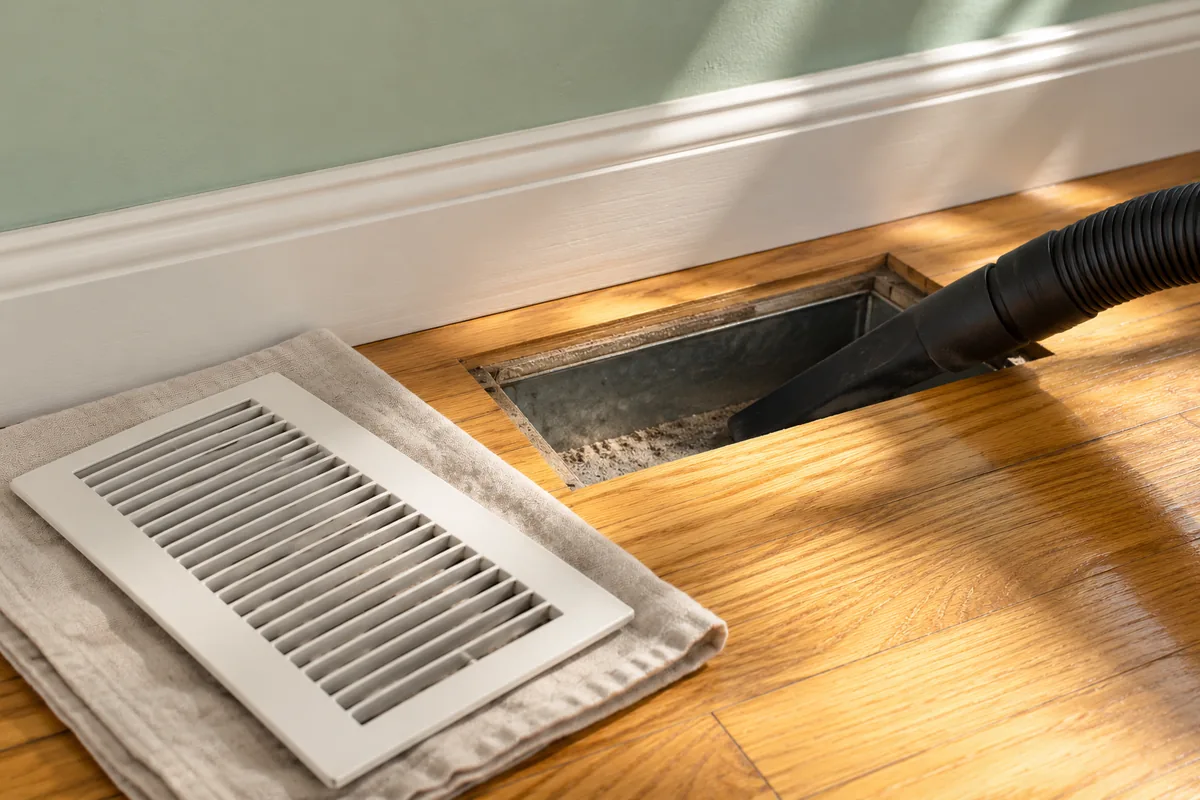
Some openings deliver conditioned air to a room. Others provide a path for air to return toward the system.
If you know which type you are looking at, include that detail. If you do not, a safe photo of the opening and its place in the room can help us identify it during review. There is no need to remove a cover just to choose the right label.
Tell us where visible material sits. A deposit on the face of a cover differs from material you can see beyond it. The outside surface gives only a limited view of the route. That view does not establish that every connected section has the same condition or requires the same work.
List affected rooms, distinguishing material near returns from material at supply openings.
New Debris and Earlier Cleaning
Explain when the concern first became noticeable. You might have seen material near an opening during ordinary room cleaning or after work elsewhere in the home. Keep the sequence factual. Timing can help frame the assessment, but it does not establish that a particular event caused debris within the full duct route.
If material appears when the fan starts, describe where you see it and whether the pattern repeats. If you only see a slow buildup on a surface, state that instead. These are different observations. We can use them to ask focused questions without assuming a hidden source from a brief description.
Mention any earlier cleaning and what its record says about the areas covered. A recent visit does not tell us the current condition of an area that the earlier job did not include. Likewise, a concern after a visit does not by itself prove that the previous work failed. The actual scope and present finding need review together.
Filter Care and Duct Cleaning
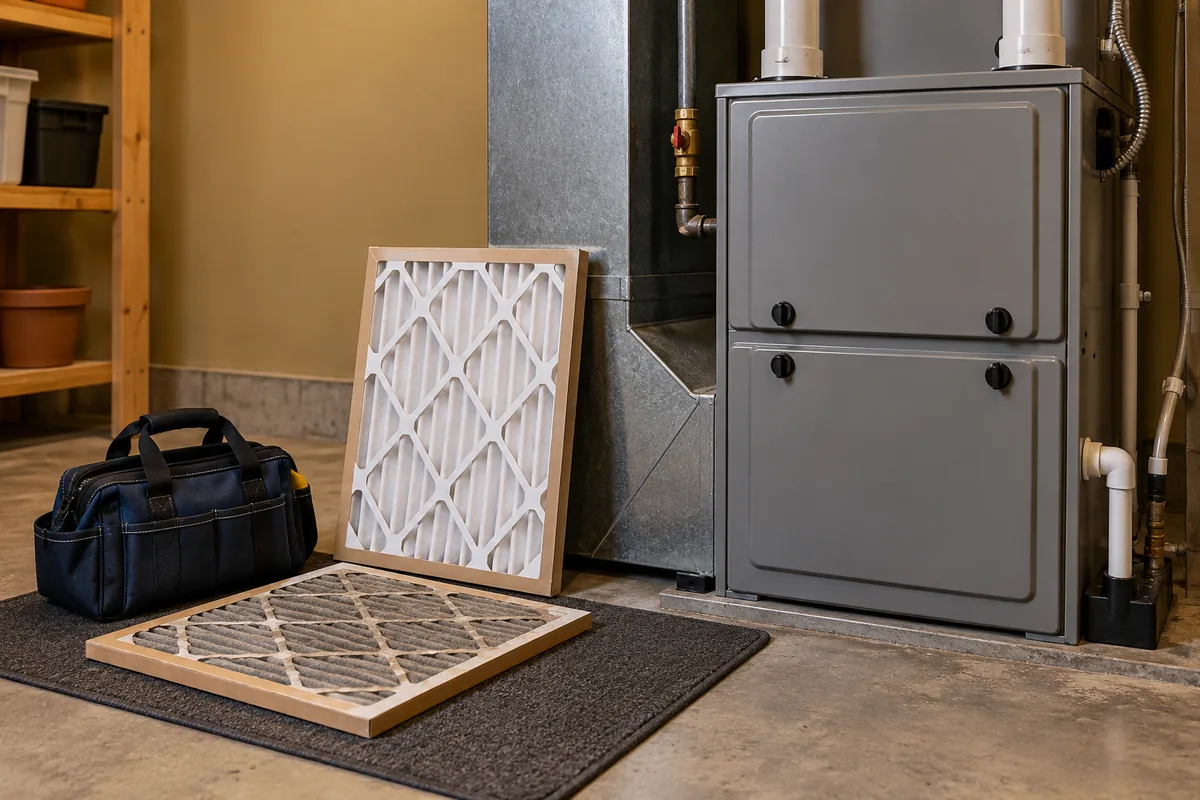
The filter location and its service history can provide useful context. Share the date of a recent change if you know it.
Mention any unusual condition you saw during normal access. Do not remove parts or alter the filter setup to test a theory. The assessment needs a clear picture of how the system normally operates.
A filter task and duct cleaning are distinct parts of system care. One does not automatically include the other. A proposal should state whether it includes a filter-related task or whether that belongs in a separate visit. Avoid assuming that a general cleaning description covers every item near the equipment.
Our HVAC maintenance service is a relevant route for questions about routine equipment care. Share those questions with the duct concern so we can separate the requested tasks.
Equipment Cleaning and System Faults
Parts near the air-handling equipment can raise different service questions from the ducts themselves. A request about a blower area, coil or equipment housing needs its own assessment of access and condition. Mention the specific concern. Do not assume that the duct cleaning label confirms support for every task within the equipment.
Ask whether the estimate includes the equipment task and why. If it does not, retain that limit alongside the duct-cleaning scope.
Cleaning also does not stand in for diagnosing a system that fails to heat, cool or move air as expected. Tell us about those symptoms early. We can review whether the request needs an equipment service step alongside, before or instead of the cleaning task.
Accessible and Concealed Duct Areas
Describe the normal route to the relevant rooms and equipment. Include locked doors, storage or fixed items that may limit the approach. Access to the home and access to every part of the system are separate issues.
You do not need to cut an opening or remove fixed finishes before the assessment. If a section sits behind a wall or ceiling, say where your knowledge of the route ends. We review the access that suits the proposed task. Any extra opening or building work needs a clear place in the scope before approval.
Record any section the work cannot reach, especially in a staged job. Completing one area does not mean every connected area has been cleaned.
Cleaning Method, Preparation and Limits
Ask how the proposed approach fits the areas and materials under review. The assessment may reveal features that affect the work plan. We explain the limits that apply to the proposed job. A method chosen for one reachable section does not establish that it suits every hidden part of the route.
The proposal should also explain the area where work will take place and any preparation needed around it. Keep household preparation limited to the directions agreed for that visit. Do not reach into ducts, disturb damaged material or apply a product to prepare the system yourself. Those actions can change the condition without resolving the service question.
Damage, moisture or another finding may change the task. Discuss the next step before extending the work.
Cleaning and correcting the source of a problem may require different actions. Before approving a change, ask which work will be added or changed and which original tasks will remain incomplete.
Estimate, Included Areas and Separate Systems
Compare the estimate with the rooms and routes you reported. Confirm whether equipment cleaning, repairs or added access work is included; vent count alone does not define the job.
Our air duct cleaning overview explains the broader service. When requesting service in Milwaukie, describe the rooms, visible concerns and any equipment questions so we can discuss the appropriate work.
If your request covers more than one system in the home, identify each one separately. A shared room list can hide the fact that different equipment serves different areas.
Leave uncertain connections open for assessment. Work on one system does not automatically cover another at the same address.
Completed Work and Future Concerns
Keep the completed areas, approved scope changes and unfinished items together for future service.
Duct cleaning does not guarantee a health benefit or prevent future dust buildup. If a concern returns, note its location and timing for follow-up. Contact HVAC & Appliance Repair Guys to request air duct cleaning in Milwaukie.
Frequently Asked Questions
Does a duct cleaning request include both supply and return areas?
The confirmed scope should state which areas it includes. Tell us about the rooms and openings involved, then review the proposed supply and return sections before approval. Do not assume that a broad cleaning label describes every part of the route.
Are filter changes and equipment cleaning part of the same job?
Only if the agreed scope includes those tasks. Mention the filter, blower or other equipment concern when you request service. We review the work needed and make clear which tasks belong in the proposed visit.
What happens if the technician cannot reach part of the route?
We discuss the access limit and its effect on the plan. The record should identify any section that remains outside the completed work. Further access or a later stage must be agreed separately; it is not part of the completed work.
Request Air Duct Cleaning in Milwaukie, OR
For air duct cleaning in Milwaukie, OR, call HVAC & Appliance Repair Guys or submit a service request through the form on this page.
Before your visit
Air Duct Cleaning details for Milwaukie, OR
Describe the visible condition, recent dust or remodeling event, odor or airflow concern, and access to the system. The cleaning work depends on inspection and safe access; an indoor-air-quality or health result is not guaranteed.
Describe the observed condition
For air duct cleaning in Milwaukie, OR, describe visible debris, stale odor, renovation dust, airflow concern, or another observation that prompted the request. Describe what you can observe without assuming contamination. Inspection and safe access determine what can be cleaned; a health result is not guaranteed.
Clarify utilities and shutoffs
Tell us whether power, gas, water, drainage, or another utility is involved in the air duct cleaning request and whether any safe shutoff has already been used. Do not operate an unfamiliar valve, reset protection repeatedly, or enter an unsafe area simply to provide this information.
Describe hard-to-reach areas
If the equipment or ductwork is behind a finish, below grade, above a ceiling, inside cabinetry, or in another concealed area, mention it when requesting air duct cleaning in Milwaukie, OR. Access for service may be separate from drywall, tile, flooring, landscaping, or other finish restoration.
Use safe interim steps
Stop using equipment that is leaking, smoking, overheating, damaging the property, or repeatedly tripping protection. For the Milwaukie, OR request, describe the safe steps already taken. Do not bypass controls, reach into moving equipment, or handle energized, fuel, or refrigerant components.