



Air Duct Cleaning in Vancouver, WA
HVAC & Appliance Repair Guys provides air duct cleaning in Vancouver, WA. Cleaning removes material from the agreed air path using an approach suited to its condition and access. Describe the visible debris and any room or route the team may have difficulty reaching. The assessment should establish both the cleaning area and the work needed to reach it.
An accessible room vent does not establish that every connected section is easy to reach. Equally, a hidden route is not proof that cleaning requires extensive building work. Keep those questions open for assessment. The proposed scope should state what the work covers and where access still needs review.
If the home has several floors or separate equipment areas, describe that layout without guessing the duct connections. Room groups and equipment locations provide useful starting details. The technician can review their actual relationship. Nearby rooms do not necessarily share one route, and different floors do not necessarily have separate systems.
Affected Rooms and Floor Levels
Use recognizable room names and floor levels in notes or photos so the concern can be located.
Name the rooms that show dust or debris and those where you noticed no change. Preserve those differences rather than make every area sound alike. The pattern can help define which air path needs attention. It does not by itself prove that every hidden branch has the same condition.
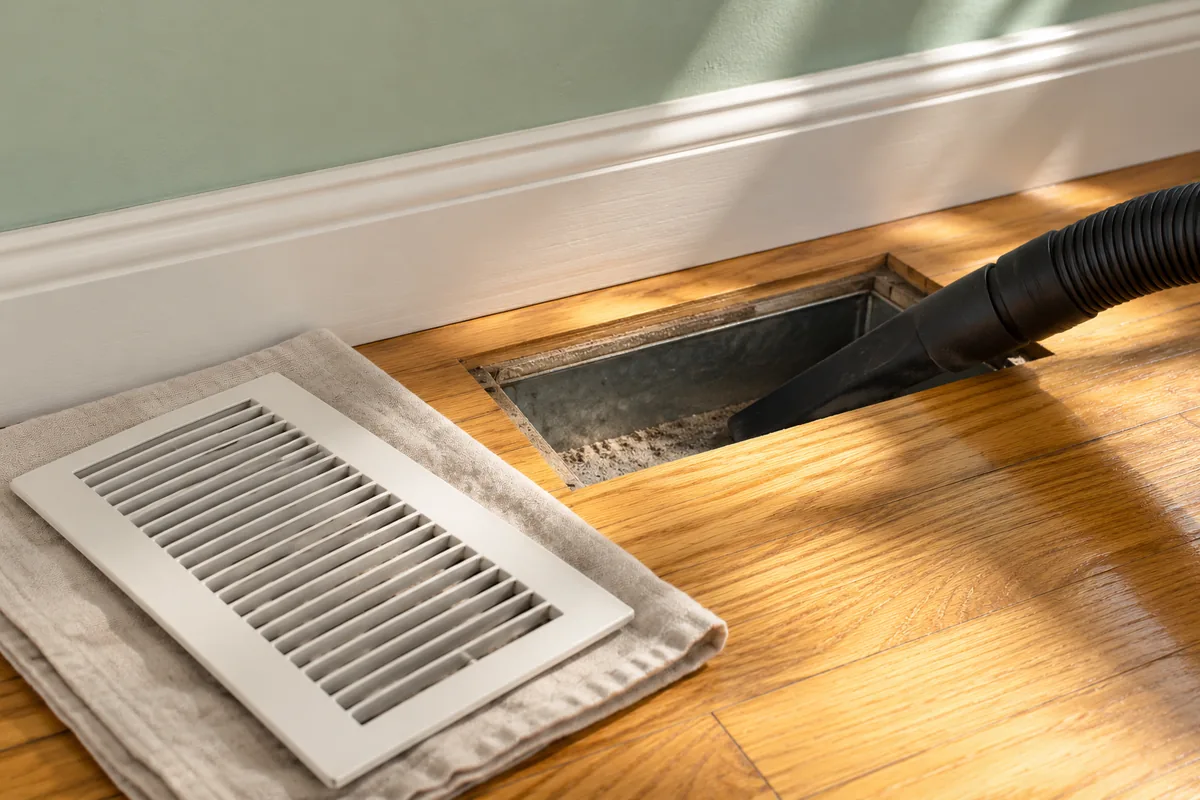
If an area has more than one visible grille, identify the one you mean from a normal room view. You do not need to remove parts to determine its role. Say when you are unsure whether it supplies or returns air. We can review that detail without relying on a homeowner tracing the route.
Room Entry and Access Limits
Tell us about locked rooms, high vents, fixed shelving or furniture that blocks the normal approach. Explain who can provide access to each space. A home may be open for a visit while a relevant work area remains closed to the technician.
Do not move heavy fittings or climb to a high grille solely to prepare a closer photo. Safe views from normal access are enough to begin the request. We discuss any preparation that the job actually needs. A guessed cleaning method should not determine how you rearrange the property before assessment.
Mention separate key holders and limited entry times when booking. Confirm that the available window suits the agreed work.
Concealed Routes and Finish Restoration
A route may pass through a finished wall, ceiling or another area that is not visible from the room. Mention what you know and how you learned it. An old drawing or work note can provide context without proving the present condition. The assessment should distinguish confirmed access from an assumed path.
Do not cut an opening, lift fixed finishes or enter a tight space to check the route yourself. Explain where your safe view ends. We review suitable access and any further work needed to assess the area. A concealed section should remain a stated limit until its role and condition are clear.
If the scope may require an opening, ask what that task includes and who handles finish restoration. Access work and repairing a finished surface can be different parts of the project. Confirm whether the estimate includes finish restoration.
Cleaning Method and Duct Condition
Ask how the proposed work will address the accessible route and collect the material it removes. The plan should consider the duct condition and the surrounding work area. We explain the proposed scope before approval.
The method should fit the equipment, route and access under review. Do not assume the same approach suits every visible or hidden section. An area with a different condition may need its own decision. Keep any limit on the cleaning work clear instead of treating all sections as identical.
If assessment identifies damage or another task, that finding needs a separate place in the plan. Cleaning removes material within its agreed scope; it does not automatically repair the air path. We discuss proposed additions before work expands. The owner should know which concern each task addresses.
Occupied Work Areas and Preparation
Discuss pets, household movement and room use that affect the work area. An empty property is not assumed unless it is part of the arrangement.
Discuss what needs to remain accessible and how the work area relates to nearby finishes or furnishings. Do not move everything in the home based on an assumed requirement. We identify preparation suited to the actual task.
Update the plan if another project changes room access or availability.
Heating, Cooling and Airflow Faults
If heating, cooling or airflow changed as well, include those symptoms in the request. Our HVAC repair service in Vancouver covers broader system faults. More difficult access does not make cleaning the answer to every performance issue. The service choice still needs to match the assessed problem.
Explain whether the concern affects one room group or several and when it occurs. Keep visible debris and equipment behavior as distinct observations. One may affect the other, but we need to review that link. A working fan does not by itself establish the condition of the complete air path or the cause of uneven comfort.
Our air duct cleaning overview describes the wider service. Keep your room notes and access details available for the Vancouver visit.
Staged Cleaning and Unfinished Areas
For staged work, record which areas were cleaned and which remain pending. Completing one stage does not complete the whole home’s air path.
When access changes, update the next step before arranging another visit. A previously blocked area may need a fresh review of its current condition. The earlier plan is useful context, not proof that the task can now proceed unchanged. We confirm the scope from the present setup.
Keep a record of completed areas, separate findings and any unfinished access or restoration work. Share it with the person managing the property so a later visit can build on the previous work. Contact HVAC & Appliance Repair Guys to request air duct cleaning in Vancouver, WA.
Frequently Asked Questions
Does cleaning a visible vent mean the hidden route is part of the job?
The proposal should state which connected areas the work covers. A visible opening alone does not define the full scope. We review the route, condition and access before treating it as an agreed task.
Should I move a fixed cabinet to expose a duct section?
Explain the obstruction before making that change. Do not dismantle fixed features based on an assumed cleaning need. We review the access required for the actual work and clarify any separate building task.
Can the work proceed in separate room groups?
Discuss that goal and the reason during planning. The actual system and access determine whether the sequence fits. Each stage should name its work and any area still pending, rather than imply completion of the full route.
Request Air Duct Cleaning in Vancouver, WA
For air duct cleaning in Vancouver, WA, call HVAC & Appliance Repair Guys or submit a service request through the form on this page.
Before your visit
Air Duct Cleaning details for Vancouver, WA
Describe the visible condition, recent dust or remodeling event, odor or airflow concern, and access to the system. The cleaning work depends on inspection and safe access; an indoor-air-quality or health result is not guaranteed.
Share the service address
For Vancouver, WA, include the street address, building or unit number, room, and the equipment involved. Mention gates, elevators, building check-in, loading restrictions, or another access step before the appointment so the technician knows how to reach the equipment.
Describe the observed condition
For air duct cleaning in Vancouver, WA, describe visible debris, stale odor, renovation dust, airflow concern, or another observation that prompted the request. Describe what you can observe without assuming contamination. Inspection and safe access determine what can be cleaned; a health result is not guaranteed.
Share prior service history
Recent maintenance, earlier repairs, replaced parts, renovations, and recurring symptoms help explain the equipment’s service history. Share relevant records and any current concerns for the Vancouver, WA visit.
Use safe interim steps
Stop using equipment that is leaking, smoking, overheating, damaging the property, or repeatedly tripping protection. For the Vancouver, WA request, describe the safe steps already taken. Do not bypass controls, reach into moving equipment, or handle energized, fuel, or refrigerant components.