

Air Duct Cleaning in West Linn
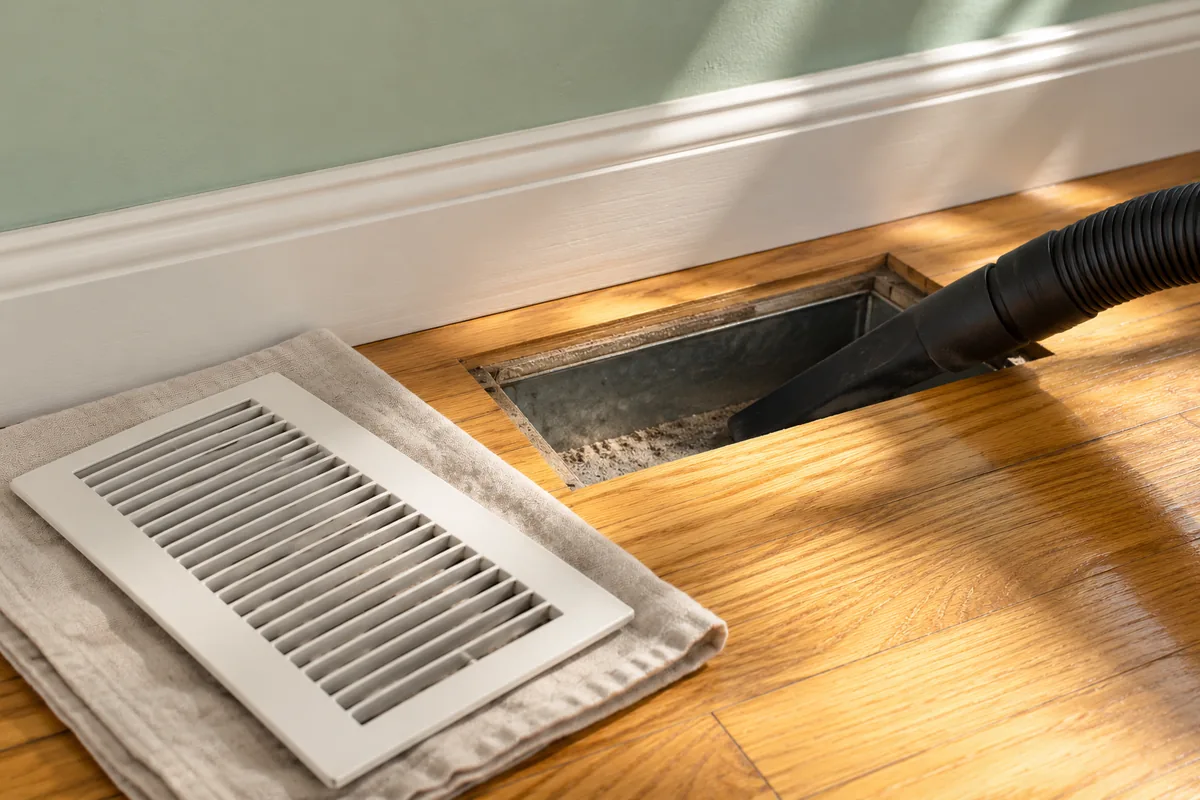
HVAC & Appliance Repair Guys provides air duct cleaning in West Linn, OR. Cleaning removes debris from an agreed route; its method must suit the duct material, condition and access. Describe visible buildup, damage or moisture concerns before work is proposed so any repair or further assessment can be addressed too.
Different sections of a route may have different materials, features or limits. One visible piece does not establish the condition of every concealed area.
If you see damage or an unusual condition near a duct, mention it at the start. Removing loose debris and correcting damage are different tasks. The assessment should explain how that condition affects the cleaning plan.
Visible Duct Conditions and Safe Access
Name the room or equipment space and describe where the visible concern appears. A photo from normal safe access can help show the location. Include a wider view when a close image would be hard to place. You do not need to identify the duct material or a hidden connection before asking for service.
Do not pull at a lining, remove insulation or reach inside a duct to supply more detail. That changes the condition without establishing the work needed. Explain where the safe view ends. The technician can review suitable access to areas that are not visible during normal use.
Share the exact wording and date of any earlier material or condition report. It provides history, not confirmation of the current state.
Debris, Damage and System Faults
Describe loose material or buildup separately from a tear, loose section or damaged surface you can see. Both may matter to the job, but they do not mean the same thing. Cleaning removes material within its agreed scope; it does not mend a damaged part of the route.
If a visible condition might affect the work method, keep that question open. Do not assume a stronger cleaning approach is automatically better for every surface. We review what the system can support. The proposal should reflect the actual condition rather than a method selected before the duct receives assessment.
Our HVAC repair service in West Linn provides a broader route when the finding involves a system fault. Tell us about changed heating, cooling or airflow as well as visible duct concerns. Those symptoms deserve their own review. Cleaning should not stand in for a repair whose cause remains unclear.
Moisture, Stains and Uncertain Sources
Mention any known water event or visible damp-looking area and when you noticed it. State what you observed without assigning a hidden cause. A stain or odor alone does not identify a substance or its source.
Do not apply sprays or seal a surface to test whether the concern disappears. A cleaning request does not establish the need for a treatment or confirm that it suits the material. We discuss the actual proposed work before approval. Any extra process needs a clear purpose within the reviewed scope.
If the same condition returned after earlier work, keep both the work record and the new timing. A repeated cleaning should not become the automatic answer to a source that remains open. We review what changed and what did not. The next task needs a reason tied to the current finding.
Supply, Return and Separate Air Paths
If you know the type of opening, name it. It may be a supply vent, a return grille or another part you can see.
If the role is unclear, the room and position are still useful. Do not trace hidden branches to complete the request. We can review the air path during assessment.
Name other rooms with similar observations without assuming they share one condition. A visible issue in one branch does not establish the state of all branches. The cleaning plan should identify the relevant route. It should also state any separate system or area outside the proposed task.
Our air duct cleaning overview describes the general service. Mention any known damage, moisture or material concerns when requesting service in West Linn.
Method Suitability and Additional Work
Ask how the cleaning method fits the route, condition and access, including any uncertainty that affects the work.
If a section needs a different task or further assessment, keep it distinct in the proposal. One ready area should not make every other area part of an assumed package. We explain the relevant finding before adding work.
Do not purchase a treatment or replacement part based solely on the appearance of a visible section. The actual material and work needs require review. A product choice is not a substitute for defining the job. We can explain the proposed next step without requiring the homeowner to decide the method in advance.
Access and Separate Building Work
Describe high openings, tight equipment areas, finished surfaces and fixed storage that limit the route. Identify who can provide entry. The task needs appropriate conditions for assessment and work. A clear description lets us discuss preparation without asking you to dismantle parts before the visit.
If an opening may be necessary, the estimate should explain that access task and its boundary. Access for duct service and restoring a finished wall can involve different work. Ask what the proposed job includes. Do not infer that every opening comes with complete finish restoration unless the scope states it.
Update the plan if furniture, room availability or other access conditions change before the appointment.
Work Approval and Unfinished Sections
We explain the reviewed condition, proposed cleaning and any separate repair need before approval. Approving cleaning does not authorize every repair option; the agreed work must identify the tasks you choose.
Keep a record of the cleaned areas and any unfinished sections, including the reason and agreed next step.
Report later material or damage with its location and date. Earlier findings provide context without diagnosing a new observation. Contact HVAC & Appliance Repair Guys to request air duct cleaning in West Linn.
Frequently Asked Questions
Can every duct surface receive the same cleaning method?
The material, condition and access need review before choosing the method. One visible section does not define the whole route. We explain the proposed work for the actual areas rather than assume a universal approach.
Does a dark stain identify what is inside the duct?
Appearance alone does not confirm the substance or source. Describe the visible area and any known history without disturbing it. The assessment should distinguish the observation from a confirmed finding.
Will cleaning fix a torn or loose section?
Removing debris does not itself repair damage. Mention the condition before booking so we can review how it affects the plan. Any proposed repair needs a clear scope and approval separate from the cleaning task.
Request Air Duct Cleaning in West Linn, OR
For air duct cleaning in West Linn, OR, call HVAC & Appliance Repair Guys or submit a service request through the form on this page.
Before your visit
Air Duct Cleaning details for West Linn, OR
Describe the visible condition, recent dust or remodeling event, odor or airflow concern, and access to the system. The cleaning work depends on inspection and safe access; an indoor-air-quality or health result is not guaranteed.
Confirm permission for the work
For rentals, managed properties, and multi-unit sites in West Linn, OR, confirm who may approve the visit and any recommended work. If building management controls a utility room, roof, mechanical space, shutoff, or common area, arrange that access before the appointment whenever possible.
Share prior service history
Recent maintenance, earlier repairs, replaced parts, renovations, and recurring symptoms help explain the equipment’s service history. Share relevant records and any current concerns for the West Linn, OR visit.
Describe what is working
Describe what is unusable, what remains operational, and whether the issue affects one unit, one area or several pieces of equipment. This helps distinguish an isolated air duct cleaning request in West Linn, OR from a broader utility, access, or system condition.
Describe hard-to-reach areas
If the equipment or ductwork is behind a finish, below grade, above a ceiling, inside cabinetry, or in another concealed area, mention it when requesting air duct cleaning in West Linn, OR. Access for service may be separate from drywall, tile, flooring, landscaping, or other finish restoration.