



Repiping in Donald
HVAC & Appliance Repair Guys provides repiping in Donald, replacing selected water-supply branches or a wider network when the findings support that extent. The project defines new runs, fixtures served and transitions to retained piping.
An unknown installation date or missing repair history does not establish that every line needs renewal. Describe the present concern and reliable details; replacement should follow the actual condition and intended result.
Flow Changes, Discoloration and Visible Leaks
Report affected outlets and whether reduced flow concerns hot water, cold water or both. A problem at one faucet does not establish that full replacement will solve it.
For discolored water, report the location, timing and hot or cold side. Appearance alone cannot identify the concealed material or condition of every run.
Visible water damage can show where moisture collects without showing where it starts. Describe the first wet area you noticed and whether water continues to appear. If the source remains uncertain, leak detection in Donald may help define it. Locating the source and choosing replacement extent remain separate decisions.
A slow basin concerns drainage, not supply delivery. Fixture, drain and supply symptoms may need different work even within one request.
Known Repairs and Uncertain Pipe History
Share invoices identifying a room, fitting or pipe section. A general plumbing charge may cover a limited repair rather than renewal of the entire supply network.
Label remembered dates as approximate. Earlier work may have changed different areas at different times.
For a history of leaks, identify locations where known. Repeat work at one connection differs from confirmed faults along several branches.
You can request an assessment without complete records. Describe accessible piping and known work without opening finished surfaces to fill the gaps.
Local Repair, Partial Repiping and Wider Replacement
Compare a local repair, partial branch replacement and wider repipe by the defects addressed and piping retained. Each needs a supported purpose.
A localized repair in Donald addresses a confirmed fault in one section; it is an alternative to broader replacement when the findings support that limited scope.
Confirm where new pipe starts and ends, the fixtures it serves and the supply runs retained, including in a whole-property project.
Our plumbing services in Donald cover related fixture and line concerns through their own scopes. A supply project does not automatically include a new water heater, drain or sewer line. If another task is relevant, we identify its purpose before adding it to the proposal.
Pipe Materials and Retained Connections
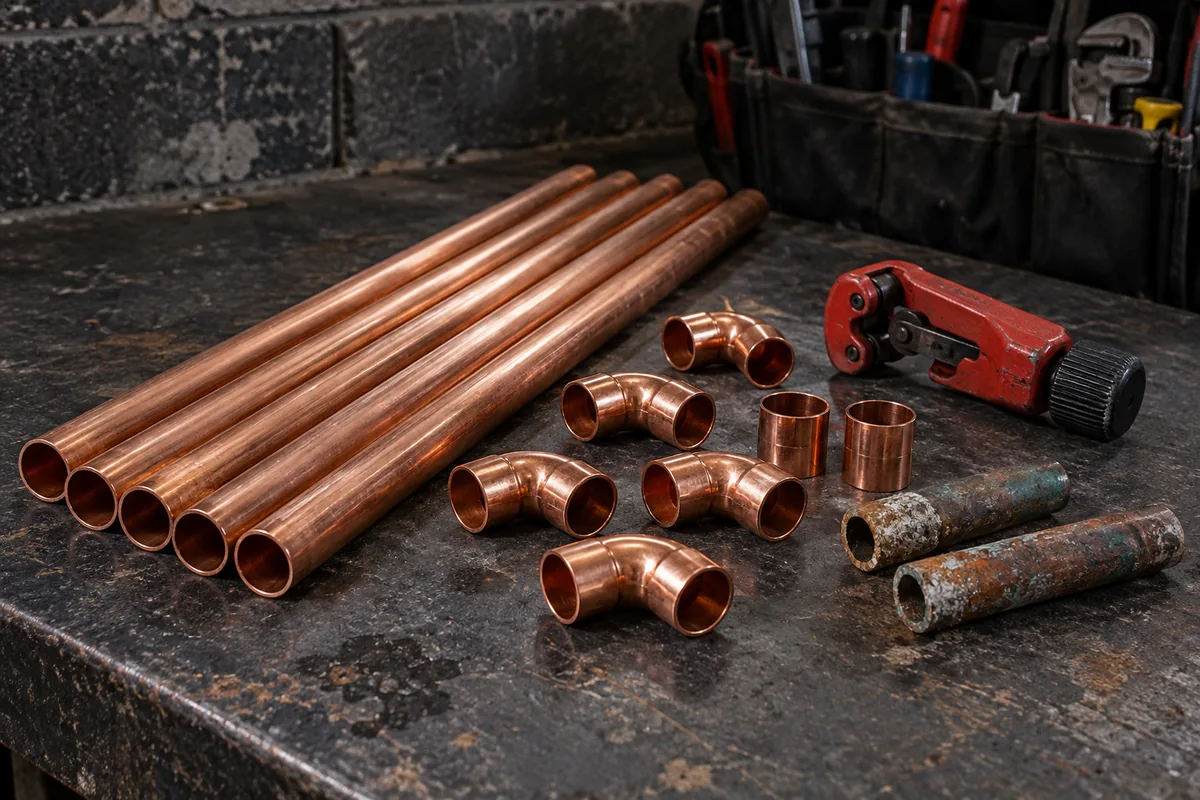
Materials and fittings must suit the intended supply route and transitions to existing pipe. A material name alone does not define those connections.
A record identifying galvanized steel applies to the stated section. Earlier alterations may have left other materials along the route.
Neither an estimated age nor a material label establishes every connection’s condition or promises its remaining life.
You do not need to choose material or fittings before requesting a plan. The proposal should explain those choices and any details still unconfirmed.
Supply Routes for Current and Planned Fixtures
Hot- and cold-water branches can follow different routes. Replacement on one side does not automatically include the other.
Mention confirmed fixture additions or layout changes. The estimate should state whether the new supply serves the current arrangement or that planned change.
The route may require entry beyond the room with the symptom. Describe known locks, enclosures and shared areas along the work path.
Openings, Finish Restoration and Supply Interruptions
Check the purpose of each opening and whether closing it or restoring the finish is included. Access and surface restoration are distinct tasks.
Leave existing fittings and finished surfaces intact while arranging the assessment. The actual route and repair plan should guide access.
Work interrupts the selected supply. Discuss the affected fixtures and sequence; do not assume every outlet stays usable throughout.
Identify who can provide entry and approve changes, with the chosen work description available to both.
Planned Repiping Estimates and Included Work
Planned replacement estimates are free and should identify runs, material, connections, access and any included restoration. Locating an unknown fault is a separate service; a planning estimate does not automatically include every diagnostic check.
Compare partial and broader estimates by the runs changed, routes and access. Pipe length or total price alone may not describe equivalent work.
Any additional finding and price change should be explained before work expands.
Completed Replacement and Retained Sections
After replacement, we check the relevant connections and affected supply operation. Keep the new and retained sections identified in the completion record.
Report any remaining symptom by outlet, hot or cold side and timing. A new branch does not resolve every unrelated fixture or pipe concern.
Request a free estimate for planned repiping in Donald from HVAC & Appliance Repair Guys. Describe the affected outlets, known pipe history and intended replacement areas, and flag any unknown leak source needing separate investigation.
Frequently Asked Questions
Will a repipe fix every water quality or pressure concern?
No general guarantee follows from replacement. Those concerns need a clear account and relevant assessment. The cause and agreed scope determine which work may address them.
Does the new work replace every valve or fixture nearby?
Only if the approved proposal includes those items. A supply-run replacement should identify its connections without implying that every nearby part will be new.
Request Repiping in Donald, OR
For repiping in Donald, OR, call HVAC & Appliance Repair Guys or submit a service request through the form on this page.