

Walk-in cooler repair for your Portland business
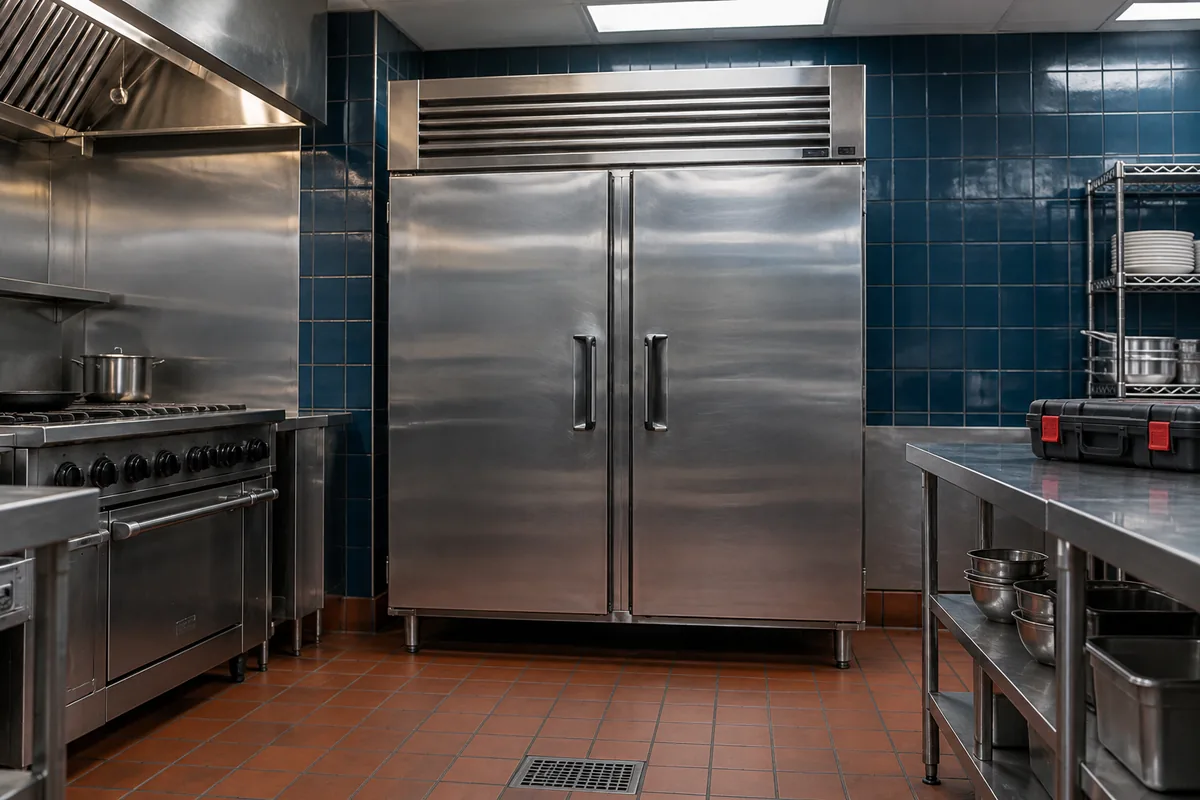
For walk-in cooler repair at a Portland business, start with what changed between normal operation and the current fault. HVAC & Appliance Repair Guys assesses the storage room and cooling equipment, then explains the finding and proposed work before an approved repair.
A room that warms during loading and later recovers has a different history from one that stays warm through a quiet period. That difference helps frame the assessment; it does not prove that deliveries caused the problem. Door condition, airflow, controls and refrigeration operation can each affect cooling.
Include the business address, the time the change was first noticed and the person coordinating the visit. If deliveries or service periods limit access to the cooler, explain those limits when requesting an appointment. Availability and the work plan depend on the equipment, access, diagnosis and any parts needed.
Cooling equipment and room conditions to assess
The insulated room and the refrigeration equipment work together, but a high displayed temperature alone cannot identify the failed part. Depending on the installed system and symptoms, the assessment may need to distinguish:
- Air circulation restricted by visible coil ice or an obstruction
- Temperature-control or sensor behavior compared with the reported readings
- A door that fails to close fully or a damaged seal that allows air entry
- Water at the room, drain or cooling equipment, with its source still to be established
- Changes in fan operation or the cooling cycle
- A refrigeration fault that requires testing rather than a conclusion from room temperature alone
Describe when the cooler stops recovering temperature
Report what staff observe during ordinary use. A short sequence of readings and events is more useful than a guessed component failure. Note whether the symptom persists when loading has finished, and identify any recent service or power interruption. Useful distinctions include:
- Temperature rises mainly while the door is in frequent use, or continues after it is closed
- Cooling is uneven across the room, or the whole room is affected
- Visible frost persists or returns, with its location and timing noted
- Equipment runs longer than usual, changes sound or stops intermittently
- The door drags, does not latch or leaves a visible gap
- An alarm repeats, or available temperature readings differ at stated times and locations
Identify the equipment before choosing a repair
Labels on the room, evaporator and condensing equipment can refer to different components. Share the labels that are already accessible and explain where each belongs. Equipment identity helps establish which controls and defrost arrangement apply; coolers do not all use the same setup. Do not remove panels or enter restricted areas to gather this information.
From the reported fault to an approved repair
The repair discussion should connect the reported symptom to the diagnosed fault and the work proposed. A fan that runs or a display that briefly returns to normal is only part of the operating picture. The following points help keep the assessment and approval clear:
- Describe the temperature pattern, affected area and any earlier repair history.
- Confirm access to the room and cooling equipment, including any property contact needed.
- Review the diagnosed fault, the proposed work and any separate room or door issue.
- Before approving the repair, ask what operating checks and any follow-up are included.
When a cooler needs a wider repair decision
Tell us if this is a new loss of cooling or a problem that has continued through earlier repairs. A cooler that has always struggled after loading raises a different question from a previously dependable system with a new fault. Changes in storage use or demand belong in that discussion.
Compare the proposed work with the equipment condition, repair history and parts support. A component repair, a change to the refrigeration equipment and work on the room itself have different boundaries. Confirm what the estimate includes and what remains unresolved; a repair request does not establish that a larger redesign or replacement is appropriate.
Plan access and deliveries at your Portland location
At your Portland site, identify the service entrance, loading restrictions and any time when deliveries occupy the route to the cooler. Mention a locked equipment area, a property manager who controls access or stock that limits the working space. Include anything that affects when the equipment can be reached.
Arrange for a contact who can describe the fault and reach the person authorized to approve work. If the room and refrigeration equipment have different owners, say so before the visit. Use the existing call or service-request options to share those details and confirm current availability.
Choose the service for your refrigeration setup
A walk-in room, a stand-alone cabinet and a freezer are different service requests. Identify which setup has failed, even if other refrigeration equipment shares the same workspace. The relevant service information should help you describe that equipment and the scope you need.
Frequently Asked Questions
Why is my walk-in cooler warm even though the fans run?
Fans running does not confirm correct refrigeration. Airflow, coil condition, doors, controls, refrigerant-side issues and load all need to be checked.
Can you repair walk-in cooler doors and gaskets?
Yes. Door hardware and gasket problems are common causes of temperature loss, frost, condensation and long run times.
What details help before scheduling?
Current box temperature, whether the coil is iced, door condition, fan behavior and any recent power or service changes are helpful.
Can you work around deliveries?
Tell us delivery windows and access constraints so the visit can be planned when the box can be inspected safely and efficiently.
Request Walk-In Cooler Repair in Portland, OR
For walk-in cooler repair in Portland, OR, call HVAC & Appliance Repair Guys or submit a service request through the form on this page.