



Walk-in freezer repair for recurring ice in Beaverton
When ice keeps returning in a Beaverton walk-in freezer, its location is useful information. Frost across the evaporator, ice beneath a drain and buildup around the doorway can point the assessment in different directions. HVAC & Appliance Repair Guys confirms the equipment, reported fault and site requirements before planning a visit for a supported system.
Include when the ice first appeared and whether warming began at the same time. Recurring ice can involve air entering the room, airflow, drainage, defrost or controls. A photograph taken from a safe position can help describe the pattern, but ice alone cannot establish that a heater or another specific part has failed.
Report any slippery area or restricted access when requesting service. Follow the site procedures for hazards and frozen stock. Do not chip at equipment, use heat to expose parts or remove covers to investigate; describe what remains visible so the assessment can be planned around it.
How the location of ice guides the assessment
Freezer systems use different defrost and fan-control arrangements. Some include drain-line or door-opening heaters, and their presence must be established from the installed equipment. The relevant assessment may consider the following areas without assuming every freezer has the same parts:
- Door closure, visible seal gaps and paths for warm, moist air
- Evaporator frost pattern and its effect on airflow
- Defrost operation and associated controls for the installed design
- Drain-pan or drain-line ice, including drain heat where fitted
- Condensing-unit behavior alongside the room temperature history
- Doorway moisture or ice and opening heaters where fitted
Describe how ice and warming return
The sequence matters as much as the current condition. Explain whether buildup is gradual, appears in the same place each time or accompanies a change in fan behavior. Preserve observations from normal operation; forcing a defrost cycle or repeatedly changing controls is not needed to make a useful service request.
- The box warms and does not return to its usual operating range
- Frost returns to the same visible area after a previous service visit
- Ice covers part of the evaporator and circulation appears reduced
- Ice develops below the drain area or spreads across a walking route
- Fans stop or restart around a reported cycle change; include the observed times
- Doorway ice appears with a door that catches, will not latch or has a visible gap
Equipment records help explain a recurring fault
Share model details from labels that staff can reach safely and any earlier repair record for the same problem. Identify whether the label is on the room, evaporator or condensing unit. If the last visit changed a control or component, include that record without assuming the previous repair caused the new fault.
Assessing the cause before choosing a repair
The diagnosis needs to account for both the ice pattern and the system operation. Fan pauses may be part of defrost or a control delay on some designs; they may also reflect a fault. The installed sequence, room conditions and other symptoms help separate these possibilities before a repair is proposed.
- Confirm the supported system, ice location, temperature history and access restrictions.
- Consider airflow, drainage and air entering the room in relation to the reported buildup.
- Assess the relevant refrigeration, defrost and control functions for the installed equipment.
- Explain the finding, proposed work and any parts needed before you approve the repair.
Compare the repair with the history of the freezer
A repeat ice complaint deserves a review of earlier findings and the condition of the room as well as the refrigeration equipment. An isolated component fault may support a focused repair. Repeated breakdowns, unavailable parts or deterioration of the insulated enclosure can make a broader comparison useful.
Replacing a refrigeration component, replacing the cooling system and repairing or replacing the insulated room are different projects. Ask which problem the estimate addresses, what work is included and whether a separate room or building issue remains. A repair recommendation should not imply that every possible replacement project is included.
Plan access for a Beaverton freezer visit
Include the service address, delivery windows and the person responsible for access. Note whether ice, stock or fixed shelving restricts the route to the affected area. Explain where the cooling equipment sits and whether a separate property contact controls access to it.
Send existing temperature and alarm records with their times, plus a short account of any shutdown, restart or earlier work. If the freezer resumes operation before the visit, include that change in the history. Repair timing depends on the findings, safe access and parts support for the system.
Related commercial repair services
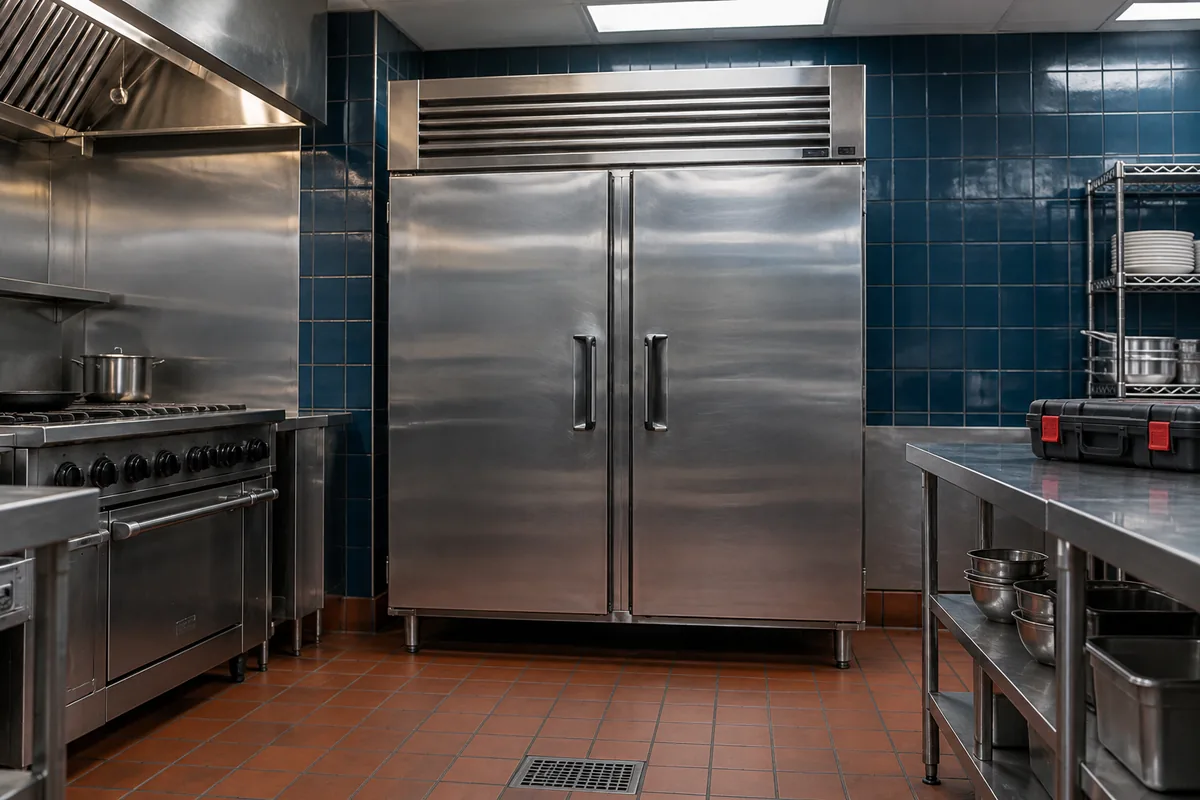
Describe whether the fault is in a walk-in freezer room, a chilled walk-in or a stand-alone cabinet. The equipment layout and normal storage purpose help identify the right service request.
Frequently Asked Questions
Why does ice keep coming back in a walk-in freezer?
Recurring ice often points to air infiltration, door problems, drain heat issues, defrost problems, fan issues or controls that need diagnosis.
Is floor ice a repair issue or a maintenance issue?
It can be either. The source should be diagnosed because drain, door, gasket, defrost and airflow problems can create recurring floor ice.
Can you service the box and the refrigeration equipment?
We can evaluate common box-related and refrigeration-related problems tied to the reported issue and explain practical next steps.
Should we shut the freezer off before service?
Do not change equipment status unless needed for safety or product procedures. Tell us what you have already done before the visit.
Request Walk-In Freezer Repair in Beaverton, OR
For walk-in freezer repair in Beaverton, OR, call HVAC & Appliance Repair Guys or submit a service request through the form on this page.