



Turbo Air Commercial Freezer Repair
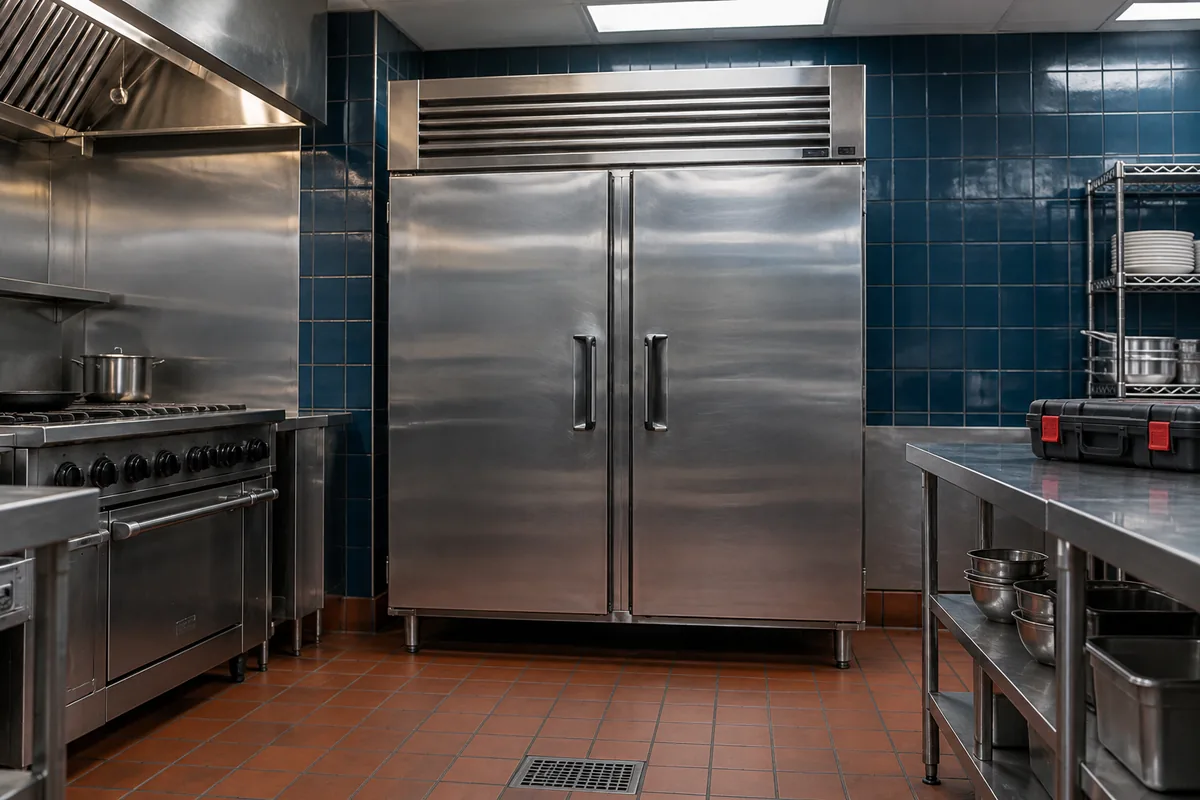
HVAC & Appliance Repair Guys provides Turbo Air commercial freezer repair in Portland Metro for cooling changes, alarms, visible frost and door problems. We check the full model and assess the fault before recommending work.
The Turbo Air M3F24-1-N, for example, has a self-cleaning condenser feature and a digital temperature control. Features vary by model; that example does not identify every Turbo Air freezer’s setup. Include the full model and serial number when the label is safely visible.
A self-cleaning feature does not clean every part of a cabinet or prevent every fault. Describe the actual concern even if the feature appears to work normally.
Routine Care and Repair History
Tell us what routine care the cabinet has received and when. Use the actual work record if one exists, and distinguish surface wiping from other service tasks. A precise task list helps the technician understand what was checked or cleaned.
Include the timing of recent care or other work and what changed afterward. The technician tests the unit’s present condition to identify the cause.
Avoid applying sprays, opening covers or reaching into moving parts to prepare for the visit. Staff do not need to disable a feature to show that cooling is weak. Leave service tests to the technician. Share what you can observe during ordinary safe use and explain where access ends.
Cooling Changes and Alarm History
Describe whether cooling changes after loading, during frequent door use or through quiet periods. Include when the change began.
If an alarm appears, record the exact text or code with the time. Explain whether it repeats and whether other symptoms occur with it. Do not erase the history by repeatedly changing settings or resetting the unit. The message and the sequence are more useful when they stay connected.
Keep the source of each reading in your site’s records. Do not treat a set point, a display value and a separate reading as interchangeable. Identify what each number represents so the technician can assess the cooling complaint.
Cabinet Condition and Service Access
Mention visible frost, a door that does not close normally or stored items near openings. Leave panels in place and do not move the unit to investigate.
If the unit moved or the work area changed recently, describe that change. A new fixture or nearby equipment may alter service access. Tell us how the technician can reach the cabinet and who can clear the agreed work area. Do not disconnect or drag the freezer out to demonstrate the layout.
For other cold equipment, use our Turbo Air commercial refrigeration repair service. Identify each affected unit separately; sharing a brand or location does not make a refrigerator fault a freezer repair.
Repair Scope, Parts and Completion Timing
Review the finding, proposed work and price before approval. The plan should distinguish any care task, repair and separate access work.
A part may need further review against the exact unit details. Do not assume a similar model uses the same component or that a part on hand will fit. We discuss the next step once the fault and support are clear. A scheduling window does not guarantee that every repair will finish during that visit.
Contact HVAC & Appliance Repair Guys to request commercial freezer repair for your Turbo Air unit and confirm model support. Keep the repair finding and open tasks with its care history.
Frequently Asked Questions
What should happen to stock while we arrange service?
Follow your site’s established procedures and keep the relevant records. Equipment diagnosis does not decide whether stored items remain suitable for use. Do not treat the presence of a built-in feature or a normal-looking display as proof about stock condition.
Request Turbo Air Commercial Freezer Repair in Portland Metro
For Turbo Air commercial freezer repair in Portland Metro, call HVAC & Appliance Repair Guys or submit a service request through the form on this page.
Before your visit
Commercial Freezer Repair details for Turbo Air
Include the service address, equipment details, and the order in which symptoms appeared. The technician checks the cause on site. The $99 service call covers diagnosis and is applied toward the total when the repair is approved. The finding and price are reviewed first.
Record the model and serial number
For Turbo Air commercial freezer repair, share the complete model and serial number exactly as shown on the rating label when it is safely visible. A product family or marketing name alone may not identify the configuration, revision, compatible part, or service information needed for planning.
Identify the exact product configuration
For Turbo Air commercial freezer repair, describe how the equipment is installed and powered. Include the exact model number when it is safely visible; models from the same brand can use different configurations.
List earlier repairs and parts
Share prior Turbo Air service dates, replaced components, recurring failures, and any part already supplied or ordered. A previous repair can be useful history, but the current condition still needs to be tested before the same cause or part is assumed.
Compare the next step after testing
After diagnosis, review the recommended repair, price, access needs, and the equipment’s condition and repair history before deciding.